Просмотр новости
Найдите то, что Вас интересует
 Спутники
 РН
РН SpaceX
 Роскосмос
 NASA
NASA
СпутникиРНSpaceXРоскосмосNASAClimate-friendly food choices, new poop solutions and avoiding animals collected from the wild can all help make pet ownership more sustainable.
While John Harvey was working as a veterinarian in Devon, England, his clinic looked for ways to lower its carbon footprint. They installed energy-efficient light bulbs. This got Harvey thinking: What about the animals? How much did pets impact the planet?
Take their food. Dogs and cats eat a meat-based diet. Raising livestock for meat uses a lot of land, water and energy. It also contributes to climate change by producing greenhouse gases. Harvey suspected pet food would have a large carbon footprint, but he couldn’t find much data on it. So in 2024, Harvey started studying how different types of dog food affect the planet. Now, he’s a researcher at the University of Edinburgh in Scotland and the University of Exeter in England.
Outdoor dogs and cats may also hunt or scare local wildlife. And many other pets — reptiles, frogs, birds and fish — are taken from the wild for sale as pets. This could harm wild populations and the ecosystems they come from.
But, in many homes, pets are an important part of the family. They can boost our well-being and bring joy. Harvey has found ways to both love our pets and care for the planet. Now, he and other scientists share science-based tips for pet owners seeking to shrink the environmental pawprint of their pets’ foods, poop and origins.
Chow down chowhoundsDogs are super popular pets. In the United States alone, there are close to 90 million pet canines. What dogs eat is their “biggest single impact” on the planet, Harvey says. He is part of a team that analyzed nearly 1,000 types of dog food. Their goal: to calculate the greenhouse gas emissions linked with making each.
Wet and raw dog foods had the highest emissions. Wet food’s footprint was high because it comes in metal cans, which take a lot of energy and resources to make. Raw dog food contains more meat than other types of foods. It also needs energy to keep it cold.
The type of meat we feed dogs also really matters. This includes the animal it comes from, such as chicken, fish or beef. But also “you can make great dog food out of trimmings of meat,” Harvey says. These are the parts often not used in human food, such as liver and kidney. Using meat parts that would otherwise be thrown out means using fewer livestock — and their associated resources.
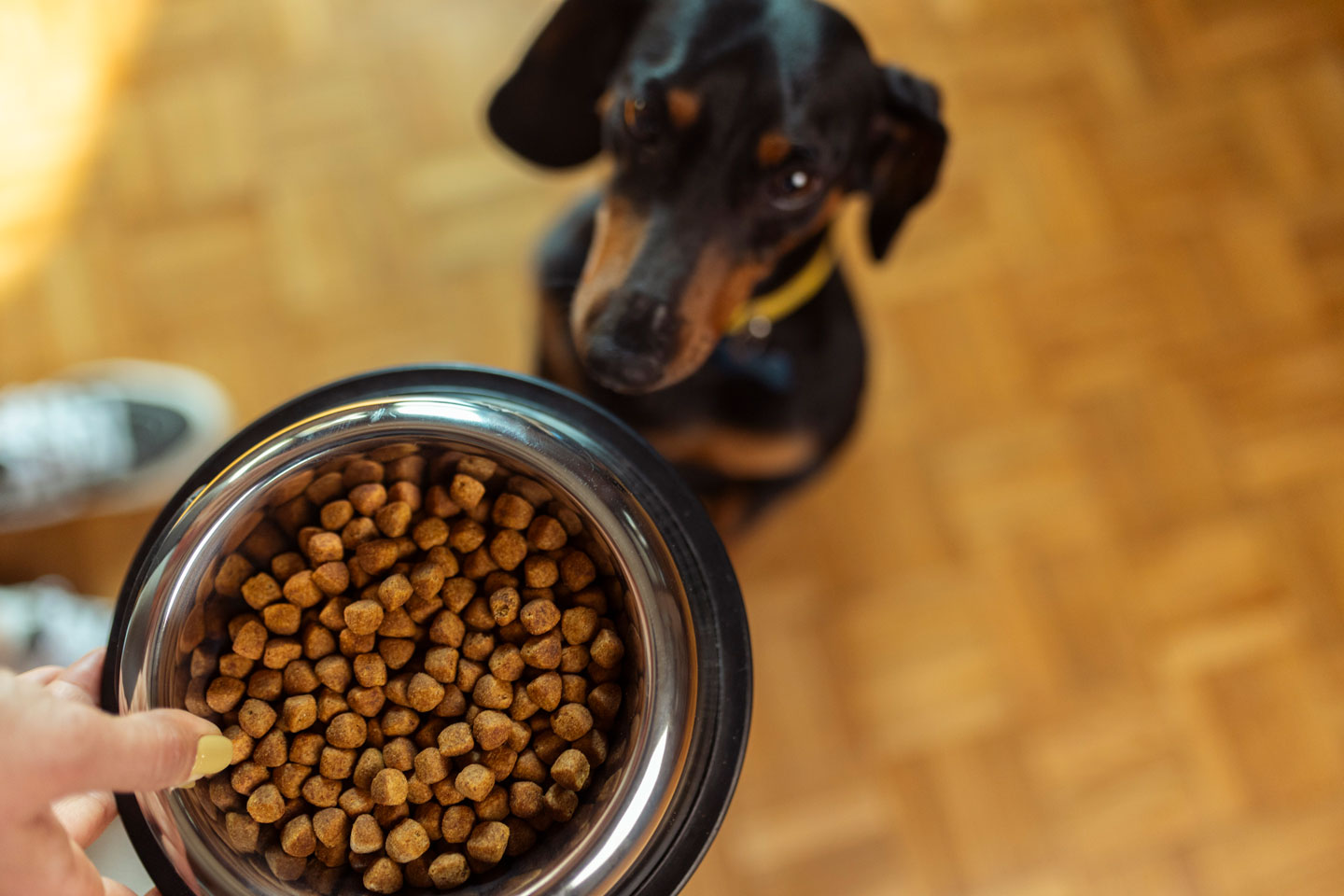 Researchers calculated the greenhouse gas emissions linked to making nearly 1,000 kinds of dog food. The one with the biggest eco-“pawprint” released a whopping 65 times more emissions than the “greenest” food. Some of the most climate-friendly options were dry foods without beef or lamb and that weren’t grain-free.Lajst/iStock/Getty Images Plus
One surprise: The dog food with the largest footprint produced a whopping 65 times the greenhouse-gas emissions of the food with the smallest footprint. (Compare this with foods that people eat. A high-meat diet produces 2.5 times the emissions of a plant-based diet.) Harvey’s team shared those findings this January in the Journal of Cleaner Production.
That means that with dog food, there “is a pretty big opportunity to make a difference,” Harvey reports.
Here are some tips. Choose dry food. Skip the lamb and beef. Don’t feed your dog human-grade meat or grain-free food. The extra meat in grain-free food isn’t needed for a dog’s health, Harvey says. Be careful not to overfeed, which Harvey notes is unhealthy for both your dog and the planet. And when choosing a new dog, consider a small one; they’ll eat less and have a smaller overall footprint.
Over time, peoples’ choices may lead breeders to produce more small dogs.
Poop patrolWith a pooch, it’s not just what goes in but also what comes out. Poop left outdoors can pollute the land and water, notes Emily Bryson. She’s an environmental scientist at Central Queensland University in Wayville, Australia. Nutrients in fresh poop can leach into water. And dog poop may also contain disease-causing germs or parasites.
Responsible dog owners pick up the pet wastes and throw it away. Making those bags spews climate-warming greenhouse gases, as does the decay of poop in landfills.
But Bryson has a solution.
“Dog poo, in itself, is a valuable resource,” she says. “It just needs to be treated to be made safe.” She studied how composting can transform nutrients in poop into forms that plants can use.
Most city-scale compost programs don’t allow dog poop, Bryson found. So she focused her research on home composting. Dog poop decomposes well, she found. Pathogens died and nutrients became available in a form plants can use as a fertilizer. In the end, the poop became valuable.
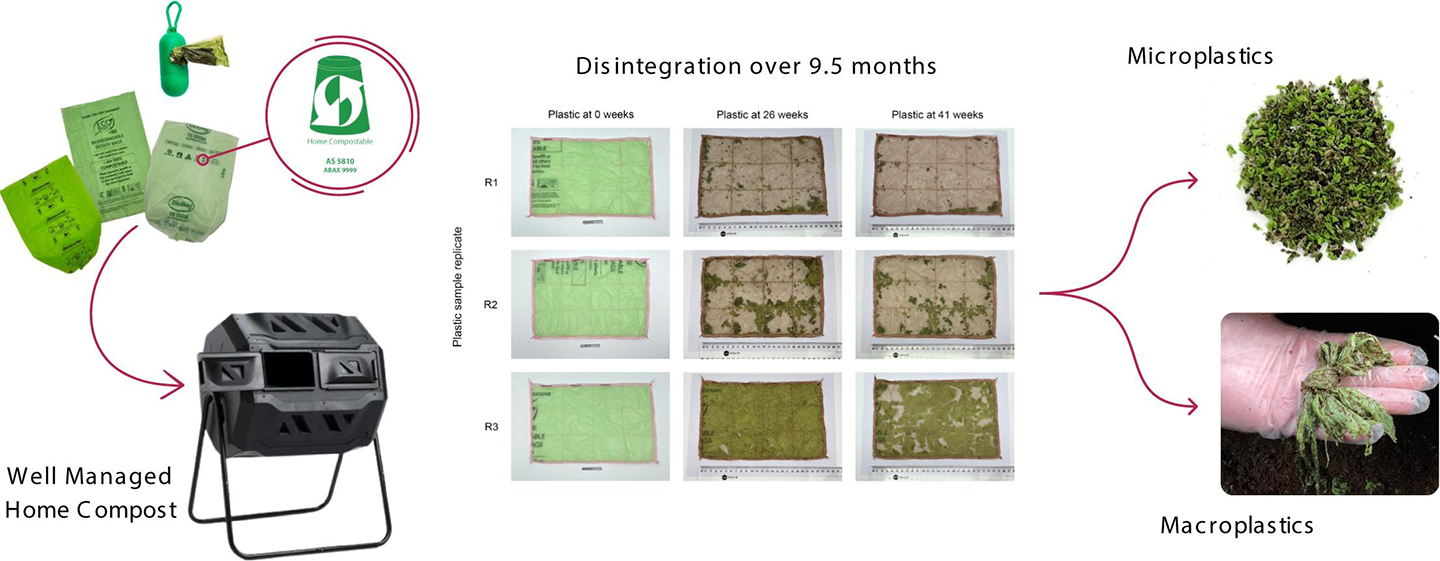 Researchers tested the breakdown of compostable bags for dog poop in home compost (left). Over 9.5 months, the bags did not fully degrade (middle). Instead, the bags broke down into a mass of polluting microplastics (right).Bryson et al/Waste Management 2026 (CC BY-NC-ND 4.0)
Getting dog poop into a compost container takes some creativity. Even compostable bags break down into microplastics, Bryson’s team found. And compostable bags are usually made from fossil fuel-based plastic. Instead of a bag, scoop poop with a tool straight into the bin. Or, Bryson suggests, put it into any paper product that will fully break down.
For instance, at some sites in New York City, people use newspaper to pick up and toss poo into a compost tumbler. The finished compost is used to fertilize park plantings.
Cat quandariesSome 76 million pet cats live in the United States. As with dog food, dry cat foods — and those without beef and lamb — will be greener for the planet. Cats eat less than most dogs, so their diet’s carbon pawprint is smaller.
But cats have a bigger impact on other animals. Environmental scientist Loren Fardell tracked how outdoor cats affect wildlife. While working at the University of Sydney, Australia, her team set up infrared cameras in backyards and near open areas, such as parks. These cameras showed that wildlife avoided spots cats had visited that day and even the day before.
Why? Outdoor cats leave a trail of scents in their urine, feces and shed fur, Fardell explains. Smells of a potential predator can stress birds and small mammals. These creatures could end up traveling farther and staying more vigilant to survive.
Cats also kill — a lot! They kill up to 4 billion birds and 20 billion mammals each year in the United States. Globally, they’ve also been linked to the extinction of 63 species, including birds, reptiles and mammals.
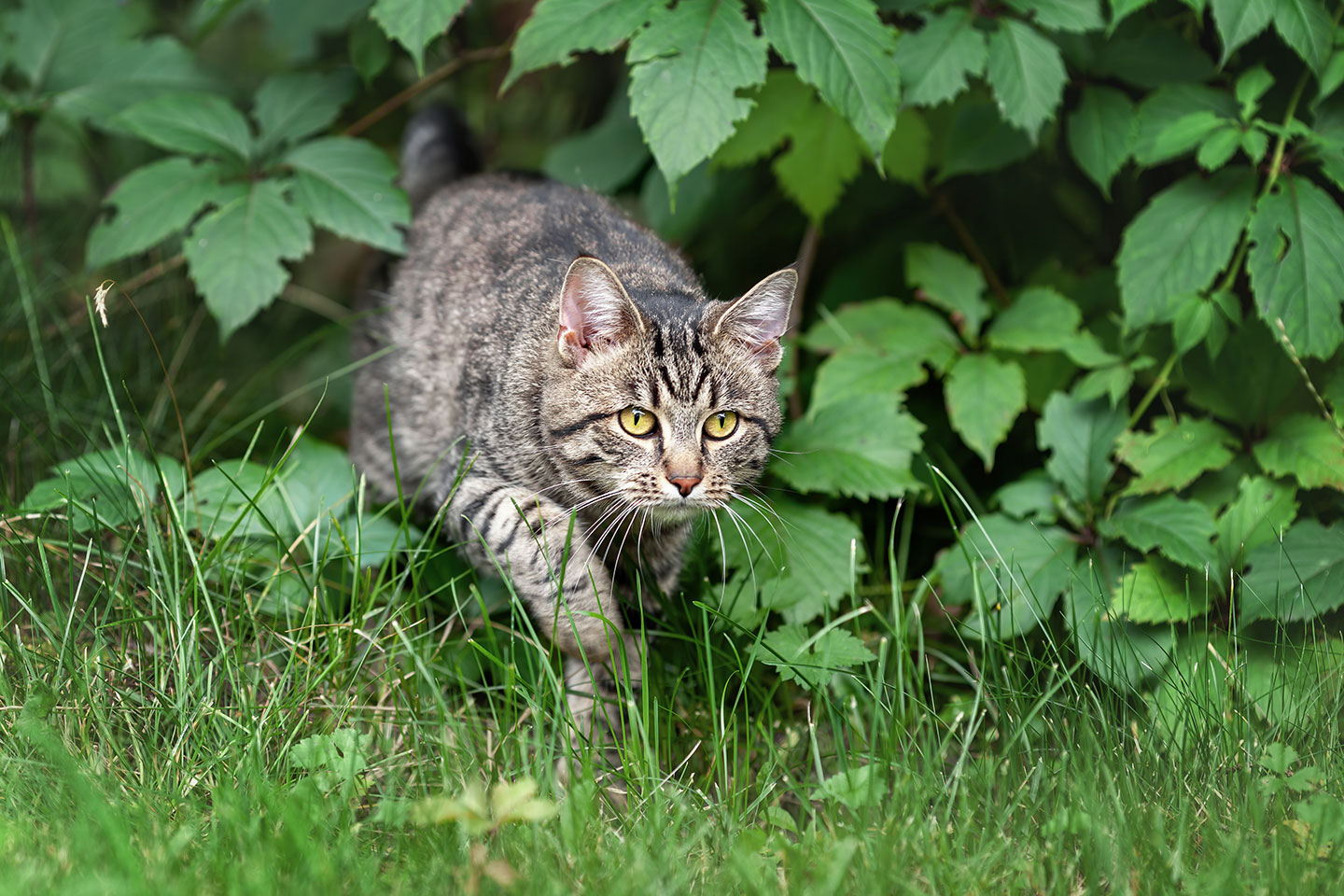 Even the smell of a cat can affect wildlife. The scent felines leave behind in backyards and parks stresses out birds and other animals, which can affect how effectively they get food or look for mates.Irina Nedikova/iStock/Getty Images Plus
Wildlife living near people already face stress from noise, lights, cars and habitat loss, Fardell points out. So it’s important to keep cats indoors, she says. Or, use fully enclosed outdoor cat runs. This also keeps cats safe from disease, predators, cars or getting lost.
Indoor kitties use litter boxes. Companies mine the absorbent clay used to make for kitty litter. This can destroy natural habitats. So researchers are looking to make litter more sustainable.
Scientists with the U.S. Department of Agriculture found discarded organic material, such as soybean hulls, were a good alternative to clay. And some companies sell kitty litter made from other natural products, such as discarded olive pits.
Never flush cat poop down the toilet. It can contain parasites that can survive wastewater treatment and later infect and kill wild animals, such as dolphins.
Caring for exotic crittersWhen Alice Hughes was a kid, she kept frogs, leopard geckos and a corn snake. Now she’s a zoologist at the University of Melbourne in Australia. Her research focuses on the impact of wild-caught pets, including reptiles.
Some 2.4 million U.S. households nurture pet reptiles. Their biggest impact will trace to whether they were wild caught or bred in captivity. Taking animals from the wild can weaken populations or even cause extinctions.
Hughes realized little effort had been made to track the impact of collecting wild animals for sale elsewhere. Laws to protect wildlife were largely set up for species known to be threatened with extinction, such as elephants and red pandas. Few laws existed to protect critters collected for sale as pets.
For example, Indonesia exports eight million Tokay geckos a year. Most come from the wild, Hughes says. “What is that doing to wild populations, not just geckos but all the other species in the food web?” No one knows, she says, “because we don’t have the data to monitor that [impact].”
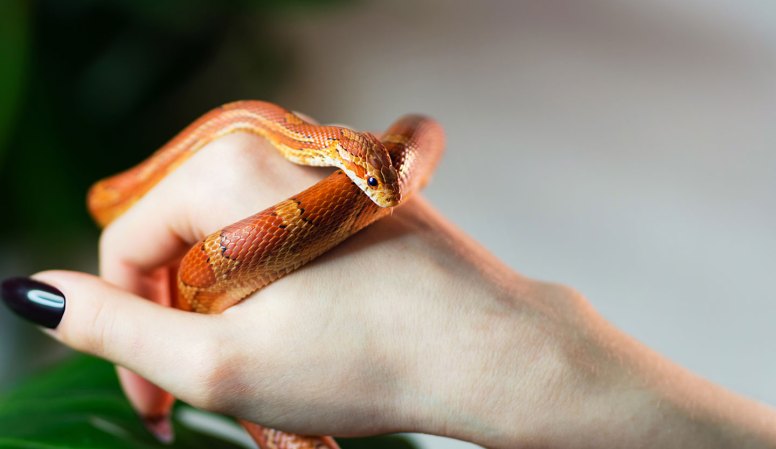 Some reptiles breed easily in captivity, such as this corn snake. Buying captive-bred reptiles won’t harm wild populations, which might suffer as people collect individuals for sale as pets.Vagengeym_Elena/iStock/Getty Images Plus
Collection of wild animals for sale as pets has already wiped out wild populations of several species, one 2023 study found. Another study found that when a species is captured for sale to pet owners, its populations in the wild can drop by up to 62 percent.
And this problem is only getting worse. Influencers showing off wild, or exotic, pets on TikTok and YouTube have made exotic reptile pets more popular, Hughes says. “Everyone sees that they’re cool. They don’t take up much space. And so,” she says, “you have this growing demand.”
Hughes found nearly half of all known species of reptiles are in the pet trade, most with no protection.
Another problem: Some people may change their mind and not want their exotic pets any more. If set free, the animals might harm local wildlife. This has happened with hundreds of species. Asian lionfish released from a U.S. aquarium, for instance, are now eating North American ocean dwellers. And pet Burmese pythons released in Florida are now gobbling up native wildlife, including opossums, bobcats and raccoons.
Submit your question here, and we might answer it an upcoming issue of Science News Explores
Just like reptiles and fish, amphibians face threats from collectors looking to sell them into the pet trade.
Amphibian populations are even more at risk than reptiles because they’re harder to keep alive during transport, says Hughes. Also, as collectors travel between sites they can spread diseases — such as the deadly chytrid fungus — to previously healthy populations.
Even spiders are vulnerable. They’re “really popular pets,” says Hughes. “Videos of dancing, jumping spiders on [social media] have increased the demand for [them as pets].” Hughes found around 100 species being sold as pets that scientists had not yet described.
Some, such as tarantulas, have long lives and small ranges. This means that if a collector catches too many tarantulas from one area, the local population could go extinct. There’s a misconception that invertebrates breed rapidly and have short lives. That’s not true for all, she says.
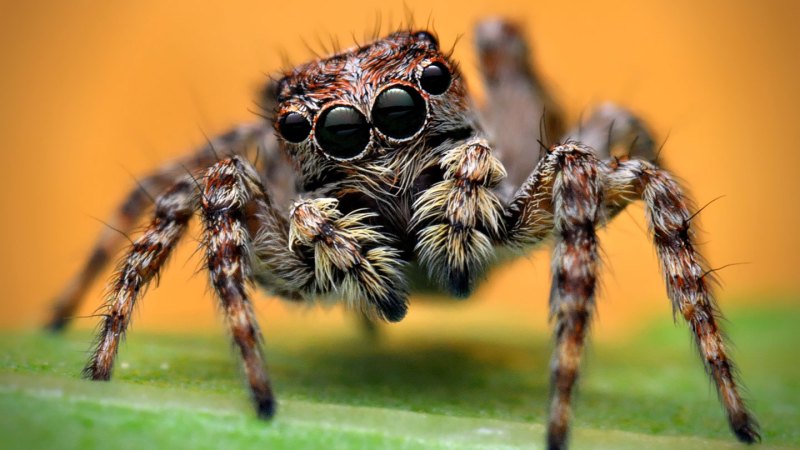 Social media posts featuring jumping spiders, such as this one, have popularized the arthropods as pets.xbn83/Moment/Getty Images Plus
Fish face many of the same problems. Even in countries with rules about reporting fish imports, no one really knows how many fish are coming in, Hughes notes. Importers may list “tropical fish,” which would not reveal whether they are transporting a highly endangered species, she says.
Collectors are not thinking about protecting species in the wild. They’re feeding “that Pokémon mentality,” says Hughes, “to catch them all.” She’s seen species of large jumping spiders and cave geckos enter the pet trade just months after first being described as a newfound species by scientists.
Finding fantastic beastsOnline pet stores make access to all sorts of creatures easy. Some animals there have been bred for the pet trade. But many others are hard to breed in captivity or are cheaper to collect from the wild. Stores often list these as “field collected.”
Sellers of field-collected species have no way to tell if their business harms native populations. That’s why “captive-bred animals are better,” Hughes says. Corn snakes and bearded dragons, for instance, breed easily in captivity. And sales of captive-bred animals won’t harm wild populations.
Another advantage: Captive-bred animals tend to have better temperaments, Hughes says, so you’re less likely to get bitten by them. They’re also less likely to have parasites or diseases, she says.
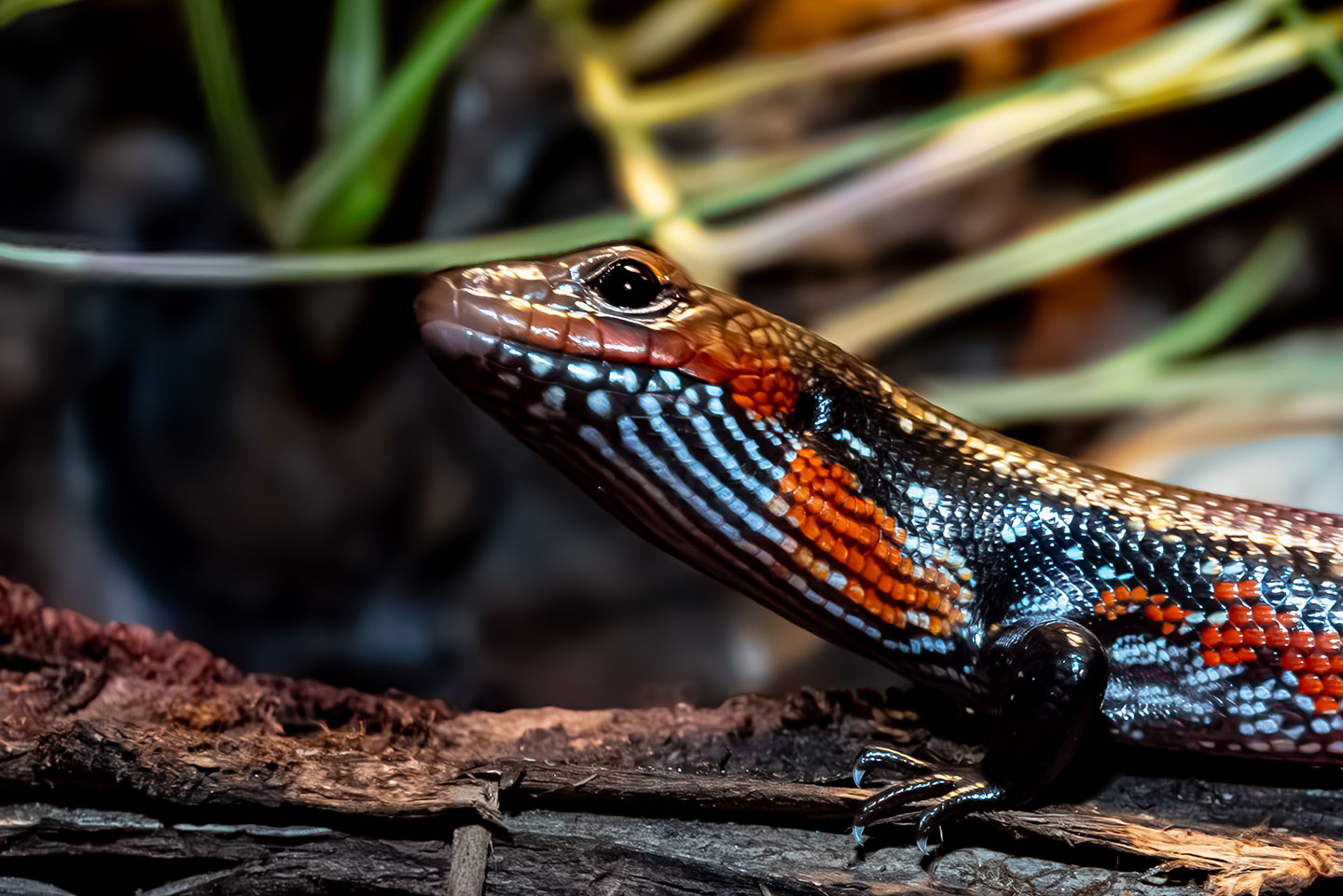 Species such as this beautiful African fire skink do not breed easily in captivity. So when sold as pets, they invariably had been collected in the wild. In general, wild collection can shrink local animal populations, which may even go extinct. This can harm the ecosystems the creatures had been part of. Allen Szykula/iStock/Getty Images Plus
A pet store should be able to tell you where animals were bred. And reputable breeders often provide some proof, such as photos of animal eggs on their websites.
Protections exist for some wild birds, Hughes says. Because of the fear of bird flu, there are stricter regulations for importing birds than for importing other creatures into the United States and Europe. This has reduced sales of wild birds.
Lots of other small creatures make good, eco-friendly pets. Pocket pets, such as rats, hamsters or gerbils, are easy to breed and have a tiny footprint on the planet. Over a million U.S. households keep such pets.
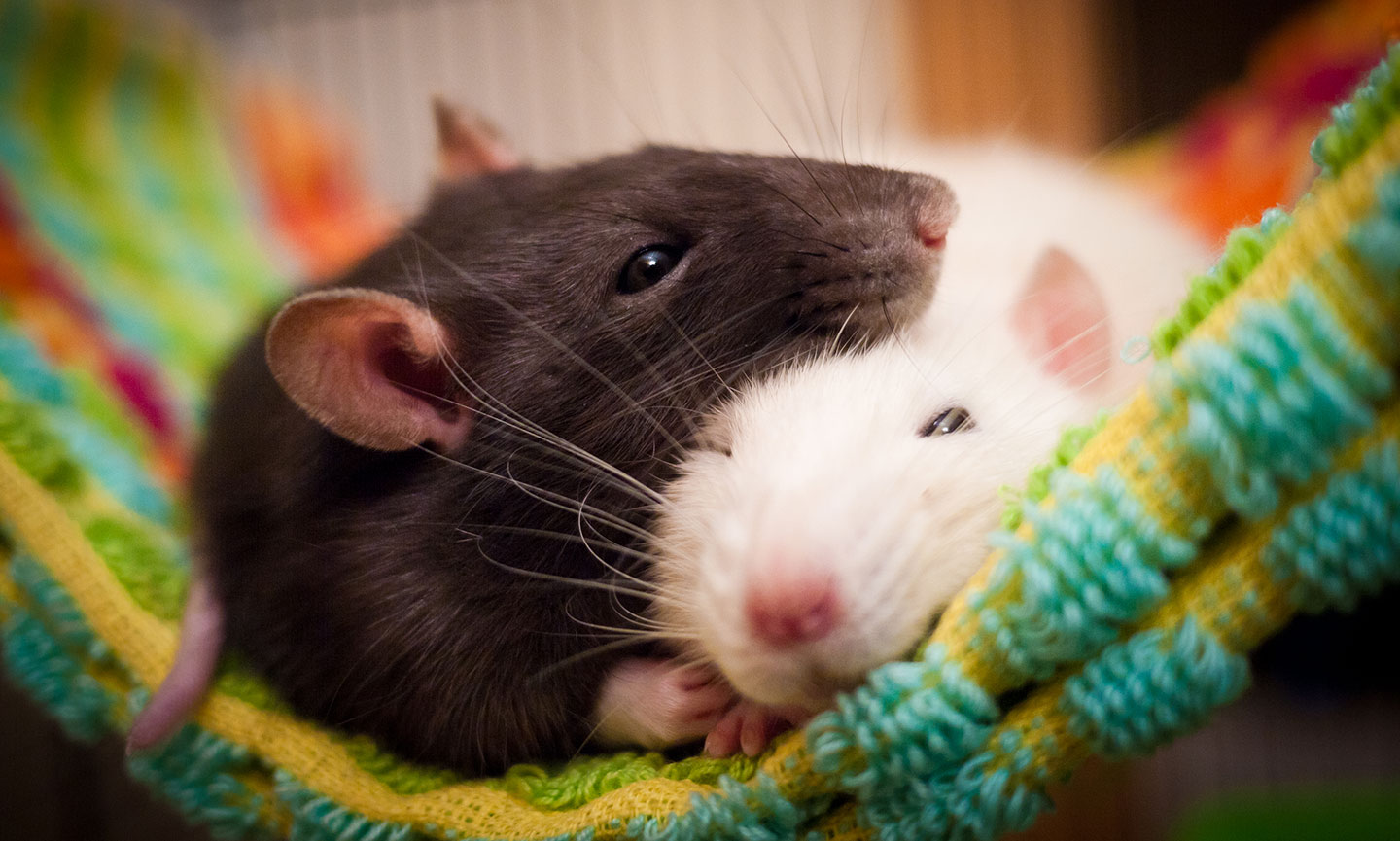 These two cuddly rats, like other pocket pets (including guinea pigs, hamsters or mice), eat a vegetarian diet and have a small eco-pawprint. Chris Scuffins/Moment/Collection Moment
Some people may enjoy a temporary pet borrowed from the outdoors. Yards and parks contain common insects and invertebrates that crawl, flit and fly.
Hughes recommends trying a pet caterpillar. You can tell what it eats based on where you find it. Take a few leaves inside and watch it spin a cocoon and undergo metamorphosis.
Slugs and snails can be fun too, but be sure to wash your hands after touching them, she advises. They can have parasites. Or set up your own worm farm and watch the critters burrow. All you need is a clear jar and soil.
Whatever pets you choose, remember to “treat them with respect. Don’t be rough with them,” Hughes says.
For Harvey, pets are really important. “They bring massive joy to a lot of people,” he says. Now, for the health of the planet, he hopes we find ways to make pet ownership more sustainable.
agriculture: The growth of plants, animals or fungi for human needs, including food, fuel, chemicals and medicine.
amphibians: A group of animals that includes frogs, salamanders and caecilians. Amphibians have backbones and can breathe through their skin. Unlike reptiles, birds and mammals, unborn or unhatched amphibians do not develop in a special protective sac called an amniotic sac.
carbon footprint: A popular term for measuring the global warming potential of various products or processes. Their carbon footprint translates to the amount of some greenhouse gas — usually carbon dioxide — that something releases per unit of time or per quantity of product.
caterpillar: The larval stage of moths and butterflies. Somewhat wormy-shaped crawlers, caterpillars tend to eat leaves and other plant bits. Some will, however, dine on other insects.
chytrid fungus: A common shortened name for fungi — Batrachochytrium dendrobatidis and B. salamandrivorans — that can create a lethal infection in amphibians, especially frogs. The formal name of the infection is chytridiomycosis.
clay: Fine-grained particles of soil that stick together and can be molded when wet. When fired under intense heat, clay can become hard and brittle. That’s why it’s used to fashion pottery and bricks.
climate change: Long-term, significant change in the climate of Earth. It can happen naturally or in response to human activities, including the burning of fossil fuels and clearing of forests.
compost: The end product in the breakdown, or decomposition, of leaves, plants, vegetables, manure and other once-living material. Compost is used to enrich garden soil, and earthworms sometimes aid this process.
diet: (n.) The foods and liquids ingested by an animal to provide the nutrition it needs to grow and maintain health. Sometimes this is a specific food-intake plan.
ecological: An adjective that refers to a branch of biology that deals with the relations of organisms to one another and to their physical surroundings. A scientist who works in this field is called an ecologist.
ecosystem: A group of interacting living organisms — including microorganisms, plants and animals — and their physical environment within a particular climate. Examples include tropical reefs, rainforests, alpine meadows and polar tundra. The term can also be applied to elements that make up some artificial environment, such as a company, classroom or the internet.
endangered: An adjective used to describe species at risk of going extinct.
exotic: An adjective to describe something that is highly unusual, strange or foreign (such as exotic plants).
extinct: (n. extinction) An adjective that describes a species for which there are no living members.
feces: (adj. fecal) A body's solid waste, made up of undigested food, bacteria and water. The feces of larger animals are sometimes also called dung.
fertilize: (in agriculture and horticulture) To provide basic chemical nutrients for growth.
flu: Short for influenza. It is a highly contagious viral infection of the respiratory passages causing fever and severe aching. It often occurs as an epidemic.
food web: (also known as a food chain) The network of relationships among organisms sharing an ecosystem. Member organisms depend on others within this network as a source of food.
fossil fuel: Any fuel — such as coal, petroleum (crude oil) or natural gas — that has developed within the Earth over millions of years from the decayed remains of bacteria, plants or animals.
fungus: (plural: fungi) One of a group of single- or multiple-celled organisms that reproduce via spores and feed on living or decaying organic matter. Examples include mold, yeasts and mushrooms.
gecko: A small to medium sized reptile found in warm to equatorial regions of the world. Some 2,000 different species of this lizard exist, in a wide range of colors. These reptiles eat insects, worms and even the occasional small bird. But they are best known for being able to climb slick surfaces, owing to special structures on the bottom surfaces of their feet.
germ: Any one-celled microorganism, such as a bacterium or fungal species, or a virus particle. Some germs cause disease. Others can promote the health of more complex organisms, including birds and mammals. The health effects of most germs, however, remain unknown.
green: (in chemistry and environmental science) An adjective to describe products and processes that will pose little or no harm to living things or the environment.
greenhouse gas: A gas that contributes to the greenhouse effect by absorbing heat. Carbon dioxide is one example of a greenhouse gas.
habitat: The area or natural environment in which an animal or plant normally lives, such as a desert, coral reef or freshwater lake. A habitat can be home to thousands of different species.
hull: (in botany) The outer shell or coat of a fruit or a seed.
infect: To spread a disease from one organism to another. This usually involves introducing some sort of disease-causing germ to an individual.
infrared: A type of electromagnetic radiation invisible to the human eye. The name incorporates a Latin term and means “below red.” Infrared light has wavelengths longer than those visible to humans. Other invisible wavelengths include X-rays, radio waves and microwaves. Infrared light tends to record the heat signature of an object or environment.
insect: A type of arthropod that as an adult will have six segmented legs and three body parts: a head, thorax and abdomen. There are hundreds of thousands of insects, which include bees, beetles, flies and moths.
invertebrate: An animal lacking a backbone. About 90 percent of animal species are invertebrates.
kidney: Each in a pair of organs in mammals that filters blood and produces urine.
landfill: A site where trash is dumped and then covered with dirt to reduce smells. If they are not lined with impermeable materials, rains washing through these waste sites can leach out toxic materials and carry them downstream or into groundwater. Because trash in these facilities is covered by dirt, the wastes do not get ready access to sunlight and microbes to aid in their breakdown. As a result, even newspaper sent to a landfill may resist breakdown for many decades.
leach: (in geology and chemistry) The process by which water (often in the form of rain) removes soluble minerals or other chemicals from a solid, such as rock, or from sand, soil, bones, trash or ash.
liver: An organ of the body of animals with backbones that performs a number of important functions. It can store fat and sugar as energy, break down harmful substances for excretion by the body, and secrete bile, a greenish fluid released into the gut, where it helps digest fats and neutralize acids.
livestock: Animals raised for meat or dairy products, including cattle, sheep, goats, pigs, chickens and geese. In some cases, farmed insects are referred to as mini-livestock.
lizard: A type of reptile that typically walks on four legs, has a scaly body and a long tapering tail. Unlike most reptiles, lizards also typically have movable eyelids. Examples of lizards include the tuatara, chameleons, Komodo dragon, and Gila monster.
mammal: An animal distinguished by possessing hair or fur, the secretion of milk by females for the feeding of their young, and (typically) the bearing of live young. They also are warm-blooded (or endothermic).
metamorphosis: A dramatic change from one stage in an animal’s life history to the next, such as the process by which a tadpole becomes a frog or the changes that transform a caterpillar into a butterfly.
microplastic: A small piece of plastic, 5 millimeters (0.2 inch) or smaller in size. Microplastics may have been produced at that small size, or their size may be the result of the breakdown of water bottles, plastic bags or other things that started out larger.
native: Associated with a particular location; native plants and animals have been found in a particular location since recorded history began. These species also tend to have developed within a region, occurring there naturally (not because they were planted or moved there by people). Most are particularly well adapted to their environment.
nutrient: A vitamin, mineral, fat, carbohydrate or protein that a plant, animal or other organism requires as part of its food in order to survive.
organic: (in chemistry) An adjective that indicates something is carbon-containing; also a term that relates to the basic chemicals that make up living organisms. (in agriculture) Farm products grown without the use of non-natural and potentially toxic chemicals, such as pesticides.
parasite: An organism that gets benefits (such as food) from another species, called a host, while usually causing some degree of harm or discomfort to the host. Classic examples of parasites include ticks, fleas and tapeworms.
pathogen: Disease-causing biological organisms, such as viruses, bacteria, fungi and parasites that can infect plants or animals (including people).
plastic: Any of a series of materials that are easily deformable; or synthetic materials that have been made from polymers (long strings of some building-block molecule) that tend to be lightweight, inexpensive and resistant to degradation. (adj.) A material that is able to adapt by changing shape or possibly even changing its function.
population: (in biology) A group of individuals (belonging to the same species) that lives in a given area.
predator: (adjective: predatory) A creature that preys on other animals for most or all of its food.
python: A large, heavy-bodied, nonpoisonous constrictor snake.
range: The full extent or distribution of something. For instance, a plant or animal’s range is the area over which it naturally exists.
reptile: Vertebrate animals belonging to a group known as Reptilia. Most reptiles have skin that is covered with scales or horny plates. Snakes, turtles, lizards and alligators are all reptiles. Once considered their own separate group, birds now belong to this order. With the exception of modern birds, most modern reptiles are cold-blooded (or ectothermic).
risk: The chance or mathematical likelihood that some bad thing might happen. For instance, exposure to radiation poses a risk of cancer. Or the hazard — or peril — itself. (For instance: Among cancer risks that the people faced were radiation and drinking water tainted with arsenic.)
slug: A soft-bodied invertebrate that travels by sliding across a surface of slime that its body releases. It resembles a snail without a shell.
social media: Digital media that allow people to connect with each other (often anonymously) and to share information. Examples include Twitter, Facebook, Instagram, TikTok and WhatsApp.
species: A group of similar organisms capable of producing offspring that can survive and reproduce.
spider: A type of arthropod with four pairs of legs and two main body sections (a head-thorax combination and an abdomen). Spiders often have the ability to spin threads of silk they can use to create webs or other structures.
stress: (in psychology) A mental, physical, emotional or behavioral reaction to an event or circumstance (stressor) that disturbs a person or animal’s usual state of being or places increased demands on a person or animal; psychological stress can be either positive or negative.
sustainable: (n. sustainability) An adjective to describe the use of resources in a such a way that they will continue to be available long into the future.
tarantula: Relatively large hairy spiders, some of which grow large enough to catch small lizards, frogs and birds.
threatened: (in conservation biology) A designation given to species that are at high risk of going extinct. These species are not as imperiled however, as those considered “endangered.”
tortoise: Any of various turtles that live on land.
trade: The buying, selling or swapping of goods or services — indeed, of anything that has value. Trade groups represent the makers or sellers of these goods and services. When nations talk about trade, they usually refer to the sale or purchasing of goods with one or more countries.
veterinarian: A doctor who studies or treats animals (not humans).
vigilant: (n. vigilance) The act of being intensely observant and careful.
wastewater: Any water that has been used for some purpose (such as cleaning) and no longer is clean or safe enough for use without some type of treatment. Examples include the water that goes down the kitchen sink or bathtub or water that has been used in manufacturing some product, such as a dyed fabric.
zoologist: An expert in the study of animals and their habitats.
Journal: E. Bryson et al. Sanitisation of dog faeces through home composting. Waste Management. Vol. 216, April 20, 2026. doi: 10.1016/j.wasman.2026.115469.
Journal: J.D. Harvey et al. Estimating the environmental impact of dog foods marketed in the UK. Journal of Cleaner Production. Vol. 540, January 20, 2026. doi: 10.1016/j.jclepro.2025.147277.
Website: Securing a Sustainable future for Pets and the Planet. Petsandplanet.org. 2026.
Journal: B.M. Michael et al. The magnitude of legal wildlife trade and implications for species survival. Proceedings of the National Academy of Sciences. Vol. 122, January 7, 2025. doi: 10.1073/pnas.2410774121.
Journal: E. Bryson et al. Disintegration of certified compostable plastic bags in outdoor household composting conditions. Waste Management. Vol. 190, December 15, 2024. doi: 10.1016/j.wasman.2024.10.028.
Journal: E. Bryson et al. Household dog fecal composting: Current issues and future directions. Integrated Environmental Assessment and Management. Vol. 20, November 1, 2024. doi: 10.1002/ieam.4970.
Journal: E. Bryson et al. What do Australians do with their dog poo? A survey of dog-owning household practices and attitudes. Australasian Journal of Environmental Management. Vol. 31, April 12, 2024. doi: 10.1080/14486563.2024.2336974.
Report: American Veterinary Medical Association. 2025 AVMA Pet Ownership and Demographics Sourcebook.
Journal: A. Hinsey et al. Trading species to extinction: evidence of extinction linked to the wildlife trade. Cambridge Prisms: Extinction. March 24, 2023. doi: 10.1017/ext.2023.7.
Journal: L.L. Fardell, C.R. Pavey, and C.R. Dickman. Influences of roaming domestic cats on wildlife activity in patchy urban environments. Frontiers in Ecology and Evolution. Vol. 11, February 23, 2023. doi: 10.3389/fevo.2023.1123355.
Journal: S.F. Vaughn et al. Production of an odor-reducing, low-dust, clumping cat litter from soybean hulls and soybean hull biochar. Bioresource Technology Reports. Vol. 21, February 2023. doi: 10.1016/j.biteb.2022.101317.
Journal: J.L. Lockwood et al. When pets become pests: the role of the exotic pet trade in producing invasive vertebrate animals. Frontiers in Ecology and the Environment. Vol 17. August 2019. doi: 10.1002/fee.2059.
Journal: M.E. Dorcas et al. Severe mammal declines coincide with proliferation of invasive Burmese pythons in Everglades National Park. Proceedings of the National Academy of Sciences. Vol 109. January 30, 2012. doi: 10.1073/pnas.1115226109.
| # | Наименование новости | Тональность | Информативность | Дата публикации |
|---|---|---|---|---|
| 1 | Greener miles, leaner logistics | 0 | 9.25 | 22-09-2026 |
| 2 | More than one way to make an impact | 0 | 11.88 | 17-07-2026 |
| 3 | Экопривычки: что делать, чтобы меньше мусорить | 0 | 0 | 26-02-2019 |
| 4 | How sustainability fell out of fashion | 0 | 9.18 | 13-08-2026 |
| 5 | Are Prefab Tiny Homes More Sustainable Than Traditional Construction? | 0 | 12.31 | 26-03-2026 |
| 6 | PCX Solutions launch its Alternative Materials Certificate | 0 | 14.39 | 03-08-2026 |
| 7 | Новый друг: советы для тех, кто решил завести собаку | 0 | 0 | 20-05-2020 |
| 8 | A healthier global diet could cut farm emissions by 85% | 0 | 10.99 | 23-07-2026 |
| 9 | La alternativa a las residencias para mascotas: «Quiero que cuiden de mi perro como yo lo haría» | 0 | 6.73 | 18-08-2026 |
| 10 | CPG Firms Must Move Strategically to Meet Sustainable Packaging Goals | 0 | 11.43 | 10-07-2026 |