Просмотр новости
Найдите то, что Вас интересует
 Спутники
 РН
РН SpaceX
 Роскосмос
 NASA
NASA
СпутникиРНSpaceXРоскосмосNASAAn unexpected discovery laid the path for using genetically engineered algae to remove microplastics from water.
The post Can microplastic-loving algae clean up water pollution? appeared first on Science Friday.
Has there ever been a time when things turned out differently than you expected? That happens in science too! In fact, sometimes an unexpected scientific discovery can lead to a massive breakthrough.
For example, in 1928 Alexander Fleming found that mold accidentally growing on a Petri dish stopped bacteria from spreading. When purified, that mold makes the medicine penicillin, which we use today to treat strep throat and other infections.
Now, Dr. Susie Dai from the University of Missouri has made a similar scientific breakthrough that may help people combat water pollution.
Microplastics are one of the most common forms of pollution. They can be found everywhere from the deepest ocean depths to the peak of Mt. Everest. Microplastics are difficult to remove from water because they are very, very small and lightweight. You can’t scoop them up or filter them out. However, Dr. Susie Dai, a professor in the Department of Chemical and Biomedical Engineering at the University of Missouri, accidentally discovered that bioengineered algae can remove microplastics from water sources.
How did she figure that out? Well, several different pieces of research came together in a remarkable way.
Algae are photosynthetic organisms, similar to plants, that make oxygen and chemical energy from sunlight, water, and carbon dioxide. The algae used in Dr. Dai’s lab were genetically modified. Their DNA was altered to add, remove, or change particular traits.
The team noticed that these altered algae exhibited hydrophobic properties. They had a natural tendency to repel water molecules, separating from water a bit as oil does in salad dressing. That made Dr. Dai think, “What can we do with it?”
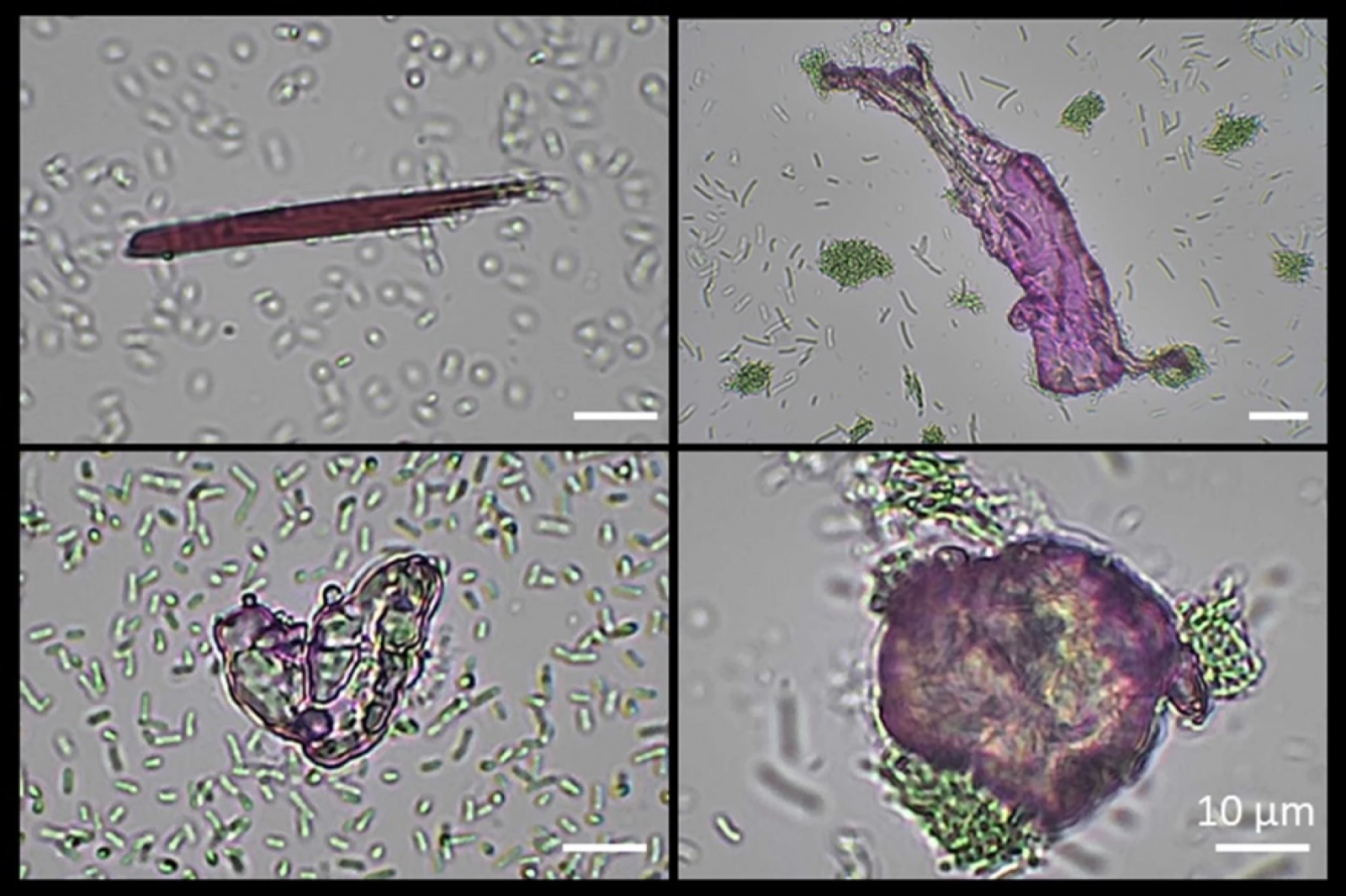 On the left, unaltered “wild type” algae (green) float randomly, without interacting with the microplastic (purple). On the right, the algae clump onto pieces of microplastic. The 10 𝝻m measurement in the bottom right corner indicates that the line below the text represents ten microns. Each micron is one-millionth of a meter. Credit: Nature Communications
At the time, the researchers were also studying microplastics—super small particles of plastic waste. The tiny plastic pieces were drawn to the algae cells and formed small clusters. The microplastics and the algae formed a sludge that sank to the bottom and was easy to clean up, removing the plastic from the water source.
This discovery is significant. The research team is now focused on scaling up the process to evaluate its performance at water treatment centers. They hope the algae can remove pollutants from water, purifying it before it returns to the tap.
After you’ve watched the video, answer these questions:
Dr. Susie Dai is a professor in the Department of Chemical and Biomedical Engineering at the University of Missouri. She has worked in environmental protection, environmental health, food safety, and regulatory science, publishing more than 60 journal papers on her research. Her lab works to discover new ideas that advance science and serve the local community.
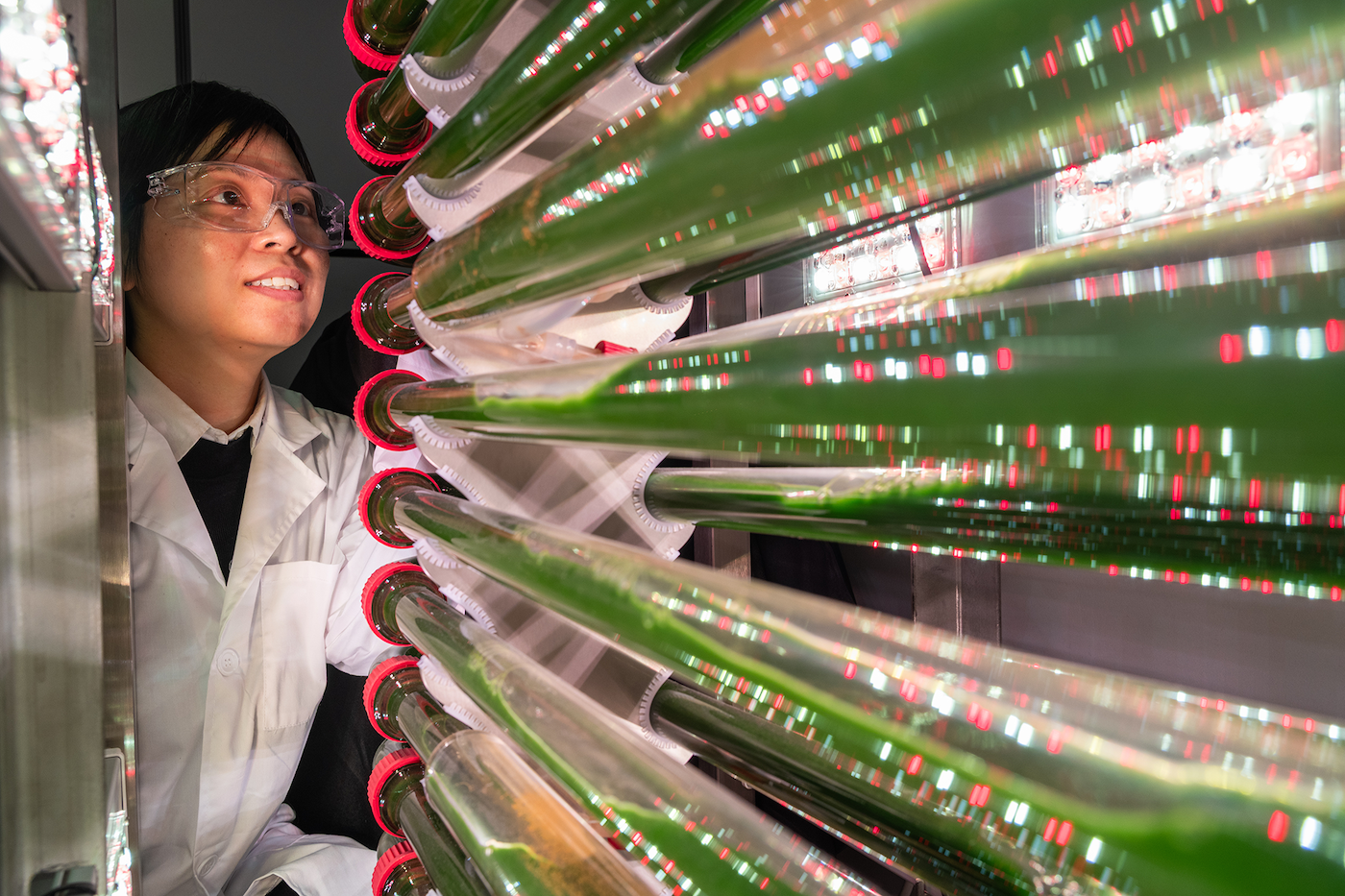 Dr. Dai grows and monitors her algae in tubes, so it can’t accidentally be released into the wild. Credit: Abbie Lankitus/University of Missouri
Learn more about microplastics and how they affect our world with the Science Friday stories below:
Credits:
Lesson by Svea Andersen
Developmental editing by Sandy Roberts
Copyediting by Erica Williams
Digital production by Sandy Roberts
Featured artwork for the activity by Fai Kosciolek
Video by Sukee Bennet
Host and Producer Kathleen Davis
Svea Anderson is a twenty-year veteran educator who embraces challenges and consistently seeks opportunities for new learning.
| # | Наименование новости | Тональность | Информативность | Дата публикации |
|---|---|---|---|---|
| 1 | Experiment: Remove microplastics from water with yeast | 0 | 4.65 | 30-06-2026 |
| 2 | This common plant could clean microplastics from your drinking water | 0 | 11.72 | 20-04-2026 |
| 3 | EPA Fails to Take Meaningful Action on Microplastics | -8 | 6 | 29-06-2026 |
| 4 | Swarms of tiny robots remove microplastics from soil and water | 0 | 8.54 | 08-08-2026 |
| 5 | Flauschige Nanofaser-Beschichtung filtert Mikroplastik aus Wasser | 0 | 10.4 | 07-08-2026 |
| 6 | Transforming polyamide microplastics into light-emitting carbon quantum dots for UV-blocking food packaging | 0 | 8.55 | 27-08-2026 |
| 7 | New “living plastic” self-destructs in just 6 days without leaving microplastics | 0 | 13.42 | 17-07-2026 |
| 8 | Traditional plastic forks shed harmful microplastics. Plastic created from sugar is an alternative | 0 | 9.48 | 10-08-2026 |
| 9 | Microplastics are leaking invisible chemical clouds into water | 0 | 6.66 | 31-12-2025 |
| 10 | Scientists turn plastic waste into clean hydrogen fuel using sunlight | 0 | 6.96 | 04-05-2026 |