Просмотр новости
Найдите то, что Вас интересует
 Спутники
 РН
РН SpaceX
 Роскосмос
 NASA
NASA
СпутникиРНSpaceXРоскосмосNASAApps like Carrier Pidge and Roost are making slow messaging the latest tech trend as users look for a break from constant notifications and digital overload.
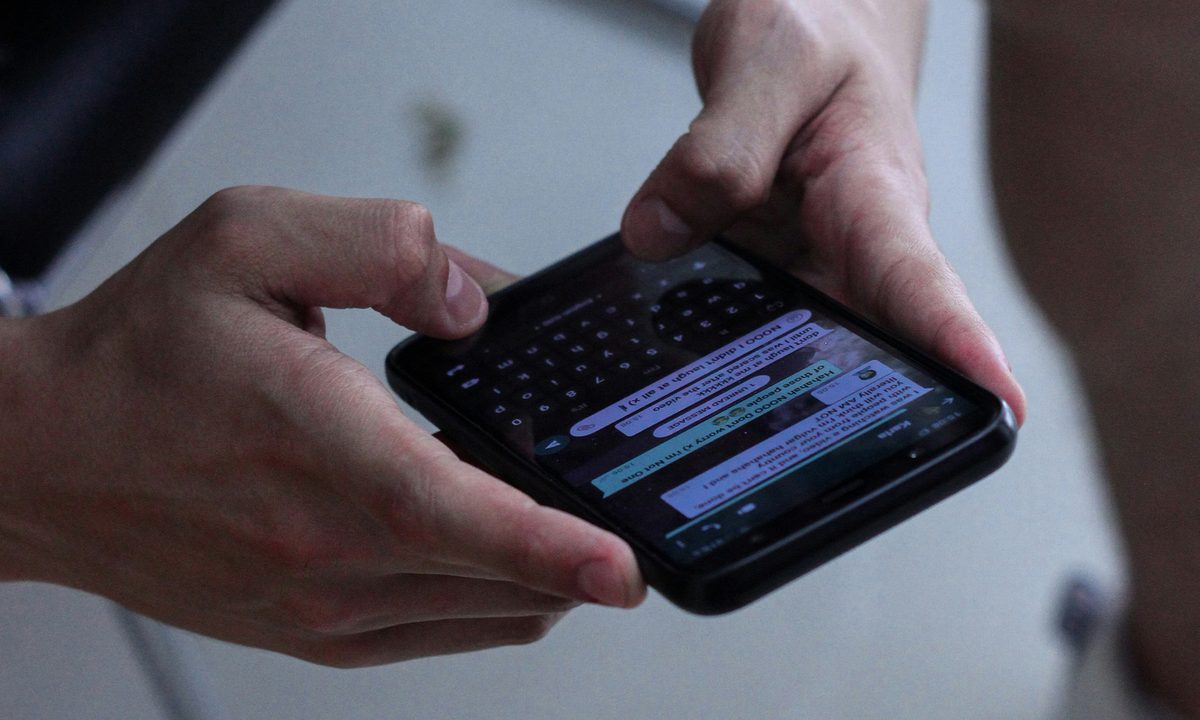 Asterfolio / Unsplash
For decades, tech has been obsessed with making communication faster. Now, apparently, we’ve had enough. As The New York Times reports, the latest trend is slow tech, with apps like Carrier Pidge and Roost deliberately making messages take minutes, hours or even longer to arrive. Yes, we’re talking about digital carrier pigeons. Carrier Pidge launched in April and recently jumped from a few hundred users to more than 75,000, while Roost reportedly reached 650,000 downloads this month.
Apparently, waiting is cool againCarrier Pidge lets you send a message via a digital pigeon whose journey you can track on a map. Its speed is based on real racing pigeons, topping out at 110mph, and there’s even a tiny 0.2% chance your bird disappears, meaning you’ll have to cough up 99 cents for a replacement. Roost takes the idea even further, offering more than 1,000 animals, from pigeons and penguins to snails that crawl along at a wonderfully useless pace.
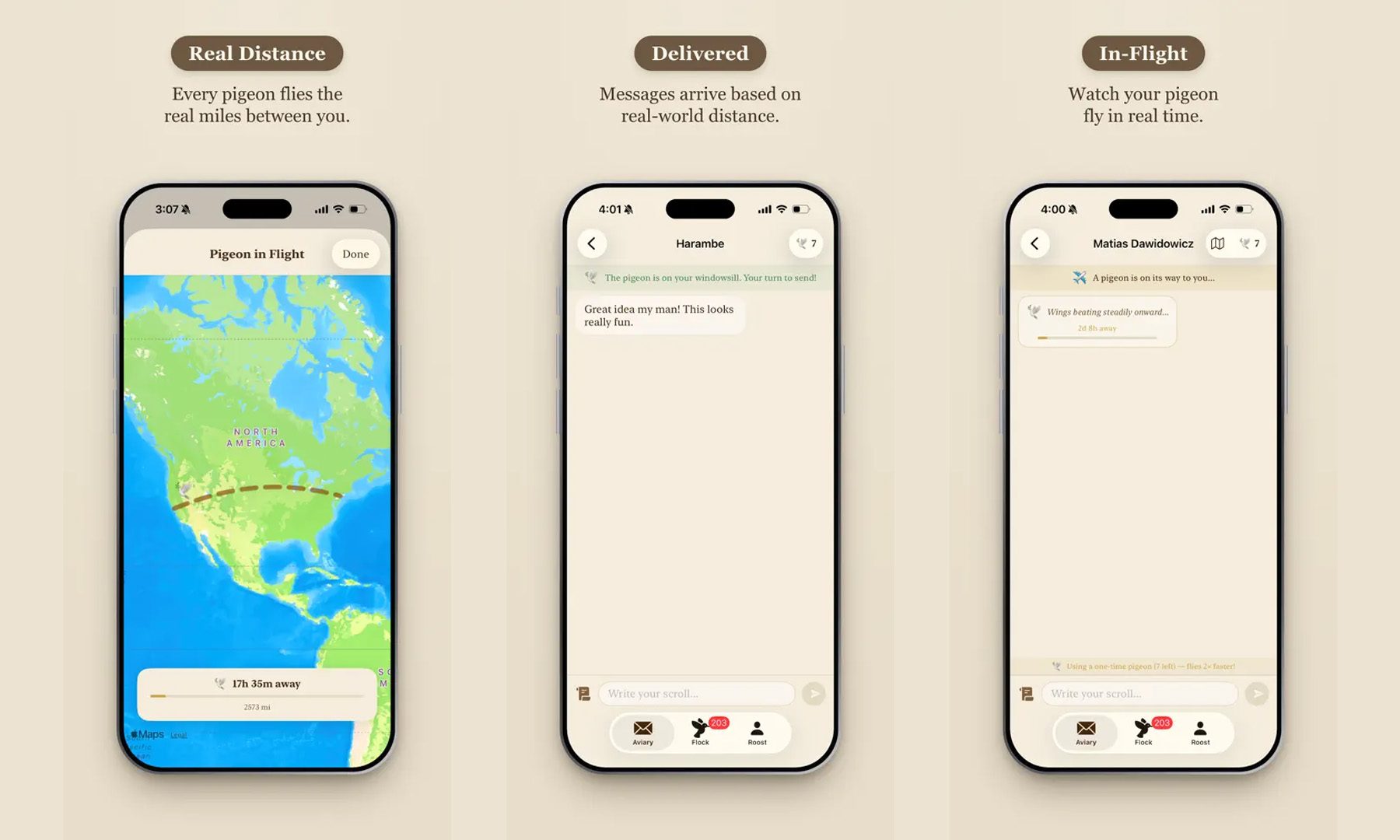 Carrier Pidge App Carrier Pidge
The appeal isn’t really the wildlife. It’s the friction. Instead of another instant notification demanding your attention, you actually have to wait for someone to respond. That may actually matter more than we think: research has suggested that constantly picking up your phone in short bursts can be more mentally taxing than simply spending a long stretch on it. Carrier Pidge’s 29-year-old creator, Noah Iarrobino, previously made an app that charged users 99 cents every time they hit snooze, while Roost creator Logan Mendelsohn comes from the trust-and-safety tech world and is now planning to hire as the app grows.
Maybe our phones got a little too good at being phonesThere may actually be something behind the silliness. A 2023 survey found that 80% of Gen Z adults, defined in the survey as people born after 1997, worried their generation relied too heavily on technology. Cal Newport, a computer science professor at Georgetown University, argues that our brains aren’t particularly well suited to a completely friction-free world where information arrives faster than we can process it.
 Digital Trends
And people aren’t just tolerating the slowness — they’re embracing it. One user told The New York Times that she and her friends even started writing to each other in Bridgerton-esque language, calling one another “my dearest lady.”
Recommended Videos
After decades of making everything faster, maybe the next killer feature really is making us wait. And honestly, if sending a text by pigeon is what it takes to make our phones a little less exhausting, perhaps we shouldn’t laugh at the birds just yet.

Varun is an experienced technology journalist and editor with over eight years in consumer tech media. His work spans…
A tight squeeze could fix the biggest hurdle for solid-state car and gadget batteries
A simple mechanical trick could replace complex chemistry fixes to make solid-state batteries safer, faster, and more reliable.
Solid-state batteries have long been promised as the holy grail of energy storage. They promise to double energy density compared to traditional options, slash charging times, and eliminate the risk of thermal fires. Despite that, the technology has yet to achieve widespread commercial adoption, and the main culprit is dendrites. These microscopic, needle-like structures form inside solid-state batteries during charging, bore through the solid ceramic electrolyte, and bridge the electrodes, causing a short circuit.
Now, researchers from SLAC National Accelerator Laboratory and Stanford University have discovered a surprisingly simple fix for this persistent problem. According to a paper published in the science journal Nature, applying controlled mechanical pressure to the ceramic electrolyte prevents these short circuits, allowing test cells to survive thousands of charge cycles without failing.
Anthropic previews new standard to streamline AI-to-machine connections
The Model Hardware Standard provides a universal translation layer, giving AI agents standard controls to run lab equiment and factory machines.
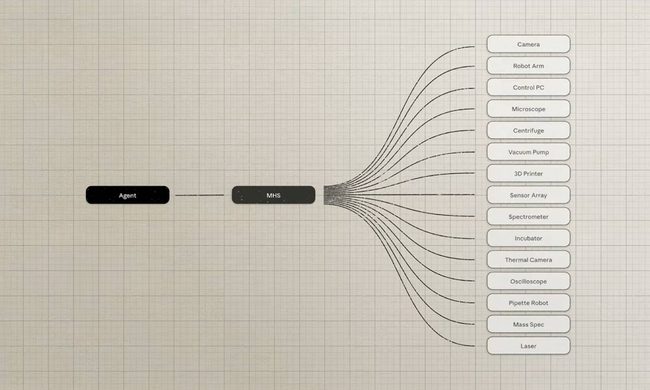
Anthropic has launched a research preview of its Model Hardware Standard (MHS), a shared specification designed to let AI agents safely control lab instruments and factory equipment. The company claims MHS reduces the time required to integrate complex machinery with AI from months down to hours or minutes. The standard is currently available to select research labs and manufacturers via a waitlist, but Anthropic plans to open-source it in the future.
How the standard connects AI to physical devices
Gemini Omni can now extend videos to 40 seconds and upscale them to 4K

Generating a short AI video is one thing; getting several shots to actually look like they belong in the same video is a much harder problem. Google is taking another swing at that with Gemini Omni 1.1 Flash, its latest generative video model aimed at giving creators and developers much more control over what happens between the first frame and the last.
The biggest change is how much of an existing video Gemini can remember when you ask it to continue a scene. Omni 1.1 can look at up to 10 seconds of previous footage for context, rather than relying on just the final second. That should help it keep characters, environments, and the general direction of a scene more consistent instead of effectively guessing what should happen next.
| # | Наименование новости | Тональность | Информативность | Дата публикации |
|---|---|---|---|---|
| 1 | «Это признак нелюбви к себе»: у подростков вошли в моду разбитые смартфоны | -2 | 3 | 11-07-2026 |
| 2 | Share of those 65 and older who are tech users has grown in the past decade | 0 | 8.69 | 13-01-2022 |
| 3 | Google Messages' RCS works well, until it doesn't | 0 | 7.66 | 19-10-2026 |
| 4 | 16 Apple Messages settings I change on every iPhone - and why | 5 | 7 | 02-07-2026 |
| 5 | AI Is Outpacing Cyber Defense: Security Must Shift from Reaction to Readiness | 0 | 5 | 26-06-2026 |
| 6 | Wild retreats for rest, reconnection and renewal: ‘People feel burnt out by our connection to technology’ | 0 | 8.82 | 17-08-2026 |
| 7 | Max возглавил топ бесплатных приложений в Google Play в России | 0 | 0 | 13-08-2025 |
| 8 | A low-tech solution from the past may be your best defense against AI deepfakes | 0 | 17.76 | 21-08-2026 |
| 9 | Every App Is Forcing AI Down My Throat And I'm Experiencing Feature Fatigue | -8 | 6 | 06-07-2026 |
| 10 | Free ChatGPT Users Will Get a Huge Upgrade Next Week | 0 | 6.69 | 07-08-2026 |