Просмотр новости
Найдите то, что Вас интересует
 Спутники
 РН
РН SpaceX
 Роскосмос
 NASA
NASA
СпутникиРНSpaceXРоскосмосNASAUC San Diego researchers have developed inexpensive passive reflective tiles that could help mmWave 5G signals get around walls and other obstacles without requiring power.
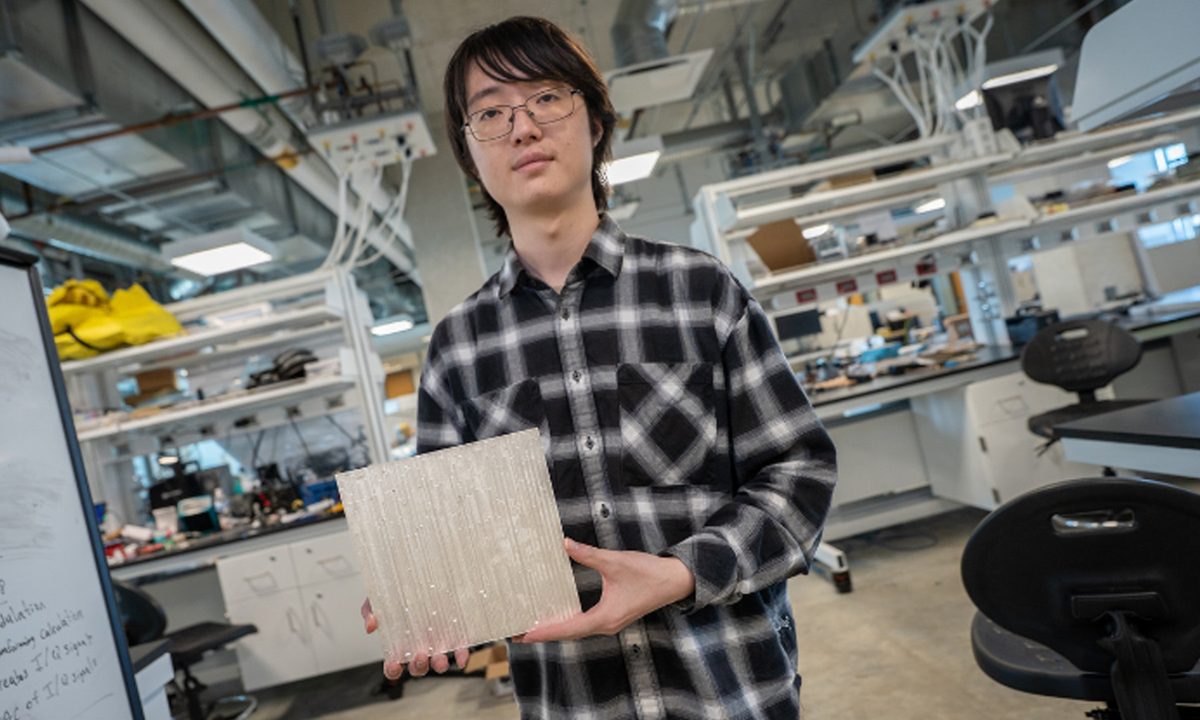 Wuqiong Zhao, UC San Diego PhD student and study co-author, holds a reflective tile.
UC San Diego
Wuqiong Zhao, UC San Diego PhD student and study co-author, holds a reflective tile.
UC San Diego
5G’s millimeter-wave technology can deliver incredibly fast wireless speeds, but it has an annoying weakness: those signals don’t like getting around things. Walls, furniture, people, and even moving a few feet can cause mmWave connections to weaken dramatically. Now, researchers at the University of California San Diego are proposing a surprisingly boring solution: cheap reflective tiles that simply bounce the signal where it needs to go.
The problem with really fast 5GmmWave sits at the higher-frequency end of wireless communications and offers much more bandwidth than conventional cellular frequencies. That’s what makes it attractive for extremely high-speed connections, but the trade-off is propagation. Signals can suffer significant path loss and are particularly vulnerable to obstructions.
 Frederik Lipfert / Unsplash
As you’d expect, that creates a frustrating scenario indoors. A phone might have an excellent mmWave connection in one spot, only for the signal to fall apart after someone walks between it and the access point. Fixing that normally means adding more access points, powered relays, or sophisticated reconfigurable intelligent surfaces, all of which add cost and complexity. Thankfully, UC San Diego’s idea is considerably simpler: don’t generate another signal, just redirect the one that’s already there.
Meet the $2 signal bouncerThe researchers developed passive metasurfaces, essentially 3D-printed reflective tiles designed to redirect mmWave signals. The tiles don’t need batteries, power supplies, control electronics, or constant coordination. Instead, multiple inexpensive surfaces can be arranged around an environment to guide wireless signals toward areas that would otherwise be poorly covered.
 The lightweight 3D-printed tiles nearly double average indoor mmWave data rates without requiring power or network modifications David Baillot / UC San Diego Jacobs School of Engineering
The UC San Diego team calls the approach FlowForm, and its research suggests that networks of these cheap passive surfaces can rival more expensive active approaches. At roughly $2 per tile, the economics are particularly interesting: rather than installing another complicated piece of networking hardware every time a signal hits a troublesome wall, a building could potentially use a collection of almost comically simple reflectors.
The boring solution might be the clever oneOf course, this doesn’t mean every 5G tower suddenly needs to be surrounded by a wall of shiny tiles. The technology is still research, and real-world deployment would involve figuring out how many surfaces are needed, where they should be placed, and how well they perform in different environments.
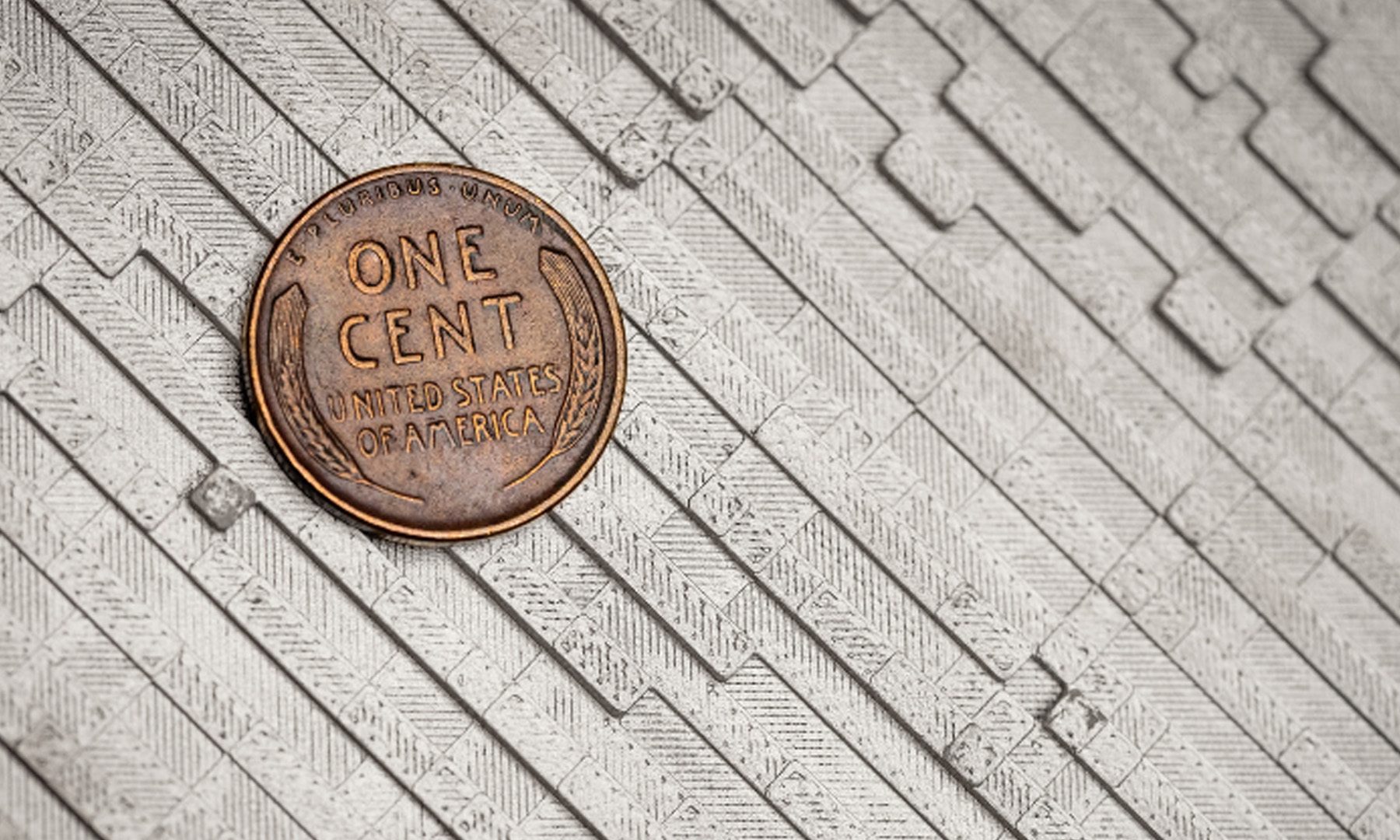 Each 6×6-inch tile contains thousands of tiny elements that passively redirect mmWave signals around obstacles UC San Diego
But the underlying idea is compelling because it tackles one of mmWave’s biggest problems without adding another power-hungry gadget to the network. As wireless systems push toward ever-higher frequencies and faster connections, sometimes the cleverest solution isn’t another complicated chip or antenna. Sometimes, apparently, it’s a $2 piece of plastic telling a radio signal where to go.

Varun is an experienced technology journalist and editor with over eight years in consumer tech media. His work spans…
A tight squeeze could fix the biggest hurdle for solid-state car and gadget batteries
A simple mechanical trick could replace complex chemistry fixes to make solid-state batteries safer, faster, and more reliable.
Solid-state batteries have long been promised as the holy grail of energy storage. They promise to double energy density compared to traditional options, slash charging times, and eliminate the risk of thermal fires. Despite that, the technology has yet to achieve widespread commercial adoption, and the main culprit is dendrites. These microscopic, needle-like structures form inside solid-state batteries during charging, bore through the solid ceramic electrolyte, and bridge the electrodes, causing a short circuit.
Now, researchers from SLAC National Accelerator Laboratory and Stanford University have discovered a surprisingly simple fix for this persistent problem. According to a paper published in the science journal Nature, applying controlled mechanical pressure to the ceramic electrolyte prevents these short circuits, allowing test cells to survive thousands of charge cycles without failing.
Anthropic previews new standard to streamline AI-to-machine connections
The Model Hardware Standard provides a universal translation layer, giving AI agents standard controls to run lab equiment and factory machines.
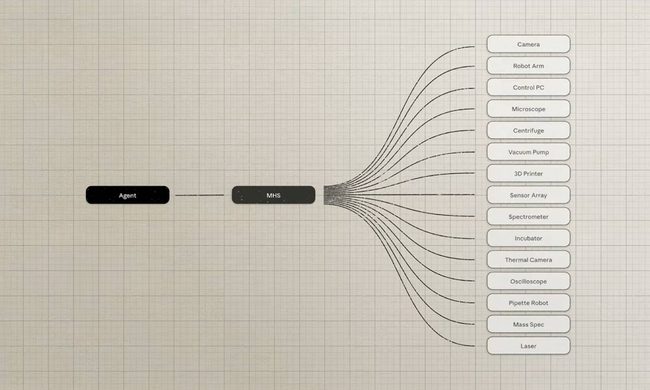
Anthropic has launched a research preview of its Model Hardware Standard (MHS), a shared specification designed to let AI agents safely control lab instruments and factory equipment. The company claims MHS reduces the time required to integrate complex machinery with AI from months down to hours or minutes. The standard is currently available to select research labs and manufacturers via a waitlist, but Anthropic plans to open-source it in the future.
How the standard connects AI to physical devices
Gemini Omni can now extend videos to 40 seconds and upscale them to 4K

Generating a short AI video is one thing; getting several shots to actually look like they belong in the same video is a much harder problem. Google is taking another swing at that with Gemini Omni 1.1 Flash, its latest generative video model aimed at giving creators and developers much more control over what happens between the first frame and the last.
The biggest change is how much of an existing video Gemini can remember when you ask it to continue a scene. Omni 1.1 can look at up to 10 seconds of previous footage for context, rather than relying on just the final second. That should help it keep characters, environments, and the general direction of a scene more consistent instead of effectively guessing what should happen next.
| # | Наименование новости | Тональность | Информативность | Дата публикации |
|---|---|---|---|---|
| 1 | Создано пассивное покрытие для стен с функцией ретрансляции Wi-Fi и 6G | 0 | 13.25 | 19-08-2026 |
| 2 | Метакристаллические панели помогут радиоволнам огибать препятствия | 2 | 7 | 23-06-2026 |
| 3 | В МЭИ создали волноводный переходник для улучшения передачи радиосигналов 5G-связи | 0 | 0 | 21-03-2025 |
| 4 | Scientists create ultra-low loss optical device that traps light on a chip | 0 | 9.28 | 24-02-2026 |
| 5 | A tiny “rainbow on a chip” could help supercharge 6G networks | 0 | 9.05 | 24-08-2026 |
| 6 | 'Rainbow-on-a-chip' could help unlock 6G networks and precision timing for quantum technologies | 0 | 14.39 | 21-08-2026 |
| 7 | A quantum metasurface breakthrough could finally close the terahertz gap | 0 | 8.31 | 31-05-2026 |
| 8 | Backyard leafhoppers inspire next-generation cloaking tech | 0 | 15.98 | 13-04-2026 |
| 9 | UCLA scientists discover how to guide heat like light at room temperature | 0 | 10.42 | 07-08-2026 |
| 10 | Researchers can make headphones leak audio through a wall, but the 30-meter claim has a few caveats | 0 | 7.35 | 21-09-2026 |