Просмотр новости
Найдите то, что Вас интересует
 Спутники
 РН
РН SpaceX
 Роскосмос
 NASA
NASA
СпутникиРНSpaceXРоскосмосNASAHeart Aerospace’s enormous X1 demonstrator has completed its first flight, offering an early glimpse at what battery-powered regional air travel could eventually look like.
 Heart Aerospace
Electric cars have become a pretty normal sight on the road, but replacing jet fuel with batteries gets considerably more complicated when you’re trying to lift thousands of pounds into the sky. Heart Aerospace has just shown that it can be done at a surprisingly large scale.
The company’s X1 demonstrator has completed its maiden flight, becoming what Heart says is the largest battery-electric aircraft ever flown. The X1 has a 106-foot wingspan, stretches 76 feet from nose to tail, and weighs more than 25,000 pounds at takeoff. The piloted flight took place on August 12 at Plattsburgh International Airport in New York and lasted 27 minutes. During that time, the X1 climbed to 1,100 feet above ground level, while its battery-powered propulsion system delivered more than one megawatt of power.
The most surprising number might be $5There’s another figure from the flight that immediately caught my attention: electricity. Heart says the X1 used roughly $5 worth of it during the entire 27-minute test. Of course, that doesn’t suddenly mean airlines will be selling $10 plane tickets. Plenty of other costs are involved in operating an aircraft, and the X1 is still a technology demonstrator rather than something you’ll be boarding for your next vacation.
 Heart Aerospace
But it does show why electric aircraft are so interesting, especially for shorter regional flights. Jet fuel prices can swing dramatically, while electric propulsion could eventually give airlines another way to reduce their energy and maintenance costs. The first flight wasn’t about getting the X1 off the ground, either. Conducted under an experimental certificate from the FAA, the test covered the basics you’d expect an aircraft to handle, including taxiing, takeoff, climbing, maneuvering, and landing. More importantly, Heart built the X1 at full scale to test technology destined for something it actually intends to sell.
This is all leading to a 30-seat electric airlinerThat aircraft is the ES-30, a 30-seat regional plane that the company hopes to put into commercial service in 2031. Unlike the fully electric X1 demonstrator, the ES-30 is being developed with a hybrid-electric propulsion system, giving it more flexibility for real-world airline operations. Heart believes the ES-30 could cut operating costs by more than 40% compared with older regional aircraft, thanks partly to cheaper energy and simpler electric systems that could require less maintenance.
 Heart Aerospace
There’s already some serious interest behind the project. United Airlines, Air Canada, and JSX are among the carriers that have committed to the ES-30. However, there’s still a long road between Wednesday’s test flight and passengers actually stepping aboard one. Heart is currently building its first pre-production ES-30 at its Los Angeles facility, with flight testing expected to begin in 2028. For now, the X1’s first flight is about proving that electric aviation can work on a much bigger scale. Flying a 25,000-pound aircraft entirely on batteries for 27 minutes is a pretty compelling place to start.

Shimul is a contributor at Digital Trends, with over five years of experience in the tech space.
A tight squeeze could fix the biggest hurdle for solid-state car and gadget batteries
A simple mechanical trick could replace complex chemistry fixes to make solid-state batteries safer, faster, and more reliable.
Solid-state batteries have long been promised as the holy grail of energy storage. They promise to double energy density compared to traditional options, slash charging times, and eliminate the risk of thermal fires. Despite that, the technology has yet to achieve widespread commercial adoption, and the main culprit is dendrites. These microscopic, needle-like structures form inside solid-state batteries during charging, bore through the solid ceramic electrolyte, and bridge the electrodes, causing a short circuit.
Now, researchers from SLAC National Accelerator Laboratory and Stanford University have discovered a surprisingly simple fix for this persistent problem. According to a paper published in the science journal Nature, applying controlled mechanical pressure to the ceramic electrolyte prevents these short circuits, allowing test cells to survive thousands of charge cycles without failing.
Anthropic previews new standard to streamline AI-to-machine connections
The Model Hardware Standard provides a universal translation layer, giving AI agents standard controls to run lab equiment and factory machines.
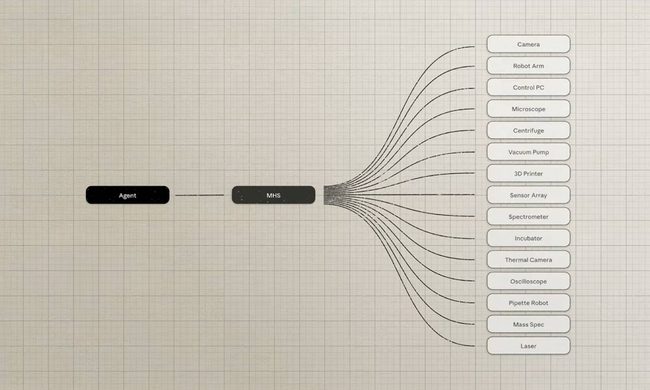
Anthropic has launched a research preview of its Model Hardware Standard (MHS), a shared specification designed to let AI agents safely control lab instruments and factory equipment. The company claims MHS reduces the time required to integrate complex machinery with AI from months down to hours or minutes. The standard is currently available to select research labs and manufacturers via a waitlist, but Anthropic plans to open-source it in the future.
How the standard connects AI to physical devices
Gemini Omni can now extend videos to 40 seconds and upscale them to 4K

Generating a short AI video is one thing; getting several shots to actually look like they belong in the same video is a much harder problem. Google is taking another swing at that with Gemini Omni 1.1 Flash, its latest generative video model aimed at giving creators and developers much more control over what happens between the first frame and the last.
The biggest change is how much of an existing video Gemini can remember when you ask it to continue a scene. Omni 1.1 can look at up to 10 seconds of previous footage for context, rather than relying on just the final second. That should help it keep characters, environments, and the general direction of a scene more consistent instead of effectively guessing what should happen next.