Просмотр новости
Найдите то, что Вас интересует
 Спутники
 РН
РН SpaceX
 Роскосмос
 NASA
NASA
СпутникиРНSpaceXРоскосмосNASAThe problem is not famous people speaking out, as they always have. It is the feeling that leaders have failed, obliging celebrities to fill the vacuumEvery time a public figure in entertainment speaks up about politics in a way deemed “controversial”, it is as if it’s the first time that has ever happened. The outrage is fresh; critics rediscover and announce, as if they have just captured an elusive, profound notion, that art should be separate from politics. A form of disciplining is dispensed. Please, Mr or Miss Moneybags, with your preening notions that you have anything intelligent or informed to say about immigration policy or Palestine. Stick to football. Stick to pop music. Stick to acting. Stick to children’s shows.Even at a time when a political moment has engulfed everything, this response continues to be born again, without regard for history or ability to confront rupture. The horror of Gaza has broken the art world, roiled Hollywood, fractured literary institutions. And still, as Ed Sheeran stands alone on stage following the withdrawal of all his support acts (in solidarity with Macklemore, who was removed from the tour due to a pro-Palestinian speech), he told his audience that he wants his music to be “about unity, not division”. The speed at which his tour unravelled is not evidence of the incompatibility of music and politics, necessitating that they remain separate to avoid that “division”. It is a study in how it is becoming increasingly unnatural to separate them. Continue reading...
Every time a public figure in entertainment speaks up about politics in a way deemed “controversial”, it is as if it’s the first time that has ever happened. The outrage is fresh; critics rediscover and announce, as if they have just captured an elusive, profound notion, that art should be separate from politics. A form of disciplining is dispensed. Please, Mr or Miss Moneybags, with your preening notions that you have anything intelligent or informed to say about immigration policy or Palestine. Stick to football. Stick to pop music. Stick to acting. Stick to children’s shows.
Even at a time when a political moment has engulfed everything, this response continues to be born again, without regard for history or ability to confront rupture. The horror of Gaza has broken the art world, roiled Hollywood, fractured literary institutions. And still, as Ed Sheeran stands alone on stage following the withdrawal of all his support acts (in solidarity with Macklemore, who was removed from the tour due to a pro-Palestinian speech), he told his audience that he wants his music to be “about unity, not division”. The speed at which his tour unravelled is not evidence of the incompatibility of music and politics, necessitating that they remain separate to avoid that “division”. It is a study in how it is becoming increasingly unnatural to separate them.

Again, this is not new. The enmeshment of entertainment and politics is organic and part of many conflicts and political outrages in recent memory. Vietnam, South Africa, Darfur – all had a cohort of celebrities involved in objecting, lobbying and raising awareness. Figures such as Macklemore or Gary Lineker or Mark Ruffalo or Ms Rachel are not breaking with convention and plunging industries into turmoil and controversy, but partaking in a long legacy of activism that includes, to name a few, Nina Simone, Donald Sutherland, Kurt Vonnegut, Marlon Brando, Mia Farrow, George Michael and George Clooney.
You can disagree with the stances they have taken. But the belief that they are somehow not qualified to take and express them, and that art and entertainment are sacrosanct, is ignorant at best, disingenuous at worst. Public figures are people who have the same passions that everybody else has, and they have politics that they wish to advance with the tools at their disposal. Some people go on protests, give money, write to their representatives; others have a public forum and a profile they can leverage.
They don’t have a responsibility to do so, but absolutely have the right to. And I suspect the reason they are met with such belittlement and outrage by their opponents is that there is an understanding that once politics spills over into entertainment, an uncontainable sort of trouble starts. This is where the separation of art and politics becomes a denial of the role the former plays in our psyches. Artists, writers, entertainers and sportspeople provide escapism, yes, if that’s what you want to get out of their work, but they also channel an expansiveness of the soul. They are fundamentally a collectivising force, one trained on a talent that stirs feeling. That is why you pick up a book or listen to a song or watch a movie or follow a team, to feel something. It is an exercise in being human, often in communion with others.
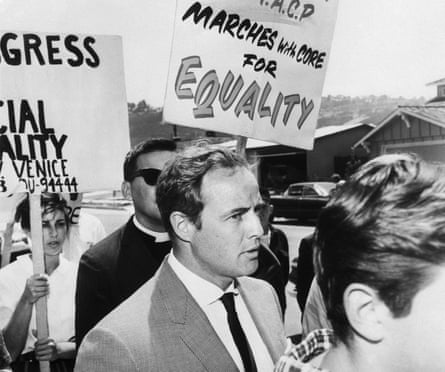
Once politics enters that relationship, it becomes ungovernable. It can move the parameters of public opinion and discourse in ways that are hard to mediate, so direct is the relationship between the artists and their audience. Which is why the main criterion that renders this activism laudable or not is how much it is blessed by political and economic establishments.
Often it is not a problem in itself; sometimes it is even rewarded. Sheeran himself headlined a concert for Ukraine. Don Cheadle and George Clooney received accolades for their Sudan activism. But when artists’ politics clashes with powerful sponsors, as it did when Gillette Stadium owner Robert Kraft removed Macklemore from the Sheeran lineup, it all becomes less straightforward, so complicated, so bedevilled by nuance that could not possibly be litigated adequately by dilettantes.
These collisions are an automatic feature of societies in which politics is failing. The outrage in Palestine is roiling culture because it has been so smothered in politics, because the pain and fury resulting from what the world is witnessing has not been appropriately channelled or responded to by a representative leadership – in fact, it has been policed and criminalised. The spillover into every other part of our lives is inevitable. A healthy political culture should view these spillovers not as crude transgressions into private spaces of consumption, but democracy by other means, because electoral democracy has not squared up to the task.
skip past newsletter promotionafter newsletter promotion
As long as that remains the case, any demands that politics stay out of – you can insert any industry here – are summoning a world that does not exist, cannot exist and has never existed. In fact, they are asking for a sort of bovine state in which we are shepherded from trough to trough, chewing for momentary satiation on a cultural diet that must remain disconnected from feeling, connection and relation to other human beings. This can be a resonant message in a world in which there is so much duress. But it is an entirely unnatural state that keeps being disrupted by many people looking up from their moments of apportioned relief to be confronted with suffering of such magnitude that its acceptance can only be achieved through a sort of excising of humanity.
The problem is not the outspoken artists and entertainers; the problem is what they are speaking about. I wish that the enduring agony of Palestinians were not litigated by the sound and fury and discursive froth of high entertainment, but this is where the politics has brought us. If you want to leave politics out of it, then demand that the politics do the work. Until then, it will be in your music and literature and film, fighting the coercion and bullying that hides behind concern for purity of art, but is really in the business of making you lose your soul.
Nesrine Malik is a Guardian columnist