Просмотр новости
Найдите то, что Вас интересует
 Спутники
 РН
РН SpaceX
 Роскосмос
 NASA
NASA
СпутникиРНSpaceXРоскосмосNASAmonthly issue of the UNRIC Info Point & Library Newsletter featuring new UN websites, publications and information products
Topic of the month: 81st Session of the General Assembly
The post UNRIC Info Point & Library Newsletter: September 2026 appeared first on United Nations Western Europe.
New UN websites & publications
TOPIC OF THE MONTH: 81st Session of the General Assembly

English: https://www.un.org/en/ga/81/
French: https://www.un.org/fr/ga/81/
Spanish: https://www.un.org/es/ga/81/
The 81st regular session of the General Assembly opened on 8 September 2026, the General Debate will commence on 22 September 2026.

General Assembly High-level Week, 18 – 28 September 2026
English: https://www.un.org/en/high-level-week-2026
French: https://www.un.org/fr/high-level-week-2026
Spanish: https://www.un.org/es/high-level-week-2026
The 81st session of the United Nations General Assembly will once again convene world leaders to revitalize global cooperation, give a critical push to the Sustainable Development Goals and drive collective action for peace, dignity and equality on a healthy planet. Two key platforms will spotlight action and solutions: the flagship SDG Media Zone produced by the UN Department of Global Communications with dynamic interviews and panel discussions on SDG solutions held from 21–25 September; and the Goals Lounge, convened by the UN Deputy Secretary-General and hosted by the UN Office for Partnerships from 14-25 September, featuring unscripted dialogues, deep dives into vital issues and interactive experiences.
High-Level Meetings of the 81st Session of the General Assembly
English: https://www.un.org/en/ga/81/meetings/
French: https://www.un.org/fr/ga/81/meetings/
Spanish: https://www.un.org/es/ga/81/meetings/
Provisional Schedule
Additional information
 Assembly for Peace
https://assemblyforpeace.unu.edu/
A new digital platform developed by United Nations University Centre for Policy Research (UNU-CPR) provides Member States and policymakers with an interactive resource on UN General Assembly powers on peace and security matters – bringing together decades of practice, precedents and potential courses of action in an accessible and searchable format.
The platform builds on 2024’s Assembly for Peace: A Digital Handbook on the UN General Assembly’s Past Practice on Peace and Security, developed and produced by UNU-CPR for the President of the General Assembly at its 78th session, in response to General Assembly resolution 77/335. It further responds to the Assembly’s encouragement in resolution 79/327 for annual updates and wider dissemination of the Handbook.
The new platform converts the original PDF Handbook into a fully interactive resource while incorporating updates from recent General Assembly sessions and including additional case studies and links to further research, learning tools and summary materials. It provides a new platform for preserving and expanding institutional knowledge of General Assembly practice.
UN in General
 Spotlight series
English: https://www.un.org/en/spotlight
French: https://www.un.org/fr/spotlight
Spanish: https://www.un.org/es/spotlight
The UN places a spotlight on specific countries and situations — including Haiti, DR Congo, Yemen, Afghanistan, and Myanmar — because these are crises that are not making global headlines, yet still involve significant human suffering.
The goal is to ensure these overlooked emergencies receive the international attention and support they deserve, by working within the UN system to capture human stories from areas that are difficult for reporters to access, and sharing them with international media.
Alongside these under-reported situations, focus is also given to higher-profile conflicts such as those in the Middle East, Sudan, and Ukraine, where millions of innocent civilians require protection under humanitarian principles and human rights law.
Across all these situations, the overarching drive is to generate empathy, mobilize action, and secure humanitarian aid and protection for the most vulnerable people in the world.
 Strengthening Information Integrity: Issue Brief 3 – Children, Youth and Information Integrity (August 2026)
https://www.un.org/sites/un2.un.org/files/un-information-integrity-issue-brief-03.pdf
Children and youth often bear the brunt of risks in today’s information ecosystem and will be most directly affected by the technologies reshaping them, according to this new issue brief launched on 10 August 2026 by the United Nations Department of Global Communications.
The paper, launched ahead of International Youth Day (12 August), applies the United Nations Global Principles for Information Integrity to children’s rights and youth engagement. Strengthening Information Integrity: Issue Brief 3 urges governments, technology companies, advertisers, media and researchers to advance protection and participation together.
It follows the United Nations Secretary-General António Guterres’ call last month, at the opening of the inaugural Global Dialogue on Artificial Intelligence Governance, for an AI Child Safety Pledge covering any system a child can reach.
 UNRIC Library Backgrounder: Critical Minerals – Selected Online Resources
https://unric.org/en/unric-library-backgrounder-critical-minerals/
New publications on this topic were introduced in the May issue of our UNRIC Info Point & Library Newsletter. Now an UNRIC Library Backgrounder on “Critical Minerals” is also available, listing UN entities working on this topic, as well as UN conference & events that have taken place. Additional publications and UN documents are also included as are statements by UN officials.
 UNDRR Portal: El Niño and anticipatory risk management
https://www.undrr.org/climate-action-and-disaster-risk-reduction/el-nino
El Niño conditions are projected to develop during the second half of 2026, with potentially significant consequences across multiple regions and sectors. While impacts will vary geographically, the greatest risks are expected in countries where El Niño-related hazards intersect with poverty, food insecurity, fragility, conflict, displacement, and limited institutional capacity.
 El Niño/La Niña Update (WMO, August 2026)
https://wmo.int/resources/publication-series/el-ninola-nina-updates/august-2026
El Niño is firmly established and will intensify into a very strong event in the coming months, with big impacts on rainfall and temperature patterns and associated risks of floods, drought and extreme heat, according to this new update from the World Meteorological Organization (WMO), released on 3 September 2026.
Forecasts from WMO’s Global Producing Centres indicate an “exceptionally high likelihood of nearly 100%” that El Niño will persist through to February 2027. This is the first time that a WMO El Niño/La Niña Update has been so unequivocal, reflecting the strong agreement within WMO’s extensive network.
Fueled by exceptionally warm ocean conditions across the tropical Pacific, El Niño is expected to strengthen further during the coming months to a very strong intensity before peaking towards the end of this year, with climate impacts continuing well into 2027.
Economic Growth and Sustainable Development
 Behind the Screens in South Africa: Challenges, Opportunities, and Needs of Digital Content Creators (UNESCO)
https://unesdoc.unesco.org/ark:/48223/pf0000399275
UNESCO has released this new research report shedding light on the growing influence, practices and challenges of digital content creators within South Africa’s evolving information ecosystem.
Conducted by the Centre for Analytics and Behavioural Change (CABC) with the support of UNESCO’s Social Media 4 Peace” (SM4P) project, funded by the European Union, the study examines the motivations, Media and Information Literacy (MIL) competencies, ethical practices and challenges of digital content creators in South Africa. The research draws on a nationwide survey of 48 content creators and in-depth interviews with 11 creators.
The findings show that while mainstream news media remains an important source of information for South African content creators, creators are increasingly conducting their own research, drawing on personal experiences and consulting knowledgeable experts. This reflects the expanding role creators play in how information is produced, interpreted and shared with online audiences.
 Biodiversity and healthy diets: Challenges and opportunities for youth engagement (FAO)
https://doi.org/10.4060/ce1185en
This report explores the linkages between biodiversity and diets, with a particular focus on the role that youth can play in shaping more resilient, inclusive and sustainable agrifood systems. It is intended to support young leaders and change-makers who seek to contribute to the transformation of global agrifood systems while mitigating biodiversity loss to promote healthy diets. The report draws on a desk review of academic sources, reports and grey literature, as well as global case studies of successful youth-led initiatives that enhance biodiversity and healthy diets, highlighting practical entry points for youth engagement and action.
 The Drought Nexus: How food security, conflicts, land and water are interlinked (UNCCD)
https://www.unccd.int/resources/brief/drought-nexus-how-food-security-conflicts-land-and-water-are-interlinked
Drought is no longer a single-sector crisis. This policy brief introduces the drought nexus, showing how water scarcity, land degradation, food insecurity, energy disruption, migration, health risks and conflict can reinforce one another across borders.
Drawing on cases from Mongolia, the Sahel, the Mediterranean and global transport and energy systems, it calls for coordinated governance, aligned finance and integrated land–water management.
The brief sets out recommendations for embedding drought resilience in national plans, strengthening cross-sector institutions, expanding early warning systems and scaling land restoration. Its message is clear: proactive, whole-of-society action can turn drought from recurring catastrophe into manageable risk.

Early Warnings for All booklet (UNDRR / WMO)
https://www.undrr.org/publication/educational-materials/early-warnings-all-booklet
The United Nations Office for Disaster Risk Reduction (UNDRR) collaborated with the World Meteorological Organization (WMO) and partnered with COPE Disaster Champions to develop this child-friendly booklet on Early Warning Systems (EWS).
 Five years of the Great Green Wall Accelerator: A journey of restoration, resilience and regional collaboration (UNCCD)
https://www.unccd.int/resources/reports/five-years-great-green-wall-accelerator-journey-restoration-resilience-and
The report shows progress in restoring land, creating jobs and building resilience across the Sahel, while highlighting the scale of the work still ahead. Challenges persist, particularly in data completeness, coordination across actors and the time required to translate financial commitments into on-the-ground results. Stronger national validation, more complete reporting and sustained political leadership will be needed to turn commitments into lasting impact.
National coalitions are expected to play a growing role in aligning ministries, donors, civil society and local actors. This progress is supported by a broad coalition of partners working across the region. The next five years will be critical in turning these systems into real impact on the ground. The Great Green Wall is beginning to move from ambition to more visible and coordinated results—grounded not only in restoration, but in jobs, resilience and opportunity across Africa’s drylands.
 From Rules to Enforcement: Managing Capacity Constraints in Quality Infrastructure (UNECE)
https://unece.org/info/Trade/WP.6/pub/415737
Markets are becoming more complex, but the capacity to oversee them has not necessarily kept pace. Products are increasingly digital and interconnected, supply chains are more fragmented, and regulatory requirements are expanding—putting traditional models of inspection and testing under growing pressure.
This new UNECE report examines how regulatory and quality infrastructure systems can adapt through risk-based prioritization, strategic selectivity, conformity assessment, digital traceability, information-sharing and cross-border cooperation.
The publication asks a central question: when comprehensive control is no longer feasible, how can regulatory systems remain credible, proportionate and effective? It offers insights for market surveillance authorities, regulators and policymakers seeking more operationally realistic approaches to enforcement in increasingly complex global markets.
 Funding and financing strategies for urban forests (UNECE)
https://unece.org/forests/publications/funding-and-financing-strategies-urban-forests
Urban forests are increasingly recognized as essential urban infrastructure, yet funding for their planning, implementation, and long term maintenance remains fragmented across stakeholders, budgets, land ownership regimes, and time horizons. Benefits accrue to multiple sectors – health, climate adaptation, biodiversity, water management, mobility – while costs are typically borne by a limited set of municipal budgets, creating persistent funding gaps and coordination challenges.
This Quick Guide on Urban Forest Funding and Finance Strategies examines how cities can mobilize, combine and optimize diverse funding and financing sources to address these gaps. It maps public, not for profit, and for profit approaches alongside the municipal capabilities required to access and manage them, including strategic planning, governance, monitoring, and citizen engagement. Drawing on case studies, the guide illustrates how regulatory tools, public expenditure, philanthropy, community participation, private finance, and blended models can be aligned to support urban forests over their full life cycle.
The guide provides a practical framework to support policymakers and practitioners in developing coherent, equitable, and durable funding strategies for urban forests within broader urban development and climate objectives, while strengthening the institutional capabilities needed to implement them successfully.
 Global Employment Trends for Youth 2026: Back to the future (ILO)
English: https://www.ilo.org/sites/default/files/2026-08/9789220437612_PDFA_Web_ENG.pdf
French: https://www.ilo.org/sites/default/files/2026-08/35070_PDFA_Web_FRE.pdf
Spanish: https://www.ilo.org/sites/default/files/2026-08/35071_PDFA_Web_SPA.pdf
Italian: https://www.ilo.org/sites/default/files/2026-08/35075_PDF_Web_ITA.pdf
Global youth unemployment is rising as stagnant economic growth and weak job creation increase barriers to job entry for young people and push more of them outside employment, education or training, according to this new report from the International Labour Organization (ILO). The Global Employment Trends for Youth 2026: Back to the future report shows that the global youth unemployment rate rose to 12.4 per cent in 2025, equivalent to 67 million unemployed people aged 15 to 24 years. At the same time, the share of young people not in employment, education or training (NEET) increased slightly to 20 per cent, affecting more than 257 million people. Some of the sharpest rises in youth unemployment have been in higher-income economies, frustrating the aspirations of millions of young people at the start of their working lives.

Hidden assets: The economic and health case for climate and clean air action
https://wedocs.unep.org/handle/20.500.11822/49870
Every US$1 invested in tackling climate change and air pollution together can generate around US$15 in economic benefits, according to this report published on 7 September by the UN Environment Programme (UNEP) and the Climate and Clean Air Coalition (CCAC). This is higher than tackling climate and clean air separately, and it includes both market and non-market economic gains.
Released on the International Day of Clean Air for Blue Skies, the report is the first comprehensive global economic assessment of integrated climate and clean-air action.
Jurisdictional Capital and AI Regulation: Evidence from the EU AI Act (IMF Working Paper No. 2026/180)
https://doi.org/10.5089/9798229060196.001
“Abstract: We study how AI regulation affects firm valuation using the EU Artificial Intelligence Act, the world’s first comprehensive AI framework. In an event study around the April 2021 proposal, we find firms combining deeper EU presence with faster AI hiring earned higher announcement returns, suggesting markets value “jurisdictional capital”—experience in the EU regulatory environment helps firms navigate the AI regulation. The effect is stronger for high-risk AI, for firms with stable and concentrated EU presence, or prior compliance experience, unexplained by size, foreign exposure, or lobbying. EU-embedded, AI-expanding firms increase within-firm EU revenue share when peers are less embedded.”
 Limiting Overshoot – Navigating exceedance of 1.5°C and pathways towards return (UNEP)
https://www.unep.org/resources/limiting-overshoot-navigating-exceedance
Global temperature rise is set to cross 1.5°C, likely within the next few years, pushing climate risks and impacts to increasingly dangerous heights, but it is still possible to bring temperatures down and achieve global goals in the Paris Agreement, according to this new UN Environment Programme (UNEP) report, released on 2 September 2026.
The report identifies an ‘overshoot, peak, and decline’ pathway as the best remaining option to minimize the magnitude and duration of this overshoot and try to return to below 1.5°C as soon as possible.
see also: Overshoot explained: 5 things to understand about a world beyond 1.5°C (2 September 2026): https://www.unep.org/news-and-stories/story/overshoot-explained-5-things-understand-about-world-beyond-15degc
Locked Out: Drivers and Economic Implications of Declining Housing Affordability in Europe (IMF Working Paper No. 2026/177)
https://doi.org/10.5089/9798229058599.001
Amid sharp house price increases in some parts of Europe, housing affordability has again become one of the main concern of households. This paper conducts three complementary sets of analyses to shed light on the drivers and economic implications of declining housing affordability. First, using a structural VAR, we show that supply-side factors have become increasingly prominent drivers of house prices—a notable shift from the credit-driven price increases that preceded the Global Financial Crisis. Second, drawing on household-level EU-SILC data, we argue that the burden has fallen disproportionately on lower-income urban renters, who face both rising rents and diminishing prospects of transitioning to homeownership. This is especially true for financially more vulnerable renters who have seen their probability of becoming home owners fall by more than half since the pre-GFC period. Third, we provide new empirical evidence that the resulting widening of income and wealth gaps between owners and renters is compounded by the efficiency cost of reduced labor mobility, as high housing costs make it harder for workers to move to more productive locations – quantitively, housing affordability constraints might have led to around one million foregone moves within the EU over the past decade. The analyses underpin the policy recommendations to alleviate housing affordability challenges set out in the IMF’s 2026 Euro Area consultation, including the need to focus on national measures to boost housing supply, with a complementary role for EU-level action.
 Progress on water, sanitation, hygiene, environmental cleaning and waste management in health care facilities 2015–2025
https://www.who.int/publications/m/item/progress-on-water–sanitation–hygiene–environmental-cleaning-and-waste-management-in-health-care-facilities-2015-2025
This new WHO and UNICEF report reveals significant gaps in essential water, sanitation, hygiene and environmental health services in health-care facilities worldwide. Despite notable gains since 2015, only four in ten facilities meet basic sanitation standards and fewer than six in ten achieve basic environmental cleaning standards such patient rooms and wards, operating theatres, examination and treatment areas, toilets and sanitation facilities, leaving patients and health workers exposed to preventable health risks. The report provides the clearest global picture yet of these essential services in health-care facilities.
 Report of the Knowledge Community on responsible artificial intelligence in health (WHO/Europe)
https://www.who.int/europe/publications/i/item/WHO-EURO-2026-13381-53155-83077
Governance readiness, not speed of deployment, should be the measure of responsible progress on artificial intelligence (AI) in health systems, according to this new report published by the WHO Regional Office for Europe (WHO/Europe) on 1 September 2026.
The report presents the findings of WHO’s first-ever Knowledge Community on responsible AI in health, a 5-week structured online dialogue held between October and December 2025. The initiative brought together researchers, policy-makers and digital health experts from 105 countries from the WHO European Region and beyond to build shared understanding of what responsible AI in health means in practice and what it will take to achieve it.
 Resilient Rangeland Futures: Insights and Pathways for Thriving Landscapes and People (UNDP)
https://www.undp.org/publications/resilient-rangelands-futures
Over half of the world’s land surface is rangelands: vast landscapes covered by grass, shrubs, woodlands and other hardy plants. In our collective imaginations, these places are often seen as empty. But for 500 million pastoralists, rangelands are anything but a void. This International Year of Rangelands and Pastoralists is an opportunity to reflect on our decisions and actions in rangelands and to spotlight the champions behind the efforts to sustain them into the future. In this publication, we celebrate these landscapes and people, and share key insights and pathways towards sustainable, resilient and inclusive development for healthier rangelands and thriving pastoral communities, drawn from decades of collaboration between UNDP, national governments and local communities, supported by various bilateral and multilateral financing partners.
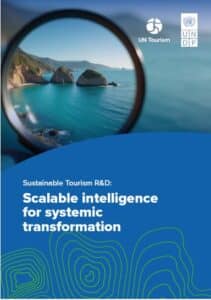 Sustainable Tourism R&D: Scalable intelligence for systemic transformation (UNDP / UN Tourism)
https://www.undp.org/publications/sustainable-tourism-rd-scalable-intelligence-systemic-transformation
Tourism is undergoing constant transformation. Ecological limits, policy innovation, and dynamic social systems are reshaping how destinations operate. This knowledge product, developed jointly by UNDP and UN Tourism, is a strategic learning tool for decision-makers seeking to design tourism systems that are adaptive, inclusive, and sustainable.
The analysis draws on three evidence streams: a global landscape assessment mapping 18 emerging practices across six stakeholder groups, from destination authorities and communities to MSMEs, platforms, observatories, and development partners; 40 UNDP Accelerator Labs; and good tourism practices from 30 destinations recognised by UN Tourism as Best Tourism Villages. From this evidence base, 13 case studies were selected for in-depth analysis, revealing four recurring transformation patterns: stewardship requires institutional capability; inclusion requires a redistribution of power; circularity is an economic strategy, not an environmental add-on; and data must enable collective action.
These patterns are translated into four Research & Development (R&D) opportunity spaces: destination stewardship, community empowerment, circular value chains, and data and AI systems – each accompanied by learning questions to guide experimentation, policy development, and investment.
 Status of the World’s Soil Resources 2026 (FAO / ITPS)
Report: https://doi.org/10.4060/ce0792en
Guidance: https://doi.org/10.4060/ce1094en
Soil degradation is continuing to worsen in many parts of the world, while proven practices to protect and restore soils are still not being adopted at the pace and scale required, according to a major new global assessment launched on 27 August 2026 by the Food and Agriculture Organization of the United Nations (FAO).
The Status of the World’s Soil Resources 2026 report, alongside new guidance developed jointly with the United Nations Convention to Combat Desertification (UNCCD), was presented at the seventeenth session of the Conference of the Parties to the UNCCD (COP17). Together, the two publications combine new evidence on the state of the world’s soils with practical guidance to accelerate action and help countries avoid, reduce and reverse agricultural land and soil degradation.
 Strengthening England’s Heat Resilience: From Warnings to Long-Term Adaptation (UNU-INWEH Policy Brief)
https://unu.edu/publication/strengthening-englands-heat-resilience-warnings-long-term-adaptation
Extreme heat is becoming one of England’s most significant climate risks. While England has strengthened preparedness through the Adverse Weather and Health Plan (AWHP) and Heat Health Alerts (HHAs), persistent gaps remain in public awareness, risk perception, and behavioural responses to warnings.
This policy brief draws on a mixed-methods study comprising a national survey of 1,097 adults in England and semi-structured interviews with 29 heat risk communicators. The findings reveal a persistent warning–behaviour gap: despite widespread exposure to HHAs, many people did not take protective action because of low perceived risk, poor recognition of alerts, and uncertainty about appropriate responses. Interviews further showed that heat risk communication is primarily focused on institutional coordination and emergency preparedness, with comparatively less emphasis on public engagement, behaviour change, and addressing structural drivers of vulnerability, such as housing conditions and socioeconomic inequalities.
 Updated methodology to quantify forest-sector employment: Global and regional estimates
https://doi.org/10.4060/cd8905en
The forest sector employs approximately 42 million people worldwide – not only inside forests themselves, but in the industries, services, and supply chains that forests support. Until now, however, fragmented data and incomplete country coverage have left significant gaps in the global picture – and no breakdown by gender.
Together with the International Labour Organization and the Thünen Institute of Forestry of Germany, the Food and Agriculture Organization of the United Nations (FAO) are addressing these gaps with more precision than ever before.
This new joint study provides the first globally comparable, sex-disaggregated employment figures for the forest sector between 2011 and 2022, covering 182 countries and representing 99 percent of the world’s forest area.
 Wildfires in the UNECE region: Response and Prevention (TM)
https://unece.org/info/publications/pub/415746
Wildfires are becoming more frequent, severe and costly across the UNECE region. Rising temperatures, prolonged droughts and expanding fire seasons are increasing risks, yet most fires still originate from preventable human causes. Their consequences reach well beyond burned forests, affecting public health, biodiversity, infrastructure, local economies and climate stability.
This publication examines the close relationship between wildfires, human activities and climate change, and emphasizes the essential role of sustainable forest management, landscape restoration and fire-aware land-use planning in reducing fuel loads, strengthening ecosystem resilience and protecting communities. It also explores the growing role of technology — remote sensing, artificial intelligence and early-warning systems — in improving wildfire detection, monitoring and response.
Looking ahead, the publication argues that wildfire management must shift from a reactive approach to one combining prevention, preparedness and resilience. Coordinated action among governments, forest owners, emergency services, researchers and local communities, supported by international cooperation, will be critical, as will integrating wildfire considerations into climate adaptation, forest restoration and sustainable development strategies.
For more information on forest and wildfires – see the special section of the UNRIC Library Backgrounder on Forests: https://unric.org/en/unric-library-backgrounder-forests/
 Youth in Charge: RCE Leaders Shaping Sustainable Societies (UNU-IAS)
https://unu.edu/publication/youth-charge-rce-leaders-shaping-sustainable-societies
Launched on International Youth Day 2026, this publication showcases meaningful youth engagement and leadership on Education for Sustainable Development (ESD) initiatives across the global network of Regional Centres of Expertise on ESD (RCEs). Through 12 case studies, the book highlights how young people are driving sustainability through community action, innovation, education, advocacy and intergenerational collaboration. Written by youth leaders and members of selected RCEs across four geographic regions (Africa & Middle East, Americas, Asia-Pacific, Europe), the publication presents real-world examples of young people as leaders and partners in addressing local challenges and helping advance global sustainability.
International Peace and Security
 Left behind: The rights of victims in the aftermath of decades of armed conflict in Afghanistan; September 2026 (UNAMA)
https://unama.unmissions.org/sites/default/files/2026-09/ENGLISH%20-%20UNAMA%20Victims%20report%20-%20FINAL.pdf
This report presents the findings of research undertaken by the United Nations Assistance Mission in Afghanistan Human Rights Service (UNAMA) in 2024 and 2025 to highlight the experiences and needs of victims of the armed conflict in Afghanistan. The report focuses primarily on the period from the United States-led military intervention in 2001 until the Taliban takeover on 15 August 2021. It is based on interviews with 195 victims of armed conflict and their relatives, 23 non-governmental organisations working to address the needs of victims of armed conflict, and 23 de facto officials.
 Power Reactor Information System (PRIS)
https://pris-stats.iaea.org/
The IAEA has rolled out an updated version of its Power Reactor Information System (PRIS), launching a new public webpage featuring optimized interactive PRIS Data Browser, providing faster, more intuitive access to trusted nuclear power reactor information from around the world.
For more than five decades, PRIS has served as the IAEA’s authoritative source of information on nuclear power reactors. The database supports Member States, policymakers, regulators, utilities, researchers and the public with reliable data on reactor status, design characteristics, operating experience and global nuclear power development trends.
Review on the future of all forms of UN peace operations: Report of the Secretary-General (A/80/798-S/2026/600, 22 July 2026)
English, French & Spanish: https://docs.un.org/A/80/798
On 26 August 2026, at UN Headquarters in New York, the Secretary-General presented the first ever review on the future of all forms of UN peace operations at the request of the landmark Pact for the Future and offered recommendations for the consideration of Member States on how the UN toolbox can be adapted to meet evolving needs and future challenges.
The Secretary-General’s review covers the wide spectrum of UN peace operations. That includes civilian special political missions and peace enforcement operations authorised by the Security Council – from a two-person office supporting a Personal Envoy to large, multidimensional peacekeeping operations.
see also:
Explainer – UN peace operations work to create, preserve peace (UN News, 26 August 2026)
English: https://news.un.org/en/story/2026/08/1168210
French: https://news.un.org/fr/story/2026/08/1159369
Spanish: https://news.un.org/es/story/2026/08/1541840
Portuguese (BR): https://news.un.org/pt/story/2026/08/1854181
Human Rights
General recommendation – No.40 on Reparatory justice for the harms and continuing consequences of colonialism, the trafficking in enslaved Africans across the Atlantic and other routes, and racialized chattel slavery (CERD/C/GC/40, Advance unedited version)
https://www.ohchr.org/en/documents/general-comments-and-recommendations/general-recommendation-no40-reparatory-justice-harms
This General Recommendation provides authoritative guidance on the legal basis for State responsibility to ensure reparatory justice for harms resulting from both direct and indirect involvement in the trafficking of enslaved Africans and racialized chattel slavery. It clarifies the obligations of States parties under the Convention and sets out a framework for addressing the enduring consequences of these historical injustices.
 Through Children’s Eyes: How digital technologies enable child sexual abuse (UNICEF-Innocenti)
Report in English, Executive Summary in French & Spanish: https://www.unicef.org/innocenti/reports/through-childrens-eyes
An estimated 20 million children aged 12 to 17 – almost 1 in 5 – were subjected to at least one form of technology-facilitated sexual exploitation and abuse in a single year across 21 countries, according to this new report released by UNICEF on 3 September 2026.
The report combines children’s testimonies with one of the largest bodies of available survey data to warn of a widespread trend of child sexual abuse and exploitation – both online and offline – enabled by technology.
The report estimates that over 15 million children were exposed to unwanted sexual content, 9 million were asked to engage in sexual conversations or share sexual images against their will, and 4 million children had sexual images of themselves shared without their consent. However, the true scale of the issue is likely far higher due to underreporting by children.
Justice and International Law
 Facilitation, Advice and Assistance: Implementation Committee under the Water Convention (UNECE)
https://unece.org/info/publications/pub/415823
The Implementation Committee under the Convention on the Protection and Use of Transboundary Watercourses and International Lakes (Water Convention) was established at the sixth session of the Meeting of the Parties (Rome, 28–30 November 2012), with the aim to facilitate, promote and safeguard the implementation and application of and compliance with the Convention. Members of the Committee include legal and technical professionals with recognised expertise. The structure, functions and procedures of the Committee are defined in decision VI/1 on support to implementation and compliance.
This brochure aims to facilitate better understanding of the mechanism to support implementation and compliance and the opportunities it provides among Parties, non-Parties and other actors.
Nuclear, Chemical and Conventional Weapons Disarmament
 Arms Control in a Time of Mistrust: Unilateral Initiatives (UNIDIR)
https://doi.org/10.37559/WMD/26/NRR/02
At a time of rising geopolitical tensions, when multilateralism is under strain, what role can unilateral measures play in reducing the global risk of nuclear weapons? The report explores past precedents and paths forward for steps to reduce weapons arsenals without a reciprocal arrangement in place. It explores the potential of unilateral measures to reinvigorate arms control efforts and build international trust.
The report analyses three historical case studies: – Gorbachev’s 1985 unilateral moratorium on nuclear testing; – The 1991 Presidential Nuclear Initiatives; – The 1969 renunciation of biological weapons by the US.
The report identifies key factors that influenced the success or failure of these efforts and how unilateral action can foster trust and facilitate future reciprocal agreements.
Drug Control, Crime Prevention and Counter-terrorism
 Preventative Policing in Practice: Guidance on Developing and Implementing a Crime Prevention Approach (UNICRI)
https://unicri.org/index.php/preventative-policing-practice-guidance-developing-and-implementing-crime-prevention-approach
This guidance document presents a practical framework for designing, implementing, and sustaining a preventative approach to crime. Drawing on international good practices, the publication introduces six interrelated pillars of crime prevention: community engagement, intelligence, physical security, environmental design, situational problem solving, and technical solutions. It highlights the importance of tailoring these approaches to local crime patterns, risks, and social contexts.
The guidance also outlines governance arrangements at the national, regional, and local levels, emphasizing the importance of institutional coordination, professional development, community engagement and consent, and respect for human rights. Designed for policymakers, law enforcement authorities and partner organizations, the guidance offers a flexible and adaptable reference that can be applied across different legal systems, institutional capacities, and cultural contexts to strengthen sustainable crime prevention efforts.
 Thinking in Alternatives: A Community Note for Southeast Asia, Strengthening Responses to Terrorist and Violent Extremist Use of the Internet (UNICRI)
https://unicri.org/index.php/thinking-alternatives-community-note-southeast-asia-strengthening-responses-terrorist-and-violent-extremist-use-internet
This new report explores alternative approaches to detecting, monitoring and responding to terrorist and violent extremist activity across increasingly complex online ecosystems.
The report focuses on Southeast Asia, examining the evolving threat landscape in the region, and how terrorist and violent extremist actors exploit digital technologies to advance their objectives. It also considers how approaches and solutions developed to address these threats can be adapted to specific linguistic, cultural and technological contexts.

Victims of Terrorism Associations Network (VoTAN)
https://www.un.org/counterterrorism/en/events/launch-victims-terrorism-associations-network-votan
The United Nations Office of Counter-Terrorism (UNOCT) launched the Victims of Terrorism Associations Network (VoTAN), a unique initiative bringing together victims of terrorism and victims’ associations from across the globe to drive collective action to support victims’ rights and needs.
see also: New initiative launched to shield terrorism victims from online harm (UN News, 21 August 2026): https://news.un.org/en/story/2026/08/1168186
Newsletter Archive: https://unric.org/en/unric-info-point-library-newsletter-archive
| # | Наименование новости | Тональность | Информативность | Дата публикации |
|---|---|---|---|---|
| 1 | Key facts to know about UN General Assembly | 0 | 7.41 | 15-09-2026 |
| 2 | EU priorities at UN General Assembly: Standing up for effective multilateralism | 0 | 6.39 | 09-09-2026 |
| 3 | The UN and the crisis in the Middle East: What you need to know (Jan-Jun 2026) | 0 | 11.18 | 09-09-2026 |
| 4 | Dag Hammarskjöld: 65 Years of UN Remembrance | 0 | 12.67 | 10-09-2026 |
| 5 | Замглавы МИД Алимов анонсировал десятки встреч Лаврова на 81-й Генассамблее ООН | 0 | 9.19 | 22-09-2026 |
| 6 | UN Bonn celebrates volunteerism at the Federal President’s Bürgerfest | 0 | 8.53 | 07-09-2026 |
| 7 | Ghana to host High-Level Side Event on Reparatory Justice at UN General Assembly 81st session | 0 | 9.18 | 15-09-2026 |
| 8 | Building Resilience to Protect People and Communities event (15 July) | 0 | 3 | 30-06-2026 |
| 9 | MEETING OF ECOWAS GROUP OF AMBASSADORS AT THE UN FOR THE MONTH OF AUGUST 2026 AND PASSING OF BATON CEREMONY OF GROUP CHAIR | 0 | 5.6 | 20-08-2026 |
| 10 | Shared Lives, Shared Future: a UN exhibition comes to Brussels | 0 | 5 | 27-06-2026 |