Просмотр новости
Найдите то, что Вас интересует
 Спутники
 РН
РН SpaceX
 Роскосмос
 NASA
NASA
СпутникиРНSpaceXРоскосмосNASABy Christina Lehm Decisions that appear routine during U.S. expansion can later determine whether litigation remains contained or reaches the European parent company. Entering the U. S. market creates legal […]
The post Why U.S. Expansion Creates Legal Blind Spots for European Companies appeared first on The European Business Review.
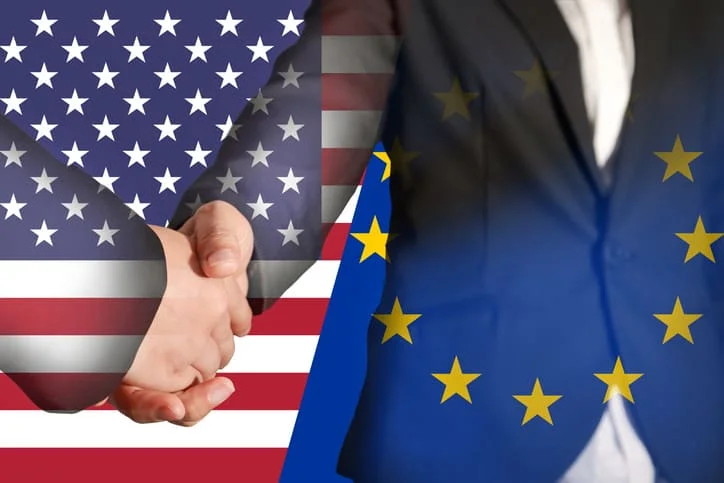
 By Christina Lehm Decisions that appear routine during U.S. expansion can later determine whether litigation remains contained or reaches the European parent company.
Entering the U. S. market creates legal blind spots because European companies often underestimate how closely ordinary operational decisions are connected to future litigation risk. Christina Lehm, a Danish-born U.S. commercial litigator and cross-border business lawyer, explains why forming a subsidiary is not enough. Contracts, governance, employment decisions, communications, data management, and insurance all influence what happens when a dispute arises—and whether the European parent company becomes involved.
Why Do Familiar Business Practices Create Unfamiliar Risks?European companies are accustomed to operating across borders, but the United States presents a different form of complexity. The U.S. is not one uniform legal market. Federal law applies in many areas, but individual states also regulate contracts, employment, insurance, consumer protection, corporate governance, taxation, and business registration.
A company may form its subsidiary in Delaware, maintain its principal office in Florida, employ remote personnel in California and New York, and sell products throughout the country. Each connection can create separate legal obligations.
The resulting blind spots are rarely caused by one dramatic mistake. They develop through a series of seemingly reasonable decisions:
These arrangements may work while business relationships remain positive. Their weaknesses often become visible only after an employee, customer, distributor, competitor, regulator, or business partner asserts a claim.
How Can Governance Decisions Draw the Parent into Litigation?European groups often establish a U.S. subsidiary but continue managing important aspects of the business from Europe. This may seem efficient, particularly during the early stages of expansion when the U.S. operation has limited personnel.
The parent may negotiate contracts, approve hiring and termination decisions, control bank accounts, direct sales strategy, communicate with customers, or resolve complaints involving the subsidiary.
Parent-company oversight is not inherently improper. The risk arises when the respective roles of the parent and subsidiary are unclear.
A plaintiff may attempt to name the European parent as a defendant by alleging that it directly participated in the relevant conduct, controlled the subsidiary, made representations, assumed contractual obligations, or disregarded the subsidiary’s separate existence. Even when those arguments ultimately fail, the parent may still face demands for documents, witness testimony, jurisdictional discovery, or subpoenas.
Clear governance helps demonstrate that the subsidiary is a genuine operating entity rather than simply a name used for activities controlled elsewhere.
| Potential blind spot | Question likely to arise in litigation |
| Contracts signed inconsistently | Which entity actually entered the agreement? |
| Parent executives directing U.S. personnel | Who made the disputed decision? |
| Shared bank accounts or financial controls | Was the subsidiary financially independent? |
| Invoices using different entity names | Which company provided the product or service? |
| Informal approval processes | Who possessed authority to bind the subsidiary? |
| Combined records and communications | Can the parent’s documents be separated from the subsidiary’s? |
European companies should define who can sign contracts, hire or terminate employees, communicate with regulators, approve payments, maintain records, and instruct outside advisers. Minutes, delegations of authority, intercompany agreements, invoices, email signatures, and customer communications should accurately identify the entity involved.
Corporate separateness is not achieved by formation documents alone. It must be reflected in daily operations.
What Should a Company Expect When a Lawsuit Arrives?A U.S. civil case generally begins when a plaintiff files a complaint and serves it on the defendant. The complaint states the plaintiff’s allegations and requested relief; it is not a finding that the defendant did anything wrong.
Nevertheless, the complaint requires immediate attention. The response deadline may be short, and the company must quickly determine:
The company should promptly retain appropriate U.S. counsel and establish an internal response team. That team will often include representatives from the subsidiary, the European parent, legal, finance, human resources, information technology, risk management, and insurance.
Why Is U.S. Discovery Such a Significant Blind Spot?Discovery is often the most unfamiliar and disruptive part of U.S. litigation for European businesses.
The parties may be required to exchange documents and electronically stored information, answer written questions, admit or deny factual propositions, produce witnesses for depositions, disclose experts, and obtain information from third parties.
A dispute involving a U.S. subsidiary may therefore reach information stored in Europe. Relevant materials might include:
This can create tension between U.S. discovery obligations and European privacy, confidentiality, employment, and data-transfer requirements. Cross-border discovery should therefore be planned early. U.S. litigation counsel, European privacy advisers, and the company’s information-technology team may need to coordinate collection, review, redaction, transfer, and production.
The cost of a lawsuit is not limited to lawyers’ fees. Executives and employees may spend substantial time locating records, explaining decisions, preparing for depositions, and supporting the defense. Poor recordkeeping, decentralized communications, and widespread use of personal devices can substantially increase that burden.
How Can Companies Reduce the Impact Before Litigation Begins?Litigation readiness should begin during market entry, not after service of a complaint.
European companies can reduce avoidable risk by implementing several practical measures:
These measures cannot prevent every lawsuit. They can, however, improve the company’s ability to respond quickly, protect relevant defenses, manage costs, preserve insurance coverage, and reduce the likelihood that the parent becomes unnecessarily entangled.
ConclusionThe most consequential U.S. litigation risks often originate long before a lawsuit is filed. They begin with the first contract, hire, customer communication, governance shortcut, or undocumented decision.
European companies should treat litigation readiness as part of market-entry planning. As U.S. operations grow across entities, states, and information systems, disciplined governance and recordkeeping will become increasingly important. Companies that prepare early are more likely to keep disputes focused, protect the European parent, and prevent litigation from disrupting the broader business.
Disclaimer: These materials have been prepared for informational purposes only and are not legal advice. This information is not intended to create, and receipt of it does not constitute, an attorney-client relationship. Internet subscribers and online readers should not act upon this information without seeking professional counsel first.
About the Author Christina Lehm is a partner with Nelson Mullins Riley & Scarborough LLP in Miami/Ft. Lauderdale, Florida. She is born and raised in Denmark and helps European businesses with the legal aspects of entering and scaling the U.S. market, and with all stages of litigation. She regularly writes and posts on the topics addressed in this article, and if you would like to know more, then please connect with her on LinkedIn and subscribe to her LinkedIn newsletter Crossing the Atlantic, where business meets law.
 | # | Наименование новости | Тональность | Информативность | Дата публикации |
|---|---|---|---|---|
| 1 | Beyond Opening Offices Abroad: Building Real Global Capability | 0 | 11.89 | 30-08-2026 |
| 2 | From Marketing Lead to Closed Deal: Where Growing B2B Teams Lose Momentum | 0 | 5.23 | 10-09-2026 |
| 3 | Seeking Capital? The U.S. Remains the Number One Global Market | 0 | 5 | 28-01-2026 |
| 4 | Why the U.S. Housing Market is Becoming a Priority for International Investors | 0 | 5 | 07-12-2025 |
| 5 | The Importance of Relationship Building in Independent Sponsor Deals | 0 | 6.6 | 01-09-2026 |
| 6 | Europe’s Opportunity to Shape the Future of AI Advertising | 0 | 7.23 | 20-09-2026 |
| 7 | Are Unethical Practices in the Global Business Environment Becoming the Silent Norm? | -2 | 3 | 12-07-2026 |
| 8 | B2B Customer Segmentation vs Ideal Customer Profile: Which Approach Maximizes ROI? | 0 | 5.17 | 12-08-2026 |
| 9 | When to Go: What Enterprise Finance Can Learn from Military Decision Doctrine | 0 | 5.68 | 10-07-2026 |
| 10 | Moat or Millstone: Can Europe Regulate Its Way to Investable Financial Inclusion? | 0 | 6.39 | 02-08-2026 |