Просмотр новости
Найдите то, что Вас интересует
 Спутники
 РН
РН SpaceX
 Роскосмос
 NASA
NASA
СпутникиРНSpaceXРоскосмосNASAFollowing the deaths of 2 students in school bus-related accidents last year, safety has joined perennial driver shortages and rising diesel costs as a top priority for districts.
 A school resource officer helps with bus traffic as school buses pick up students after school at Westbrook High School on Monday, August 31, 2026. (Daryn Slover/Staff Photographer)
The vast majority of Maine students — approximately 80% — start their day on a school bus.
On Monday, as many returned to class, the state continued to deal with challenging headwinds in several areas related to school transportation, including bus safety, driver shortages and high fuel costs.
Maine has been grappling with how to keep school transportation safe after two students were killed while getting on or off buses last school year. The state recently began providing funding for districts to retrofit buses with safety features like crossing arms to prevent similar tragedies.
At the same time, districts are continuing to deal with a shortage of drivers, an issue that has plagued the state for years, and have devised creative solutions to get students to school with limited staff.
And the cost of diesel, the fuel used by most buses, is up nearly $2 a gallon over this time last year, which could lead to some uncomfortable fiscal conversations as the year progresses.
SCHOOL BUS SAFETYMaine schools and families were left reeling last winter after 12-year-old Brayden Callahan and 5-year-old Simon Gonzalez were killed within weeks of each other in school bus incidents in Rockland and Standish, respectively.
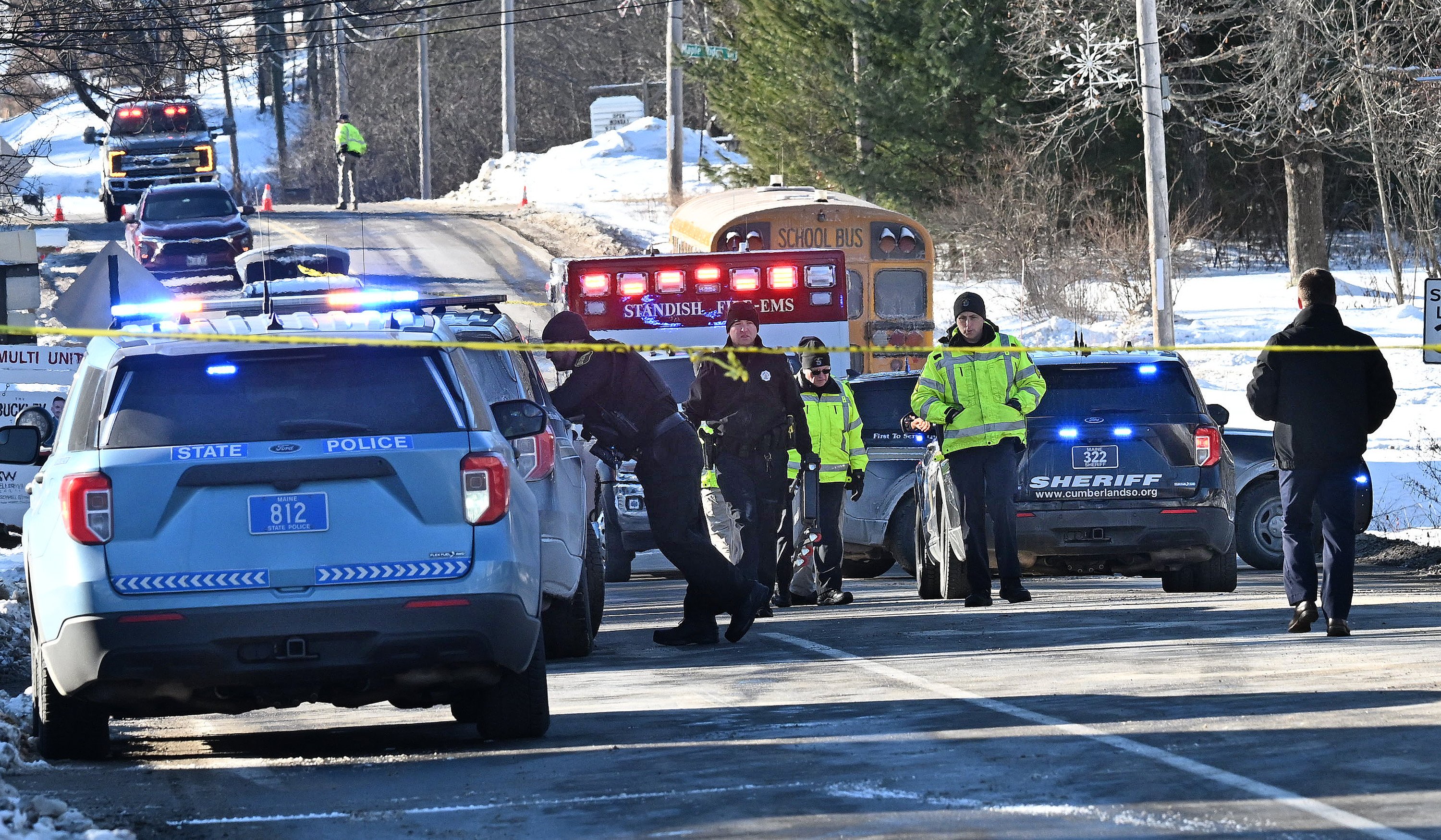 Rescue personnel on the scene of a bus crash in Standish where a student was killed on Northeast Rd. Tuesday, December 16, 2025. (Shawn Patrick Ouellette/Staff Photographer)
Purchase this image
Rescue personnel on the scene of a bus crash in Standish where a student was killed on Northeast Rd. Tuesday, December 16, 2025. (Shawn Patrick Ouellette/Staff Photographer)
Purchase this imageIn Rockland, driver Jeffrey Colburn, 66, did not keep his eyes on the road after dropping Brayden off on Nov. 21, 2025, according to crash reports, did not extend the crossing arm in front of the bus, and accelerated forward, killing him. Colburn was charged with manslaughter, but took a plea deal last month and was sentenced to community service.
In Standish, Gonzalez was dragged by a school bus after his arms got caught in the door while he was trying to board on Dec. 16, 2025.
Fatal incidents like this are rare — only five schoolchildren have died while getting on or off a school bus in Maine in 55 years — but the deaths spurred lawmakers and Gov. Janet Mills to act.
In January, Mills signed an executive order creating a commission to study school transportation safety in the state.
The commission met throughout the spring and offered five recommendations in its final April 30 report. Among them were: requiring crossing arms on all buses and mandating their use at every stop (current state law only requires arms on buses of model year 2021 or later), ordering buses to be equipped with technology that prevents the door from closing on a limb, restoring a state requirement of physical exams for drivers, and standardizing driver training.
That report was finalized shortly after the Legislature adjourned, and both retrofitting and use of the arm remain optional. Lawmakers considered, but did not pass, a bill that sought to close those gaps by mandating that older model buses have crossing arms, and requiring that drivers activate them while picking up or dropping off students. It also would have required buses to have anti-pinch sensors, which stop doors from closing if a limb is caught in them.
Although the bill did not become law, some of those transportation safety priorities ended up advancing through Mills’ supplemental budget, which set aside nearly $6 million for districts to add crossing arms or anti-pinch technology to their fleets.
Since the budget went into effect a month ago, districts can now be reimbursed up to $3,000 per bus for the equipment and labor costs associated with the upgrades. They can also ask for reimbursement for any crossing arm retrofitting done in the prior year.
As of Monday, 13 districts had applied to retrofit a total of 46 buses, according to a Department of Education spokesperson, who said they anticipate several more invoices soon. The department declined to provide a list of which districts have applied.
The program is set to run through June 30, 2027, although the state plans to ask districts this winter if more time will be needed.
DRIVER SHORTAGES CONTINUEMaine has dealt with what the DOE calls a “serious and real shortage” of bus drivers for years. In the weeks leading up to the start of the school year, districts from Kennebunk to Aroostook County continued to advertise for open positions.
To deal with the shortages, districts have combined routes or cut them entirely. To attract new drivers, departments offer signing bonuses or other benefits.
Westbrook recently tried a different approach. The City Council decided this summer to give free unlimited Greater Portland Metro passes to students, providing an alternative way of getting to school for those who live within the 1.5-mile walking radius of the school and are not served by school buses. The program is meant to fill gaps in traditional bus routes that the district hasn’t been able to close as it remains understaffed.
The agreement for 700 passes will cost the city up to $34,000, significantly less than the cost of purchasing and staffing additional school buses, which could exceed $200,000.
When the program was approved in early August, the district had four vacant bus driver positions, Superintendent Peter Lancia said. The district’s director of transportation, Michelle Foye, said last week that there are now three.
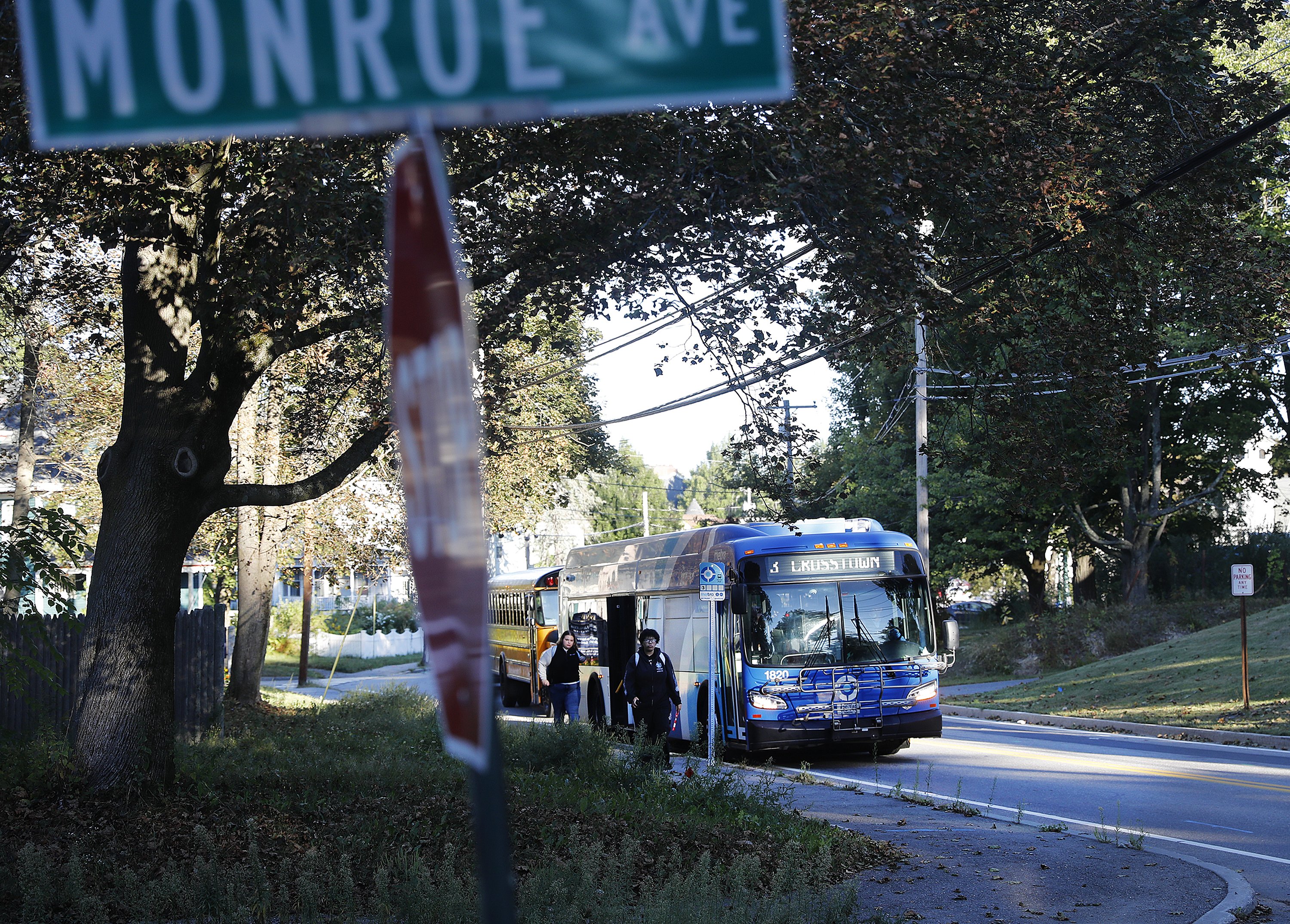 A student gets off a Greater Portland Metro bus at a new stop near the corner of Stroudwater Street and Monroe Avenue down the street from Westbrook High School. The one-year pilot program began at the end of August, providing 700 Westbrook students with free Metro bus passes for the 2026-27 school year. (Staff photo by Derek Davis)
Purchase this image
A student gets off a Greater Portland Metro bus at a new stop near the corner of Stroudwater Street and Monroe Avenue down the street from Westbrook High School. The one-year pilot program began at the end of August, providing 700 Westbrook students with free Metro bus passes for the 2026-27 school year. (Staff photo by Derek Davis)
Purchase this imageThe Metro passes haven’t had an impact on the number of students signed up for traditional bus routes, Foye said, since they’ll primarily serve students who weren’t eligible for service anyway. But the district is still dealing with ongoing issues.
Because of persistent shortages, Westbrook has done “double runs” at some schools for three years now: bus drivers make one trip to pick up students, drop them off about 15 minutes early, then head out for another round of pickups. The system requires schools to have supervision on site earlier than they would otherwise.
While some districts offer signing bonuses, Foye said Westbrook hasn’t taken that approach, since they’re more interested in retention. Westbrook has its own bus driver trainer, who has trained 10 new drivers over the past three years. It still hasn’t been enough to fill every vacancy.
“Bus drivers just aren’t out there,” Foye said. “There aren’t a lot to choose from.”
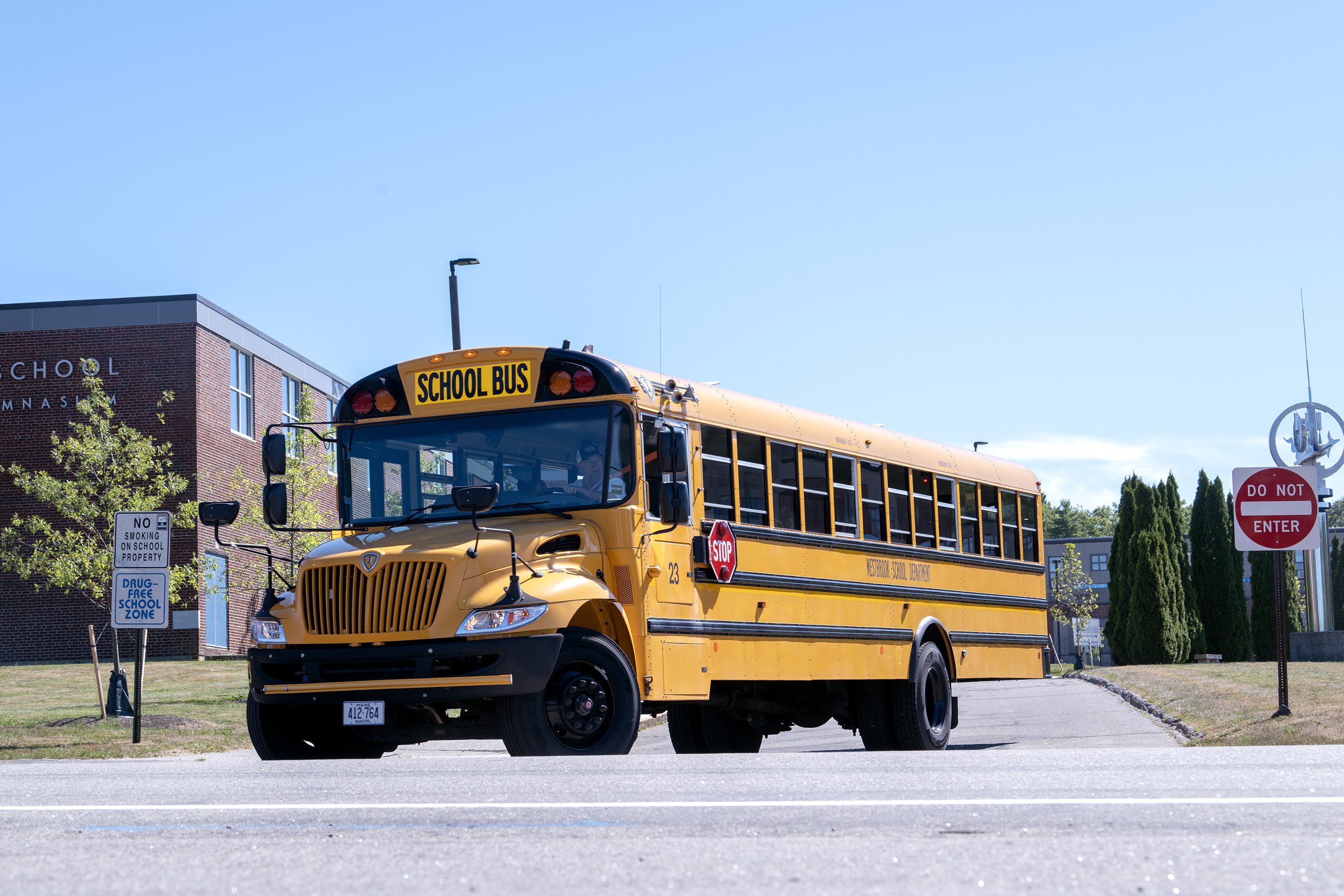 A school bus driver pulls out of Westbrook High School after picking up students at the end of the school day on Monday, August 31, 2026. (Daryn Slover/Staff Photographer)
Purchase this image
A school bus driver pulls out of Westbrook High School after picking up students at the end of the school day on Monday, August 31, 2026. (Daryn Slover/Staff Photographer)
Purchase this imageThe school district serving Cumberland and North Yarmouth has been advertising bus driver positions on its social media and in newsletters in recent weeks. Superintendent Jeff Porter said the district still had two openings as of Monday, but the first day of school went smoothly after the district rearranged some routes and called on other staff with commercial driver’s licenses to temporarily fill the gaps.
In Cape Elizabeth, transportation director Monica Cooke feels lucky. Her district hasn’t dealt with the shortages fellow districts are dealing with, and she knows why: Cape Elizabeth offers full-time work and benefits, with a comparatively high wage of $32 an hour, something many other districts aren’t able to do.
Cooke said her drivers stick around, and it’s reflected in the ages of her crew. The youngest driver is 58, and the oldest is 82.
In Maine, diesel is averaging $5.67 a gallon, up from $3.89 a gallon this time last year, according to data from AAA. Costs in Maine are slightly higher than the national average, which has climbed since the spring when the U.S. and Israel began the war in Iran, disrupting the passage of oil through the critical Strait of Hormuz.
Maine school districts develop their budgets in the spring to be approved by voters in early summer. In Biddeford, Superintendent Jeremy Ray budgeted $17,000 extra for its all-diesel bus fleet, but worried he’ll have to find additional money elsewhere among still-climbing prices, according to reporting from WGME.
According to a May survey of districts by national school leaders and transportation organizations, more than half said their fuel spending was over budget, 40% consolidated routes for efficiency and a quarter had reduced the number of routes to save on fuel.
| # | Наименование новости | Тональность | Информативность | Дата публикации |
|---|---|---|---|---|
| 1 | Report: Many Maine schools not using evidence-based reading instruction methods | 0 | 39.37 | 11-09-2026 |
| 2 | Maine’s minimum teacher pay is rising. Can schools afford to keep up? | 0 | 39.5 | 06-09-2026 |
| 3 | Saco School Board race heats up as 2 educators challenge chair, vice chair | 0 | 38.42 | 29-08-2026 |
| 4 | Portland schools employee detained by ICE | 0 | 33.85 | 18-08-2026 |
| 5 | UMaine System projects 10-year high in enrollment as classes begin | 0 | 35.24 | 31-08-2026 |
| 6 | Supporting Maine teachers and their students | Column | 0 | 46.39 | 27-08-2026 |
| 7 | Yarmouth moves $2 million school recreation bond to ballot | 0 | 37.73 | 24-08-2026 |
| 8 | Meet Kennebunk Elementary School’s new principal | 0 | 34.53 | 19-09-2026 |
| 9 | Back to school affects all of us | Column | 0 | 38.23 | 27-08-2026 |
| 10 | New No. 1 in the Varsity Maine girls soccer poll | 0 | 35.51 | 22-09-2026 |


