Просмотр новости
Найдите то, что Вас интересует
 Спутники
 РН
 SpaceX
 Роскосмос
 NASA
СпутникиРНSpaceXРоскосмосNASA
Some hallmark signs of a scam are pretty easy to spot on our phones these days. Unknown number? Let it go to voicemail. Suspicious text? Delete it.
But scammers know that. That’s why some are going old school.
NBC 5 Responds teamed up with former NBC Chicago investigator Phil Rogers to expose and track a new version of an old scam — all the way to Canada.
When you check your mail, chances are a bunch of it goes straight into the recycling. That’s because almost 60% of our physical mail is advertising or promotional material, according to the U.S. Postal Service.
And it’s because of that that an official-looking letter stood out to Phil Rogers.
“You could say they chose the wrong guy here,” said Phil Rogers.
The letter looked legitimate. Richard Kluck, who claimed to be a partner at a Canadian law firm, apologized for the unexpected contact, then quickly got to his offer.
“I thought, wow, this is a new approach,” said Phil Rogers.
According to the letter, a client of Kluck’s named “Maria Rogers” had passed away, leaving an unclaimed $10 million estate. The letter stated: “I am reaching out to discuss a sensitive and significant matter concerning an unclaimed “permanent life insurance policy” from one of our late clients, Mrs. MARIA ROGERS, who unfortunately passed away approximately four years ago due to COVID-19 complications.”
Their offer to Phil Rogers?
“Let’s split the take on this woman’s bequest. She doesn’t have any living relatives. If we don’t do this, it’s basically just going to go to the Unclaimed Property Division. That doesn’t look terribly right to me,” said Phil Rogers.
The letter states: “I propose an opportunity for you to be recognized as the beneficiary of this policy. Should you consent to this partnership, I assure you this process will be executed with the utmost professionalism and confidentiality.”
Phil Rogers immediately spotted the scam.
“Usually in cases like this, it will be, ‘Now in order to make this happen, we just need a small fee to put everything in motion and that will be refunded to you at the end of the process.’ Nobody ever sees that fee again,” said Phil Rogers.
But there were elaborate elements of this scam that surprised both Phil Rogers and NBC 5 Responds’ PJ Randhawa.
First off, the purported Canadian law firm named in the letter had a pretty slick and detailed website.
But a closer look revealed several slip-ups, like geographic references that mixed up Ottawa, Canada and the United Kingdom. The website is registered to an English language certification center in the UK, and the registration shows it’s only been up since April of 2026.
Next, the property manager business address listed for the firm said no business called Kluck Partners was a tenant at that address. Plus, calls to the phone number listed on the Kluck Partners law firm website weren’t answered or returned.
Now, the more obvious issue: There is no Richard Kluck licensed to practice law in Ontario, according to the provincial law society.
So who was the man pictured on the website?
As NBC 5 Responds started digging, the same photo was found popping up all over the internet.
In one place, he’s listed under one identity. Elsewhere, he appears under different names. He’s even listed as a founder of a nonprofit to end homelessness in Rhode Island.
But his most visible role may have started as “model.”
The photo is listed on multiple stock image websites under the description “smiling standing businessman,” available for download. We found no evidence the man pictured has any connection to the alleged scam. Instead, it appears his stock photo has been reused across the internet under a variety of names and personas.
“That doesn’t surprise me. One of the things that we would often find is that a lot of these sites, that if they even went to any effort to look legitimate, would use stock images, usually vacant lots for addresses, that kind of thing,” said Phil Rogers.
Unfortunately, this isn’t an isolated case.
NBC 5 Responds found nearly identical letters online, with the same story, same logo and same offer. But in these cases, the sender appears to have borrowed the identities of real Canadian attorneys, changing just a few details to make the scam seem legitimate.
“This is expensive. I mean, email is free. Somebody went to the expense of mailing this letter, and if you assume they did, they mailed a whole bunch of them, where postage isn’t cheap. And so that makes me wonder, what’s their success rate on this?” said Phil Rogers.
Key takeaways
An unexpected letter promising money should set off alarm bells. Never use the contact information in the letter. Always verify it yourself through independent, official sources.
Anyone can build a nice website. Dig deeper. Most states and provinces have online search tools to help verify which attorneys and professionals are licensed.
Lastly, check the postage. Phil Rogers’ scam letter was supposed to be from Canada, but the postmark was from North Carolina. Just another red flag to look out for.
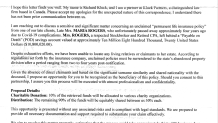
Here’s a look at the full scam letter Phil Rogers received in the mail:
Some hallmark signs of a scam are pretty easy to spot on our phones these days. Unknown number? Let it go to voicemail. Suspicious text? Delete it.
But scammers know that. That's why some are going old school.
NBC 5 Responds teamed up with former NBC Chicago investigator Phil Rogers to expose and track a new version of an old scam --- all the way to Canada.
When you check your mail, chances are a bunch of it goes straight into the recycling. That's because almost 60% of our physical mail is advertising or promotional material, according to the U.S. Postal Service.
And it's because of that that an official-looking letter stood out to Phil Rogers.
"You could say they chose the wrong guy here," said Phil Rogers.
The letter looked legitimate. Richard Kluck, who claimed to be a partner at a Canadian law firm, apologized for the unexpected contact, then quickly got to his offer.

"I thought, wow, this is a new approach," said Phil Rogers.
According to the letter, a client of Kluck's named "Maria Rogers" had passed away, leaving an unclaimed $10 million estate. The letter stated: "I am reaching out to discuss a sensitive and significant matter concerning an unclaimed "permanent life insurance policy" from one of our late clients, Mrs. MARIA ROGERS, who unfortunately passed away approximately four years ago due to COVID-19 complications."
Their offer to Phil Rogers?
"Let's split the take on this woman's bequest. She doesn't have any living relatives. If we don't do this, it's basically just going to go to the Unclaimed Property Division. That doesn't look terribly right to me," said Phil Rogers.
The letter states: "I propose an opportunity for you to be recognized as the beneficiary of this policy. Should you consent to this partnership, I assure you this process will be executed with the utmost professionalism and confidentiality."
Phil Rogers immediately spotted the scam.
"Usually in cases like this, it will be, 'Now in order to make this happen, we just need a small fee to put everything in motion and that will be refunded to you at the end of the process.' Nobody ever sees that fee again," said Phil Rogers.
But there were elaborate elements of this scam that surprised both Phil Rogers and NBC 5 Responds' PJ Randhawa.
First off, the purported Canadian law firm named in the letter had a pretty slick and detailed website.
But a closer look revealed several slip-ups, like geographic references that mixed up Ottawa, Canada and the United Kingdom. The website is registered to an English language certification center in the UK, and the registration shows it's only been up since April of 2026.
Next, the property manager business address listed for the firm said no business called Kluck Partners was a tenant at that address. Plus, calls to the phone number listed on the Kluck Partners law firm website weren't answered or returned.
Now, the more obvious issue: There is no Richard Kluck licensed to practice law in Ontario, according to the provincial law society.
So who was the man pictured on the website?
As NBC 5 Responds started digging, the same photo was found popping up all over the internet.
In one place, he's listed under one identity. Elsewhere, he appears under different names. He's even listed as a founder of a nonprofit to end homelessness in Rhode Island.
But his most visible role may have started as "model."
The photo is listed on multiple stock image websites under the description "smiling standing businessman," available for download. We found no evidence the man pictured has any connection to the alleged scam. Instead, it appears his stock photo has been reused across the internet under a variety of names and personas.
"That doesn't surprise me. One of the things that we would often find is that a lot of these sites, that if they even went to any effort to look legitimate, would use stock images, usually vacant lots for addresses, that kind of thing," said Phil Rogers.
Unfortunately, this isn't an isolated case.
NBC 5 Responds found nearly identical letters online, with the same story, same logo and same offer. But in these cases, the sender appears to have borrowed the identities of real Canadian attorneys, changing just a few details to make the scam seem legitimate.
"This is expensive. I mean, email is free. Somebody went to the expense of mailing this letter, and if you assume they did, they mailed a whole bunch of them, where postage isn't cheap. And so that makes me wonder, what's their success rate on this?" said Phil Rogers.
Key takeawaysHere's a look at the full scam letter Phil Rogers received in the mail:
| # | Наименование новости | Тональность | Информативность | Дата публикации |
|---|---|---|---|---|
| 1 | Rogers Customer Left Owing Nearly $17,000 After Phone-Return Scam | 0 | 10.2 | 09-10-2026 |
| 2 | Nigerian scammers bilk the U.S. Fish and Wildlife Service of hundreds of thousands of taxpayer cash | 0 | 7.64 | 02-08-2026 |
| 3 | Rosie’s Law: New Illinois law will allow courts to decide pet custody battles – NBC5 (Chicago) | 0 | 21.15 | 05-08-2026 |
| 4 | Why Smart People Fall for Scams | Money Moves with Jill Schlesinger | 0 | 9.95 | 23-07-2026 |
| 5 | Good Day PA Retirement Special - Miller Insurance Group | 0 | 7.59 | 16-09-2026 |
| 6 | Families fear wrong remains amid funeral home investigation | 0 | 10 | 14-08-2026 |
| 7 | Register Of Deeds Marc Gravitt Advises Civitans To Be Leary Of Real Estate Fraud | 0 | 8.62 | 22-08-2026 |
| 8 | Мошенники начали обманывать наследников недвижимости под видом нотариусов | 0 | 10 | 12-08-2026 |
| 9 | WATCH: Older Americans over 60 lost nearly $8 billion to scammers in 2025 | 0 | 20.25 | 29-07-2026 |
| 10 | Online scams cost Americans almost $150B last year – 7x more than reported | 0 | 10.06 | 29-07-2026 |