Просмотр новости
Найдите то, что Вас интересует
 Спутники
 РН
РН SpaceX
 Роскосмос
 NASA
NASA
СпутникиРНSpaceXРоскосмосNASAThis Insight is part of GNET’s LatAm series, which looks at the crime-terror nexus in Latin America and the implications/risks for tech moderation. The ongoing Russo-Ukrainian war, described as the world’s “first full-scale drone war”, has accelerated the development of low-cost First-Person View (FPV) drones by both state and non-state actors, innovative targeting techniques, and new forms of aerial reconnaissance that […]
From Kyiv to Culiacán: How Mexican Cartels Are Adapting Drone Warfare Lessons from Ukraine
From Kyiv to Culiacán: How Mexican Cartels Are Adapting Drone Warfare Lessons from Ukraine
28th September 2026

This Insight is part of GNET’s LatAm series, which looks at the crime-terror nexus in Latin America and the implications/risks for tech moderation.
The ongoing Russo-Ukrainian war, described as the world’s “first full-scale drone war”, has accelerated the development of low-cost First-Person View (FPV) drones by both state and non-state actors, innovative targeting techniques, and new forms of aerial reconnaissance that have reshaped contemporary combat. What began as battlefield improvisation has evolved into sophisticated operational doctrine, with commercially available drones transformed into highly effective weapons that deliver precision strikes at a fraction of the cost of conventional military systems. Crucially, these innovations have not remained confined to the Ukrainian front. Rather, they have become increasingly visible across online communities, where combat footage, tactical analyses, and technical expertise enable military knowledge to circulate far beyond the conflict itself. As a result, the question is no longer whether criminal organisations will adopt unmanned aerial systems (UAS), but how quickly and in what form they will integrate battlefield-inspired drone capabilities into their own operations.
Among the actors adapting these innovations are Mexico’s powerful drug cartels. Over the past four years, organised crime groups such as the Cártel Jalisco Nueva Generación (CJNG) and the Sinaloa Cartel – both designated as terrorist organisations by the US in 2025 – have integrated commercially available drones into their operations. Initially used for intelligence gathering, surveillance, and narcotics trafficking, these drones have since been adapted for increasingly sophisticated offensive applications. Today, weaponised drones are routinely employed to target rival organisations, attack law enforcement, intimidate civilian populations, and gain territorial control. Growing evidence suggests that Mexican cartel operatives are not only adapting tactics pioneered on the Ukrainian battlefield through online learning environments but may also be seeking direct exposure to combat experience.
By analysing specific examples of cartel drone operations alongside emerging evidence of tactical learning from the Ukrainian conflict, this Insight investigates how Mexican drug cartels are adapting drone tactics that have emerged from the Russo-Ukrainian War beyond traditional use. The Insight further considers what this adaptation reveals about the increasing overlap between criminal and violent extremist approaches to technology-enabled violence. Based on these findings, the Insight puts forward recommendations to mitigate the misuse of commercial drone technologies and disrupt the spread of emerging violent tactics.
From Smuggling Tool to Battlefield Weapon: The Evolution of Cartel Drone Use in Mexico
From intelligence gathering and logistical support activities, Mexican drug cartels have also been deploying UAS for decades. The earliest documented uses of drones by Mexican criminal organisations emerged during the early 2010s, when cartels began modifying commercially available quadcopters to support smuggling operations. Initially, drones provided a low-cost and relatively discreet method of transporting small quantities of illicit materials, particularly across prison facilities and the U.S.-Mexico border. By 2017, Mexican authorities were reporting the use of commercially available aircraft modified to carry improvised explosive payloads, establishing the basis for a form of aerial violence that has since become increasingly routine.
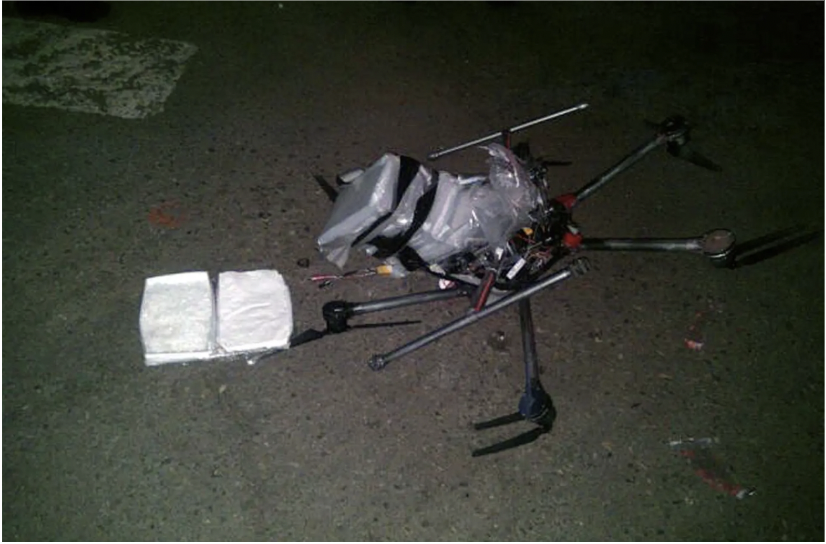
Figure 1. A drone carrying packages of methamphetamine landing on the ground in Tijuana, Mexico (Source: TIME).
This evolution illustrates how organised criminal groups are transforming UAS into operational and coercive tools. Accordingly, drones are now used to observe police patrols and rival groups, coordinate movements, support migrant smuggling, signal territorial control, and deliver explosives against security forces, competitors, and local communities. This shift reflects both increased use and greater technical sophistication: groups have moved from deploying commercially available quadcopters for surveillance and transport to modifying them for targeted attacks and experimenting with FPV platforms and specialised payloads.
The Cártel Jalisco Nueva Generación has emerged as one of the most advanced adopters of weaponised drone technology among Mexican criminal organisations. Since 2020, the CJNG has used drones against rival armed groups, security forces, and local populations, integrating UAS into its broader strategy of territorial control. Unlike earlier criminal uses of drones for surveillance or smuggling, CJNG’s deployment reflects an attempt to develop an aerial capability, as the organisation reportedly established a dedicated “Drone Operators” unit in April 2023, complete with its own insignia.
CJNG’s early weaponised drone operations typically involved commercially available quadcopters modified to carry and release explosive payloads while hovering above targets. These attacks primarily relied on military-style explosives, including hand grenades, although seizures by Mexican authorities have revealed increasingly sophisticated modifications, including custom-built drone munitions and specialised payloads. In April 2025, footage circulated on social media X appeared to show the first confirmed cartel use of an FPV drone in Mexico, again reportedly linked to CJNG.
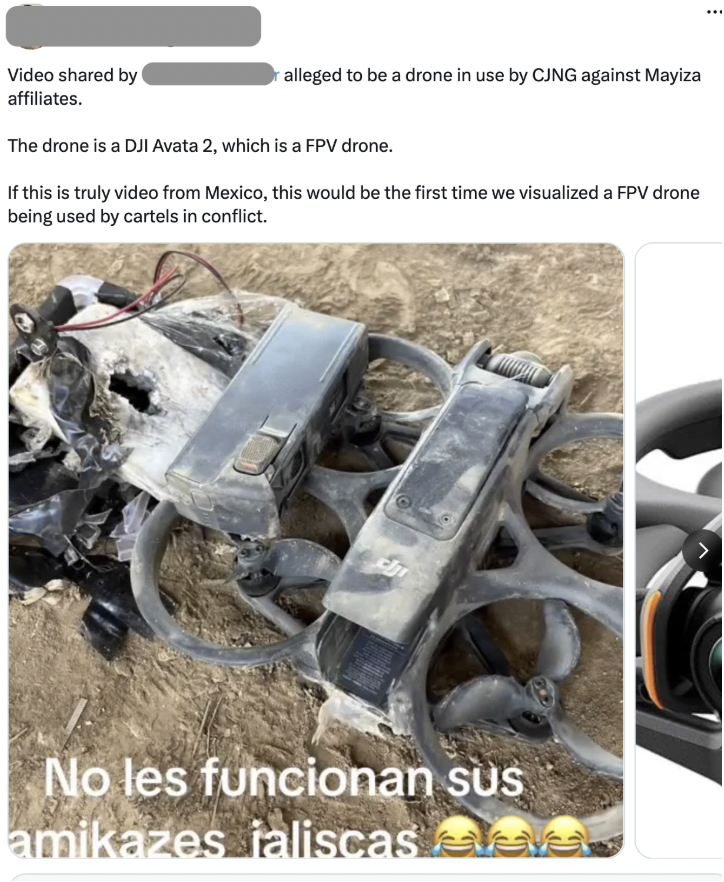
Figure 2. FPV drone allegedly used by the Mexican drug cartel CJNG, shared via X.
While Mexican cartels had already begun experimenting with off-the-shelf technology, Russia’s full-scale invasion of Ukraine in 2022 accelerated the development and visibility of drone warfare tactics. The Ukrainian battlefield demonstrated how relatively accessible platforms could be adapted for increasingly sophisticated functions, including precision attacks, real-time surveillance, and coordinated operations. For criminal organisations, the significance of Ukraine therefore lies less in introducing drones as a new technology than in showing how existing technologies can be adapted into more effective and versatile weapons.
The growing availability of battlefield footage, technical analysis, and tactical demonstrations online has lowered barriers for non-state actors seeking to understand and replicate these methods. Cartels may appropriate techniques developed for warfare or terrorist violence and repurpose them for territorial control, coercion, intelligence gathering, and attacks against rival gangs or state authorities. The challenge for Mexican authorities is consequently not only to prevent cartels from acquiring UAS, but to counter their ability to continuously absorb and adapt emerging technologies and tactics from external conflict environments.
In March 2026, Border Report shared that “DataInt, a firm specialising in real-time monitoring of disruptive events in Mexico, estimated that between 120 and 130 cartel-orchestrated drone attacks occurred in 2025”, resulting in as many as 820 casualties. While precise figures remain difficult to verify due to the clandestine nature of cartel operations, the increasing frequency of reported attacks demonstrates that armed drones have become a recurring feature of Mexico’s criminal landscape rather than an isolated experiment.
Learning from the Battlefield
While cartel groups have historically adapted commercially available technologies through experimentation and incremental innovation, evidence in 2025 emerged indicating that several Mexican individuals with alleged links to organised crime had passed through Ukraine’s International Legion, particularly units operating in the Donetsk and Kharkiv regions, to gain access to FPV drone expertise that could later be transferred to criminal organisations.
The most notable case involved a Mexican national operating under the alias “Águila-7”, as reported by Defense News. The individual allegedly entered Ukraine in March 2024 using fraudulent Salvadoran documentation and presented himself as a humanitarian volunteer. After joining Ukraine’s International Legion, he reportedly completed drone training in Lviv, where his unusually advanced technical knowledge raised instructors’ suspicions. Investigators from Intelligence Online later examined whether he had intentionally sought placement within drone-focused units to acquire FPV capabilities for use by foreign criminal organisations. Although the full extent of these allegations remains under investigation, the case illustrates a significant development: criminal actors may no longer rely solely on observing battlefield innovations remotely but may actively seek opportunities to acquire combat experience and specialised skills.
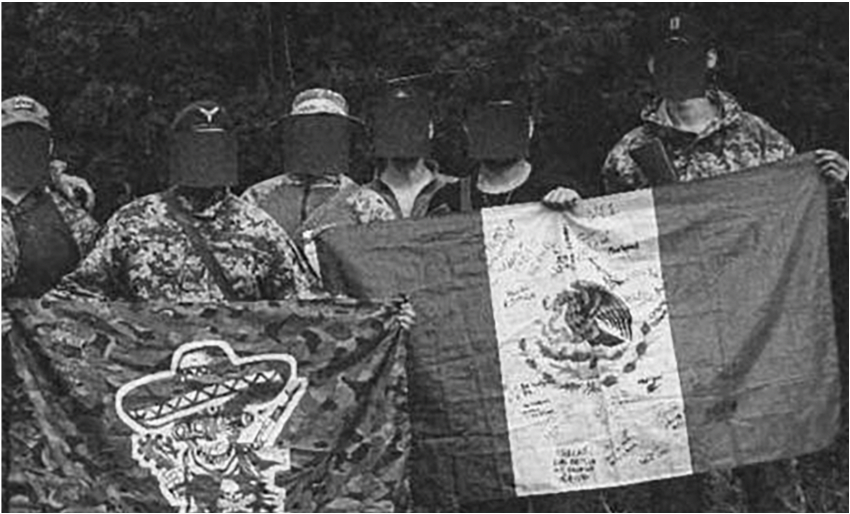
Figure 3. Mexican volunteers in Ukraine (Source: Intelligence Online).
This possibility is particularly concerning given Mexico’s existing ecosystem of criminal innovation. Mexican cartels have historically demonstrated an ability to absorb military expertise and repurpose it for organised crime; the emergence of Los Zetas, founded by former members of Mexico’s elite aerial special forces (Grupo Aeromóvil de Fuerzas Especiales – GAFE), provides an earlier example of how specialised military knowledge can migrate into criminal organisations. The potential transfer of modern drone expertise follows a similar pattern, where individuals with battlefield experience could act as force multipliers by training other cartel members and accelerating the adoption of more advanced tactics.
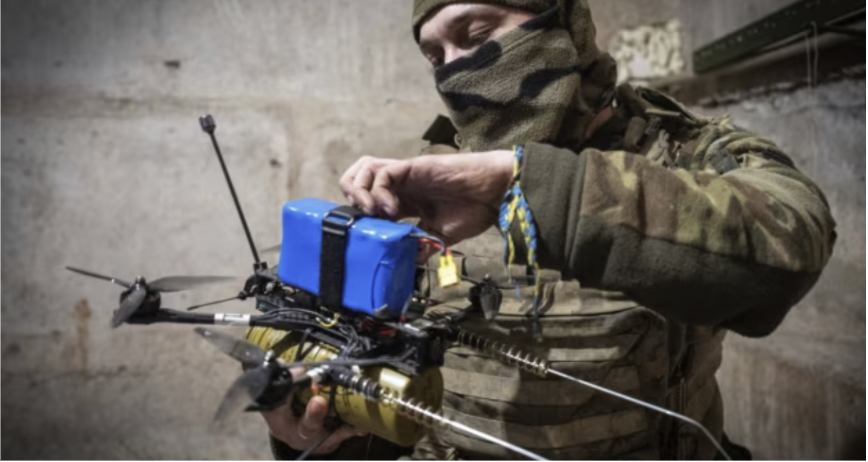
Figure 4. A Ukrainian soldier assembling an FPV drone in the Donetsk region (Source: RadioFreeEurope).
Digital Ecosystems and the Diffusion of Drone Tactics
These capabilities are diffusing not only through physical acquisition or direct battlefield experience. The contemporary drone ecosystem is also digital: footage of attacks, technical demonstrations, battlefield reporting and discussion of drone capabilities circulate rapidly across online platforms. Rather than spending months acquiring experience in a foreign conflict, prospective users learn how to build, modify, and operate drone systems through publicly available online material, including YouTube tutorials and footage from contemporary battlefields, significantly lowering the threshold for entry.
This diffusion also extends beyond Mexico’s largest and most sophisticated criminal organisations. Regional and smaller groups such as Cárteles Unidos and Los Ardillos have reportedly developed a record of drone use to protect their members and territory, suggesting that the technology is becoming increasingly commonplace among smaller organisations and local gangs. In these cases, drones are not necessarily part of a coordinated national strategy against the state; relatively small groups may use them to defend territory, monitor rivals, or protect themselves from attack.
Online platforms reinforce this regional diffusion by circulating footage and reporting on drone attacks in contested areas such as Michoacán, Guerrero and Sinaloa, where smaller factions can observe how rival groups use commercially available aircraft for reconnaissance, intimidation and explosive attacks. This does not necessarily mean these organisations are accessing formal online training networks; rather, publicly shared footage and technical discussion can lower barriers to imitation by showing which platforms, payloads, and tactics are used in comparable local conflicts. The result is a more decentralised pattern of adoption in which drone capabilities spread through inter-group competition and local experimentation, rather than through a single cartel-wide strategy.
This development reflects a broader characteristic of organised crime: Mexican cartels continuously adapt to changing security environments, exploiting new technologies to evade law enforcement, maintain competitive advantages, and strengthen territorial control. The adoption of drones follows this established pattern of technological adaptation.
Recommendations
The evolution of cartel drone capabilities shows that non-state actors can increasingly acquire and adapt technologies previously associated primarily with state militaries. As Mexican criminal organisations integrate surveillance, precision strike, and battlefield-inspired drone tactics into their operations, they transform into hybrid threats combining elements of organised crime, paramilitary activity, and technology-enabled violence. Consequently, a one-size-fits-all approach focused solely on either counterterrorism or traditional law enforcement will be insufficient. Effective responses must account for each actor’s operational environment, technological capabilities, and strategic objectives.
Improving the preparedness of military, law enforcement, and intelligence personnel is therefore essential. Counter-drone strategies should move beyond simply responding to individual attacks and instead focus on anticipating how criminal organisations acquire, adapt, and deploy emerging technologies. This requires closer cooperation between governments, security agencies, and private-sector actors involved in drone production and distribution.
Key recommendations include:
—
Matilde Gamba is a junior human rights professional with experience supporting advocacy, policy and legal research across international and non-governmental organisations. Her research explores the nexus between state violence, transitional justice, and global accountability efforts, with particular attention to the legal responses to mass atrocities. Matilde has investigated post-authoritarian justice in Latin America, contributed to a research lab on international accountability in Ukraine, and authored a thesis examining impunity for state actors in the Philippines during Rodrigo Duterte’s War on Drugs. Her current interests lie in the security implications of emerging military technologies and the evolving landscape of international law in conflict settings. LinkedIn.
—
Are you a tech company interested in strengthening your capacity to counter terrorist and violent extremist activity online? Apply for GIFCT membership to join over 30 other tech platforms working together to prevent terrorists and violent extremists from exploiting online platforms by leveraging technology, expertise, and cross-sector partnerships.
The views and opinions expressed in this Insight are the authors’ own and do not necessarily reflect those of GNET or any of its partners.
| # | Наименование новости | Тональность | Информативность | Дата публикации |
|---|---|---|---|---|
| 1 | Cheap Drones Are A Costly Problem For Governments in Latin America | 0 | 18.97 | 26-08-2026 |
| 2 | The InSight Take: Organized Crime Adopts the Latest Technologies in the Drone-IED Arms Race | 0 | 18.97 | 25-08-2026 |
| 3 | "Будут воевать против нас". Украина создала новую угрозу для Трампа | 0 | 8.1 | 28-09-2026 |
| 4 | Russia’s new jet-powered drones mark latest evolution in air war above Ukraine | 0 | 6.67 | 28-09-2026 |
| 5 | Hezbollah’s Financing Networks: A Threat Far Beyond Lebanon | 0 | 10.71 | 19-08-2026 |
| 6 | On the Radar: The End of Colombia’s Total Peace? | 0 | 19.63 | 03-09-2026 |
| 7 | Ukraine considers moving critical enterprises underground to metro stations | 0 | 8.46 | 28-09-2026 |
| 8 | Почему Запад так безжалостен к Украине В пятницу, 25 сентября, ... | 0 | 8.02 | 28-09-2026 |
| 9 | Russian drones kill two in market outside Kyiv, three others in different regions, officials say | 0 | 4.17 | 27-09-2026 |
| 10 | TTP’s Technological Advancement and Pakistan’s Counterterrorism Challenges | 0 | 9.81 | 10-09-2026 |