Просмотр новости
Найдите то, что Вас интересует
 Спутники
 РН
РН SpaceX
 Роскосмос
 NASA
NASA
СпутникиРНSpaceXРоскосмосNASAOn Wednesday, Sep. 9, a three-judge panel of the 5th Circuit Court of Appeals in New Orleans heard oral arguments in Louisiana v. FDA, a lawsuit filed by the Louisiana attorney general seeking to end telehealth abortion nationwide, even in states that protect abortion access.
Since the fall of Roe and a national snapback of abortion rights in a majority of U.S. states, the antiabortion movement has been laser focused on trying to restrict telehealth abortion because it's increasing in both awareness and popularity, and it allows patients to circumvent state bans.
The 5th Circuit is considered one of the most conservative appeals courts in the country. But the three-judge panel randomly selected to hear Wednesday's case included two judges appointed by Democratic presidents: Judge Stephen Higginson, appointed by former President Barack Obama; and Judge Dana Douglas, by former President Joe Biden. The third judge, Judy Richman, was appointed by George W. Bush.
During oral arguments, all three judges indicated skepticism about Louisiana’s arguments, starting with Louisiana’s right to bring the case.
While the recent 5th Circuit hearing offers hope that efforts to restrict mifepristone through the courts will not succeed anytime soon, two greater threats remain: Trump’s antiabortion nominee to lead the FDA, Heidi Overton, and Attorney General Todd Blanche’s promise to restrict the mailing of mifepristone under the Comstock Act. (This move would spur immediate lawsuits by Democratic states and manufacturers of mifepristone.)
Meanwhile, abortion rights advocates will never give up in finding new ways to put abortion pills in women’s hands.
The post Fifth Circuit Judges Seem Skeptical of Louisiana’s Challenge to Telehealth Abortion appeared first on Ms. Magazine.
 The 5th U.S. Circuit Court of Appeals in New Orleans. (Carol M. Highsmith / Library of Congress Prints and Photographs Division)
On Wednesday, Sep. 9, a three-judge panel of the 5th Circuit Court of Appeals in New Orleans heard oral arguments in Louisiana v. FDA, a lawsuit filed by the Louisiana attorney general seeking to end telehealth abortion nationwide, even in states that protect abortion access.
Since the fall of Roe and a national snapback of abortion rights in a majority of U.S. states, the antiabortion movement has been laser focused on trying to restrict telehealth abortion because it’s increasing in both awareness and popularity, and it allows patients to circumvent state bans.
The 5th Circuit is considered one of the most conservative appeals courts in the country. But the three-judge panel randomly selected to hear Wednesday’s case included two judges appointed by Democratic presidents: Judge Stephen Higginson, appointed by former President Barack Obama; and Judge Dana Douglas, by former President Joe Biden. The third judge, Judy Richman, was appointed by George W. Bush.
During oral arguments, all three judges indicated skepticism about Louisiana’s arguments, starting with Louisiana’s right to bring the case.
Daniel Winik, a senior counsel in the Justice Department’s Civil Division, defended the FDA, arguing Louisiana was not directly injured by the agency’s actions and therefore lacked standing to bring the lawsuit. (To have standing to file a lawsuit, a party must show that it suffered a direct harm from a policy.) Notably, Winik declined to answer questions about the regulatory process or the science the FDA reviewed in regulating mifepristone, leaving that to the drug companies’ lawyers: Jessica Ellsworth, representing Danco Laboratories, and John Elwood, representing GenBioPro.
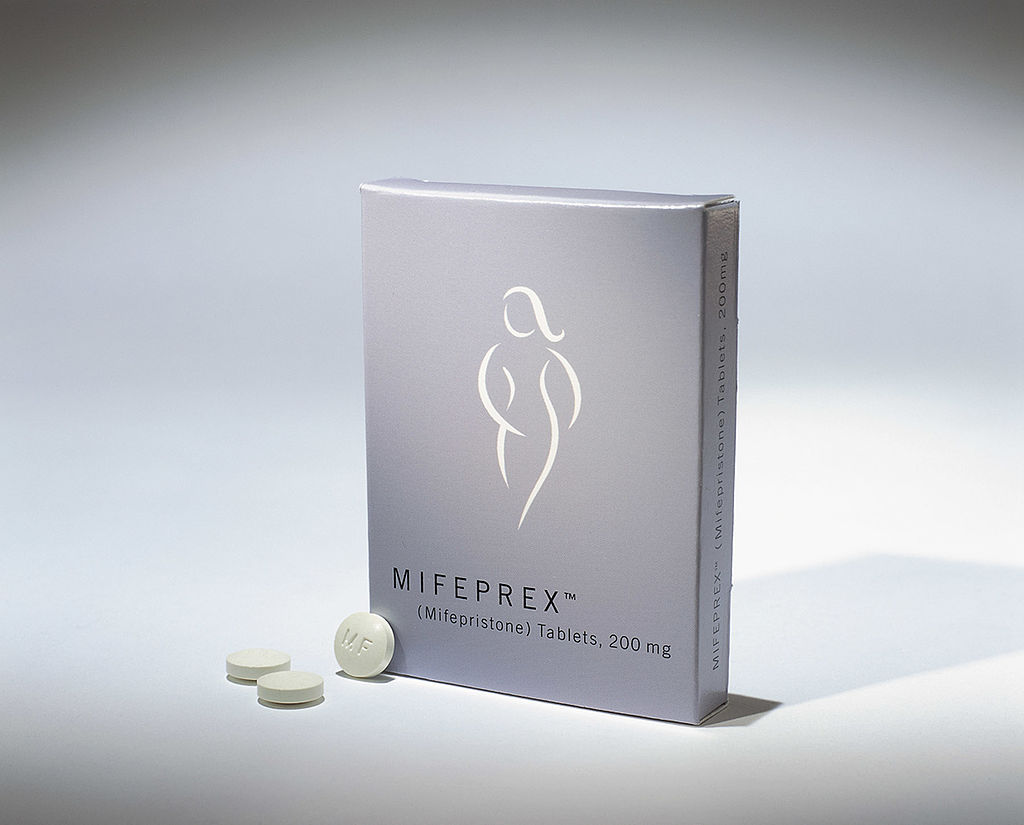 The abortion pill known as RU-486, seen here as Mifeprex. The World Health Organization recommends two regimens for medication abortion: misoprostol alone or combined with another medication, mifepristone. (Newsmakers via Getty Images)
Judge Higginson repeatedly pressed Louisiana on why the court should not dismiss the case for lack of standing based on the Supreme Court’s 2024 decision in FDA v. Alliance for Hippocratic Medicine, which held that medical associations lack standing to challenge FDA approval of mifepristone based on attenuated downstream harm.
Louisiana—represented by Solicitor General J. Benjamin Aguinaga—argued it had a right to bring the case because women obtaining abortion pills through telehealth were going to emergency rooms and obtaining services using Medicaid, thereby imposing costs on the state.
Judge Higginson highlighted the multi-step chain of third-party actions required to cause the injury alleged by Louisiana: Prescribers mail abortion pills to patients in Louisiana. Patients take them, then experience complications (which are rare; abortion pills are safe and effective, multiple studies show) then seek Medicaid-funded emergency care.
He characterized this theory as relying on an overly attenuated causal chain.
Judge Richman’s questions highlighted Louisiana’s lack of legal authority for their procedural arguments and challenged Louisiana’s argument that FDA rules authorized the shipping of mifepristone into states where abortion is illegal under state law.
Judges Douglas and Richman heavily questioned the concrete evidence behind Louisiana’s alleged financial injuries.
Aguinaga (Louisiana) conceded the state did not have exact numbers showing how many of the alleged 1,000 monthly telehealth abortions in Louisiana resulted in emergency-room visits covered by Louisiana Medicaid, relying instead on estimates and general declarations.
Based on the oral arguments, it appears highly likely the 5th Circuit will rule in favor of the FDA, finding Louisiana lacks standing because the alleged financial/Medicaid injuries are too attenuated and depend on independent actions of third parties.
 An abortion-rights rally in Washington D.C., on March 26, 2024. (Mostafa Bassim / Anadolu via Getty Images)
Whatever the 5th Circuit decides, the Supreme Court ruled in an emergency appeal in this case in May that there would be no changes in mifepristone access until the appeals process is complete, so telehealth abortion will remain available at least until that time. (Editor’s note: Of course, you can get abortion pills by mail in any state, regardless of what laws are technically on the books.)
The Louisiana case is one of five cases challenging FDA regulation of mifepristone.
Drexel law professor David S. Cohen says a good decision in the Louisiana case is possible and would bind the lower courts in the 5th Circuit, limiting options for the Texas case and put Louisiana in a bind: either appeal to the Supreme Court or ask for a hearing of the full 5th Circuit, call an en banc hearing.
“The en banc hearing would definitely give us the terrible 5th Circuit decision we expect. But, it would stall this case for a long time—at least another year. And the entire time, the Supreme Court stay would remain in place. So status quo for much longer than Louisiana would want,” said Cohen.
In this instance, the case would be appealed, which would push the Supreme Court decision into June 2028, right before the presidential election.
“Louisiana would not like those odds. But moving quickly by going directly to the Supreme Court wouldn’t be great for Louisiana either, since the Supreme Court, having shown multiple times it isn’t interested in overturning the apple cart here, might just deny cert, leaving the 5th Circuit good opinion in place,” said Cohen.
At any point, however, the FDA could itself change its rules regulating mifepristone. In fact, the agency is under intense political pressure by antiabortion activists and politicians to do so.
If the agency were to reimpose in-person dispensing on mifepristone or remove mifepristone from the market (contrary to science), it would be a radical break with the agency’s history of following the science in making decisions about how regulate drugs, which would likely be disruptive to drug regulation nationwide.
U.S.-based healthcare providers are prepared to pivot to several alternative regimens, including a misoprostol-only abortions and ulipristol acetate-misoprostol abortions. In addition, mifepristone would still be widely available from online providers based outside of the U.S.: from community networks outside of the medical system that share pills for free, and from websites that sell pills.
Louisiana Lawsuit Is Based on Flawed Factual and Legal ClaimsIn 2000, the FDA approved mifepristone in combination with another medication, misoprostol, for abortion in early pregnancy, but the agency placed mifepristone under severe restrictions, including a requirement that only certified doctors could dispense the drug in person.
A series of agency actions in 2016 and 2023 loosened access to the drug, but the certification requirement remains in place and now applies to pharmacies, as well as a requirement that patients sign a duplicative consent form.
Louisiana sued the FDA last October, arguing that the agency’s decision to allow telehealth abortion during the Biden administration has undercut the state’s ban on abortion and violated the state’s sovereignty.
Many women who live in states banning medical providers from offering abortion services are accessing care via telehealth from out-of-state clinicians. In Louisiana, for example, 10,060 people accessed abortions via telehealth prescription of abortion medications sent by mail to the state, according to the Society of Family Planning.
Louisiana also asserted the FDA didn’t have enough safety data to roll back the in-person dispensing requirement.
There are more than 100 high-quality, peer reviewed studies proving mifepristone is safe and effective and there is solid science supporting the FDA decision to end in-person.
Despite this evidence, Trump’s FDA is currently conducting a review of mifepristone in response to a flawed abortion safety report submitted by an anti-abortion group.
In June, the FDA said the review would take six months. Abortion pills have been used by more than 7.5 million American women since they were first approved by the FDA in 2000, and they are used widely around the world.
Louisiana is also arguing that the FDA’s 2023 decision to remove the in-person dispensing requirement violates a long-dormant, nineteenth-century anti-obscenity law called the Comstock Act—a far-fetched legal argument that the Department of Justice itself disavows in an opinion published on its website.
In January 2026, the FDA asked the district court to delay ruling until the FDA review is complete. The court granted this request in April 2026, pausing the case to give the FDA time to conduct its “review,” with a status report due on October 7. The district court also denied a request from Louisiana to temporarily reinstate the in-person dispensing requirement while the case was litigated. Louisiana appealed.
A different panel of the 5th Circuit Court of Appeals from the current one reinstated the in-person dispensing requirement, temporarily limiting access to abortion pills. The Supreme Court ultimately stayed the 5th Circuit’s ruling, allowing people to continue to access mifepristone by mail and at pharmacies as the case proceeded.
During his confirmation hearings, Attorney General Todd Blanche pledged to take action to stop mifepristone from being available through the mail, but he has not settled the lawsuit, likely for fear of political backlash before the midterms.
During a private call with faith leaders, Blanche hinted that restrictions on mail-order abortion drugs are coming, saying the administration was “putting practices and policies in place so that other states and other organizations” can’t send abortion pills through the mail to states where they are banned. But the Justice Department has urged the courts to hold the mifepristone lawsuits until after the FDA finishes their safety review.
The antiabortion movement has been pressing mifepristone restrictions along multiple pathways: through the FDA by reinstating in-person dispensing, and through the Department of Justice by enforcing the Comstock Act.
While the recent 5th Circuit hearing offers hope that efforts to restrict mifepristone through the courts will not succeed anytime soon, two greater threats remain: Trump’s antiabortion nominee to lead the FDA, Heidi Overton, and Attorney General Todd Blanche’s promise to restrict the mailing of mifepristone under the Comstock Act. (This move would spur immediate lawsuits by Democratic states and manufacturers of mifepristone.)
Meanwhile, abortion rights advocates will never give up in finding new ways to put abortion pills in women’s hands.
For more information on medication abortion, see the Center for Reproductive Rights’ Medication Abortion Resource Hub.
*
A note from Ms. editors: We want to hear from you for The Majority, a new campaign collecting stories about how reproductive freedom has enabled readers to build the lives they want and need.
Poll after poll shows a majority of Americans support reproductive healthcare access. Yet public debate overlooks the lives shaped by abortion access, contraception, IVF, miscarriage care, maternal healthcare or comprehensive sex education—countless women who chose to pursue an education, have children, not have children, protect their health and chart their own future. What’s your reproductive freedom story? Add your voice. Together, these stories will help show not only why reproductive freedom remains a majority value, but also what it makes possible.
Look to these trusted groups if you or a loved one needs to know more about reliable abortion care: