Просмотр новости
Найдите то, что Вас интересует
 Спутники
 РН
РН SpaceX
 Роскосмос
 NASA
NASA
СпутникиРНSpaceXРоскосмосNASAA lot of e-bikes try to win you over with flashy features and gimmicky tech. That’s not the approach Pedego took with the Latch 2. Instead, they built a folding bike that’s comfortable, has a solid feel, and has good components throughout. There really wasn’t much, if anything, to complain about the bike. It folds […]
The post Pedego Latch 2 Review: Full-Size Folding E-Bike with a 5-Year Warranty appeared first on Electric Bike Review.
80
Pedego skips the gimmicks on the Latch 2 and instead delivers a solid, comfortable folding e-bike, with a five-year warranty.
Rating MatricOur Rating
7
7
7
8
8
View Bike Specs
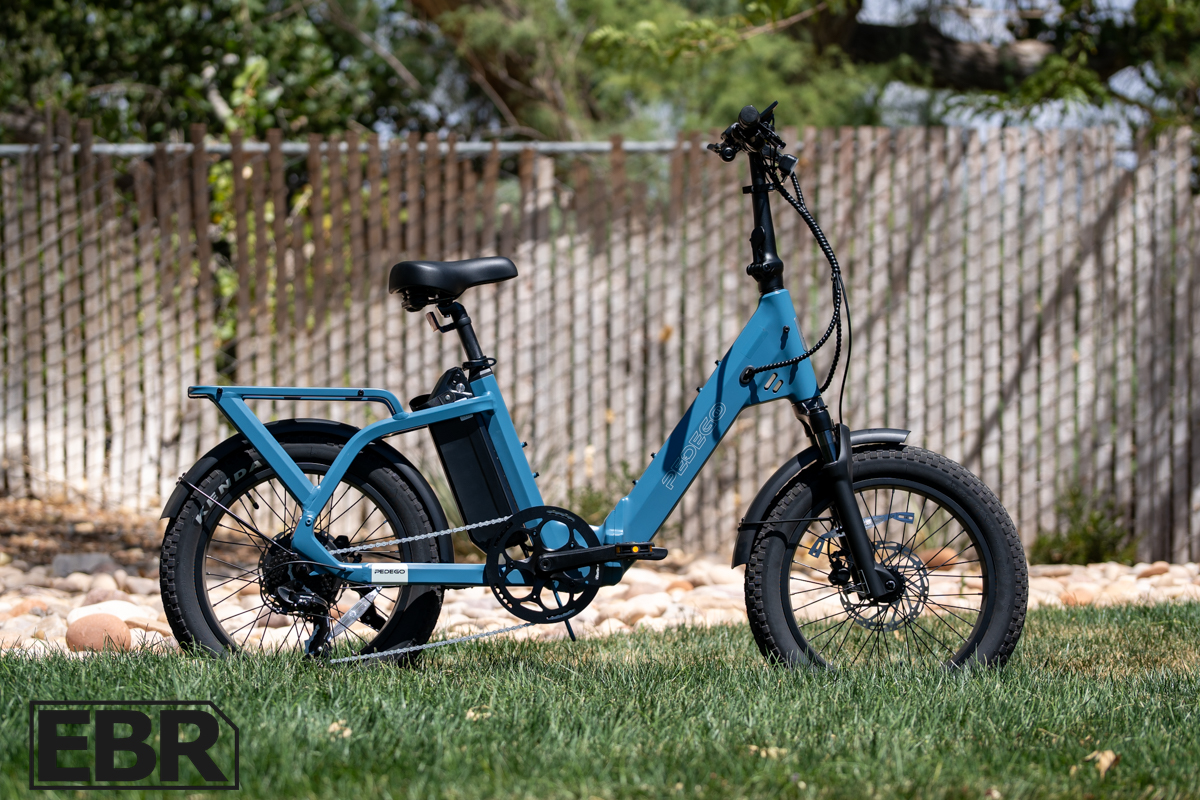
A lot of e-bikes try to win you over with flashy features and gimmicky tech. That’s not the approach Pedego took with the Latch 2.
Instead, they built a folding bike that’s comfortable, has a solid feel, and has good components throughout. There really wasn’t much, if anything, to complain about the bike. It folds nicely, is on par with the industry standards for power and range, and has good, name-brand components.
The thing that stands out most about riding the Latch 2 is how little it feels like a folding bike. Folders often tend to be a little loose, and that flex hurts the ride.
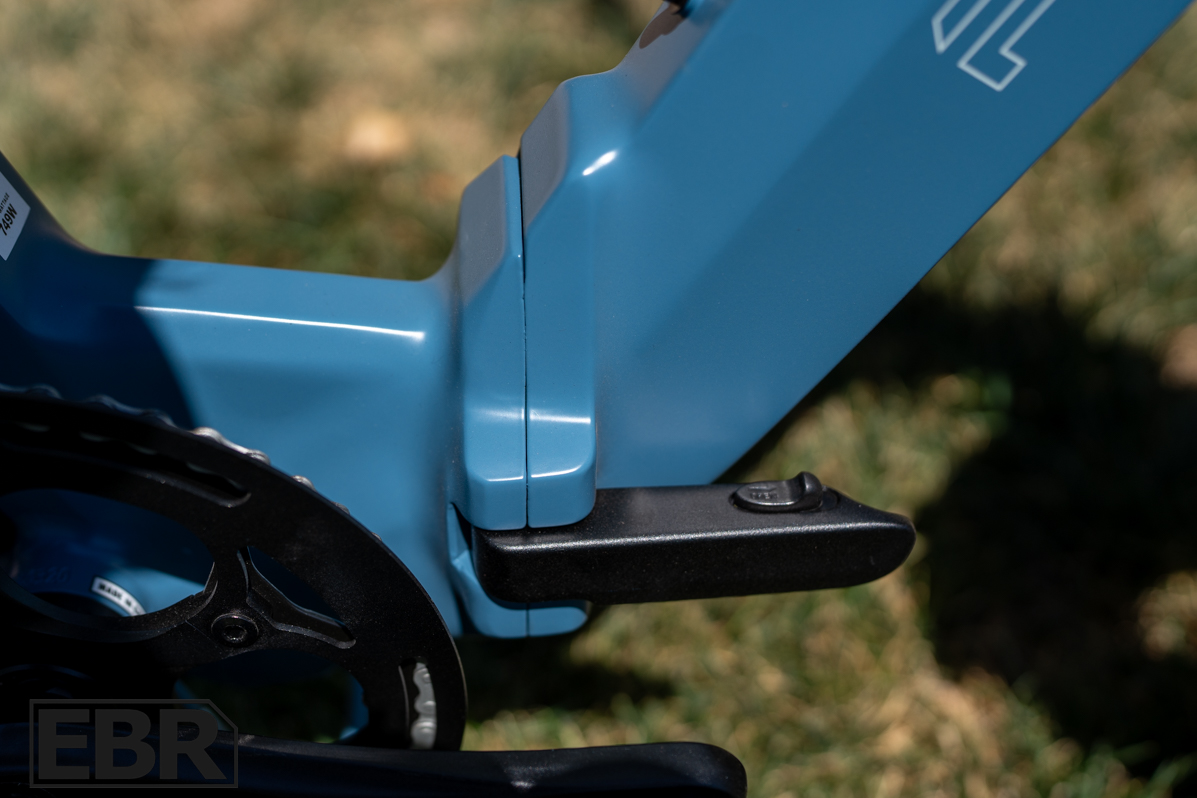
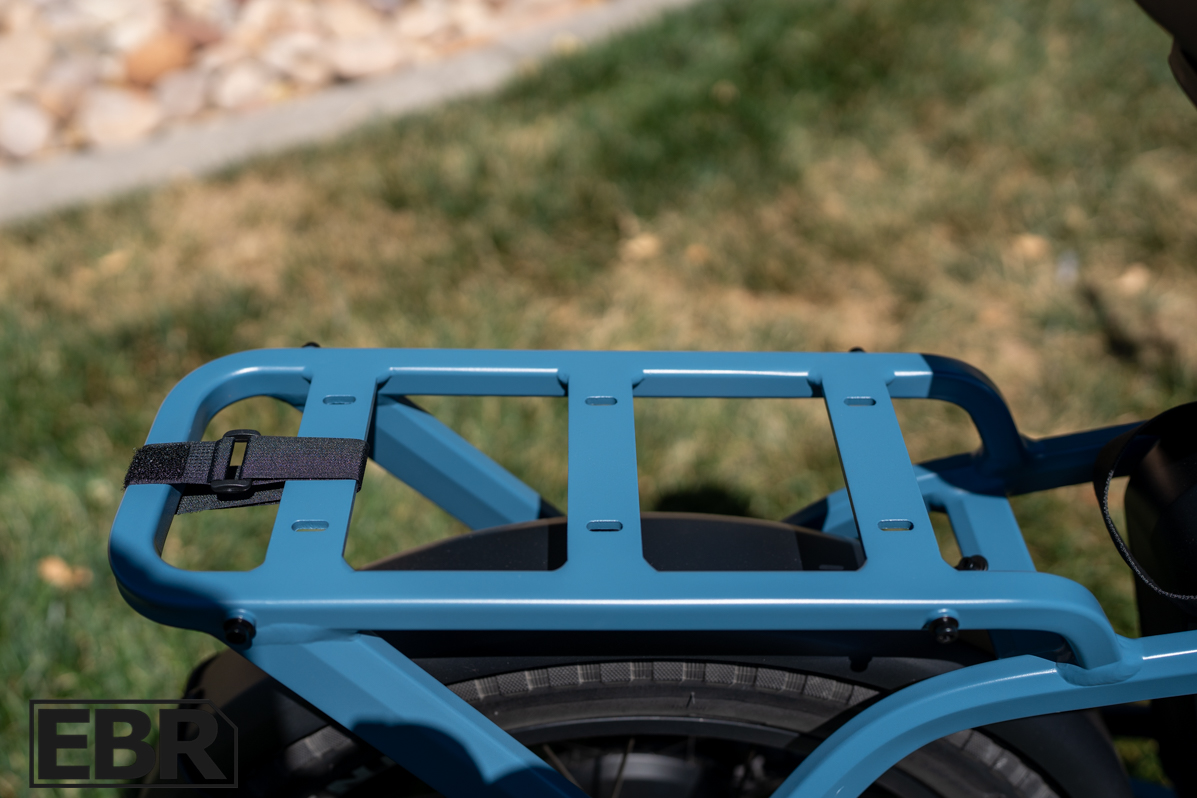
This one is the opposite. The frame is sturdy, the rear rack is sturdy, the fold latch is sturdy, and the whole bike has a rigid feel that gives you a better ride than I expected from a folding platform.
Folding e-bikes also tend to have weird geometry. It’s likely due to the fact that brands are making a bike that literally folds in half, but folders usually have longer reaches than what I would consider natural. The stem cants forward in relation to the fork, which both extends the reach further than needed and makes turning feel less natural than it otherwise would.
The Latch 2 still has that forward-canted stem, but the reach is only 17″, which is shorter than average and makes it so my arms are not stretched out straight like a zombie in a folding bike apocalypse. Instead, I still was able to have a slight, natural bend in my elbows which gave me better control over the bike.
The bike is spec’d for riders from 5’1″ to 6’1″, and I think that range is honest. At the low end, a 5’1″ rider will have the saddle slammed down and their hands sitting a little higher on the adjustable stem; at the top end, our six-foot-three tester in the office was comfortable, so you can probably push past the stated 6’1″ a bit.
On adjustability, the stem gives you a good three to four inches of range to raise or lower the bars, and the seatpost offers 7.5 inches of height adjustment, so most riders can dial in a fit. The 660mm handlebars are a good natural width, fairly flat with a little rise and not much sweep, and the lock-on grips have some vibration dampening that takes the edge off.
Comfort-wise, the bike performed well. The front fork is a little stiffer than most, which I actually liked since most inexpensive forks feel divey (i.e. they just sink down as soon as you hit any kind of bump). The comfort saddle, using “BF Foaming Technology” is also surprisingly comfortable.
Between the saddle, the grips, and the stiff-but-composed frame, it’s a good setup for a daily driver or something to cruise around on.
The Latch 2 has a 750W rear hub motor with 90 Nm of torque that peaks at 1,200 watts. That’s right in line with what I’d want to see on a folding mid-fat bike like this.
On our hill test it climbed the ‘Black Hill” in 92 seconds on throttle at a 13.6 mph average, and 92 seconds on pedal assist at the same 13.6 mph average. We’ve run this hill with about 10 to 12 bikes so far, and the Latch 2 lands toward the top of that group, even though I did the test in the ‘Standard’ setting instead of ‘Pedego’ mode (which is the bike’s most powerful mode).
Overall, the motor is powerful yet controlled, and I had no complaints there. It’s a little louder than some motors, but the engagement is smooth at the start of the pedal stroke, and the motor doesn’t have excessive overrun when you stop pedaling.
A big reason the motor feels so composed is the controller. It’s a 25-amp, 48-volt sinewave, field-oriented-control (FOC) unit, which delivers more precise power so the bike feels predictable and natural rather than surging. Pedego’s PedalSense system also lets you switch between torque and cadence sensing depending on the feel you want, with throttle available in either mode.
I personally found riding in torque mode to be more natural even though the power output is very high to where you don’t forget you are riding an e-bike.
Min Assist: Coming soon – test not yet complete
Max Assist: 38.8 miles
The battery is a 48V, 17.4Ah pack, which works out to 835 watt hours – which is a nice sized battery and gives you a lot of range.
We were able to get almost 40 miles when we tested the bike on MAX assist, which is very impressive in the folding bike category. While we haven’t been able to do our full MIN assist range test, we think that Pedego’s estimate of 84 miles is likely accurate (we also are assuming they used some kind of mathematical calculation to come up with that range given they estimate something other than a more round number like 80, 85, or 90). I guess sometimes the math actually works out!
The great range is likely a result of a combination of a larger battery (835Wh) and good quality LG 21700 cells paired with a high-quality sinewave controller that ensures power is delivered more efficiently.
For charging, Pedego includes a 48V 3A charger, so it will take around 6.5 hrs to fully re-charge your battery from 0 to 100%.
At $1,695 the Latch 2 is a little more expensive than the industry average. However, when you look at the entire package, that pricing starts to make sense – and seems to be a great value in the long-run.
Component-wise, Pedego has specc’d the Latch 2 with fairly standard, but high-quality components.
The drivetrain is a Shimano Tourney 7-speed drivetrain with rapid-fire shifters (tourney usually comes with over-the-handlebars shifters, so this is possibly a mix of a Tourney-level derailleur and Altus shifters). The cassette range is 11-32T in the rear, and is paired with a 52T front chainring. That combination worked well for the bike. With only 7 speeds I was expecting some ghost pedaling, so I was pleasantly surprised when I still had good engagement and a natural cadence while riding at 28 mph.
The brakes are Tektro hydraulic disc, 2-piston, with 180mm rotors front and rear at 1.85mm thickness. That’s exactly what I’d expect on a folding mid-fat bike at this price. On our 2-3 minute long brake test down the Black Hill (a total of about ½ a mile) I slammed on the brakes 6-7 times, and even rode a stretch where I was constantly riding the brakes to keep the bike under 10 mph. I had no issues down that entire stretch and the bike didn’t have any brake fade.
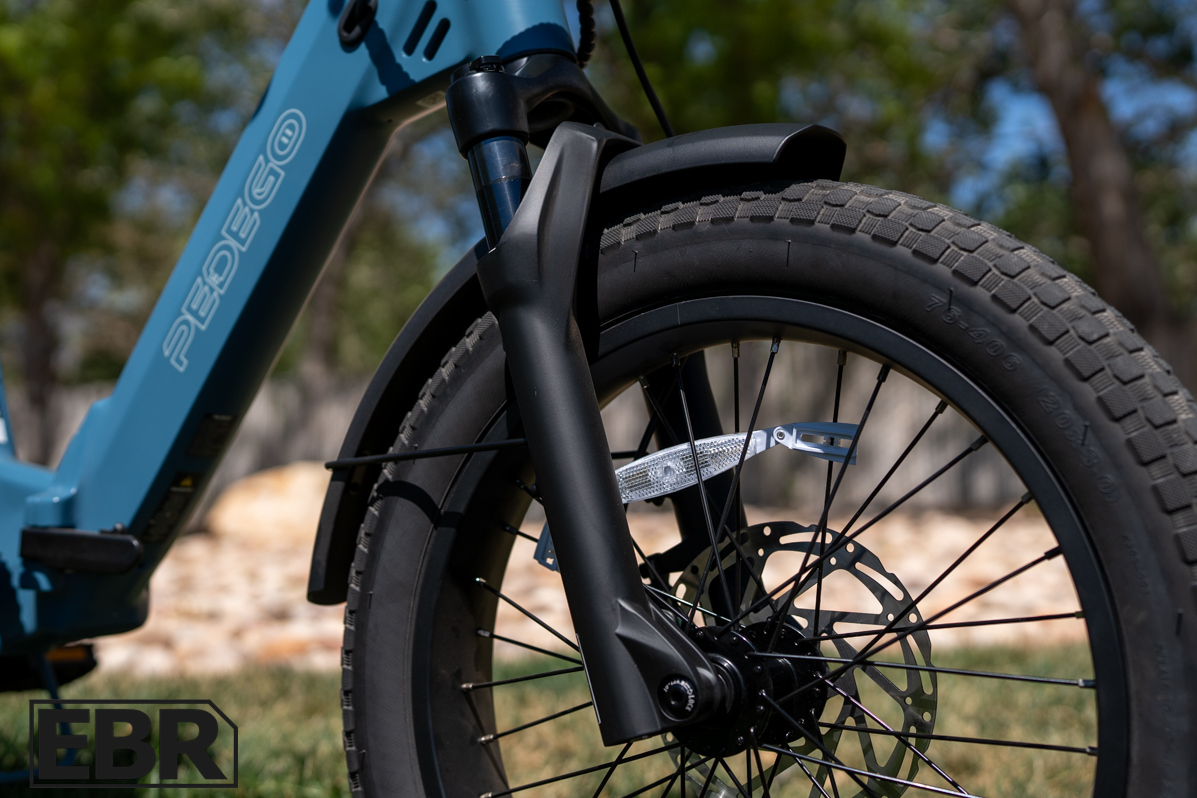
The suspension is a 60mm coil fork with a through-axle, which is a nice touch: the thru-axle adds rigidity through corners and improves the ride feel. The fork is on the stiff side, which works well for average-weight riders and resists bottoming out for heavier ones. The one catch, and it’s the main thing I’d ask Pedego to fix, is that there’s no rubber gasket or stopper at the bottom of the fork travel, so a full bottom-out produces a metal clang. It doesn’t hurt performance, but it can startle you.
Tires are 20″ × 3.0″ and are fast-ish on pavement but with enough tread to handle light offroad trails around a campground. The fenders front and rear are aluminum, so they are going to make some noise when rocks hit; I’d personally prefer a harder plastic there, but they do the job.
Rounding out the build: the comfort saddle is a little better than average, the lock-on grips have vibration dampening, and there’s a 100-lux front light plus rear lighting integrated with turn signals and a brake light. There’s also a bell that’s crisp enough that people actually hear it, which I appreciate on any kind of e-bike.
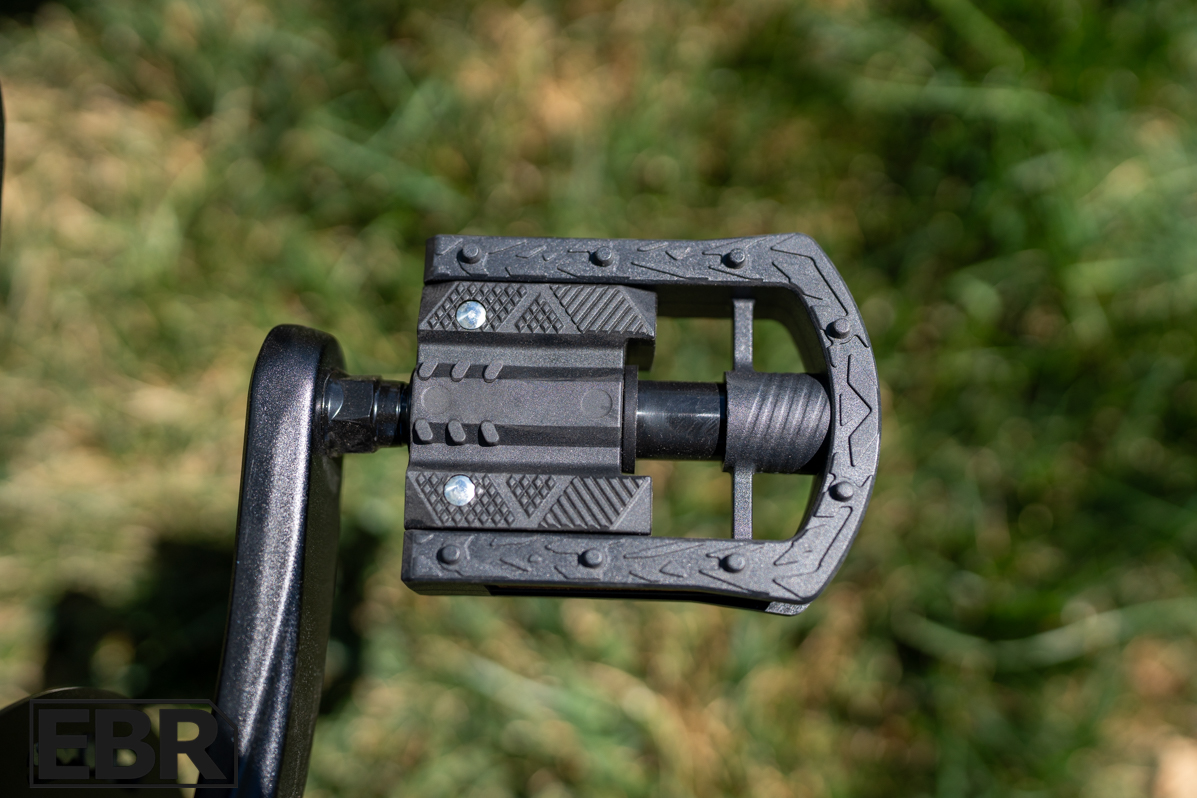
A few small finish notes: the grip end caps work loose over time, and there’s no chainstay protection, so I’d add a strip of chainstay tape to keep the chain from chipping the paint.
Overall the component package would normally place the bike around the $1,500 price-point – so on the surface this looks a bit like a bike where your paying a bit more to be able to buy from a bike shop.
HOWEVER, when you add the 5 year warranty and 6 free tune-ups that significantly changes the value proposition. Given a standard tune-up generally costs around $75, you would need to compare the Latch 2 more to a folding bike in the $1,200 – $1,300 price range.
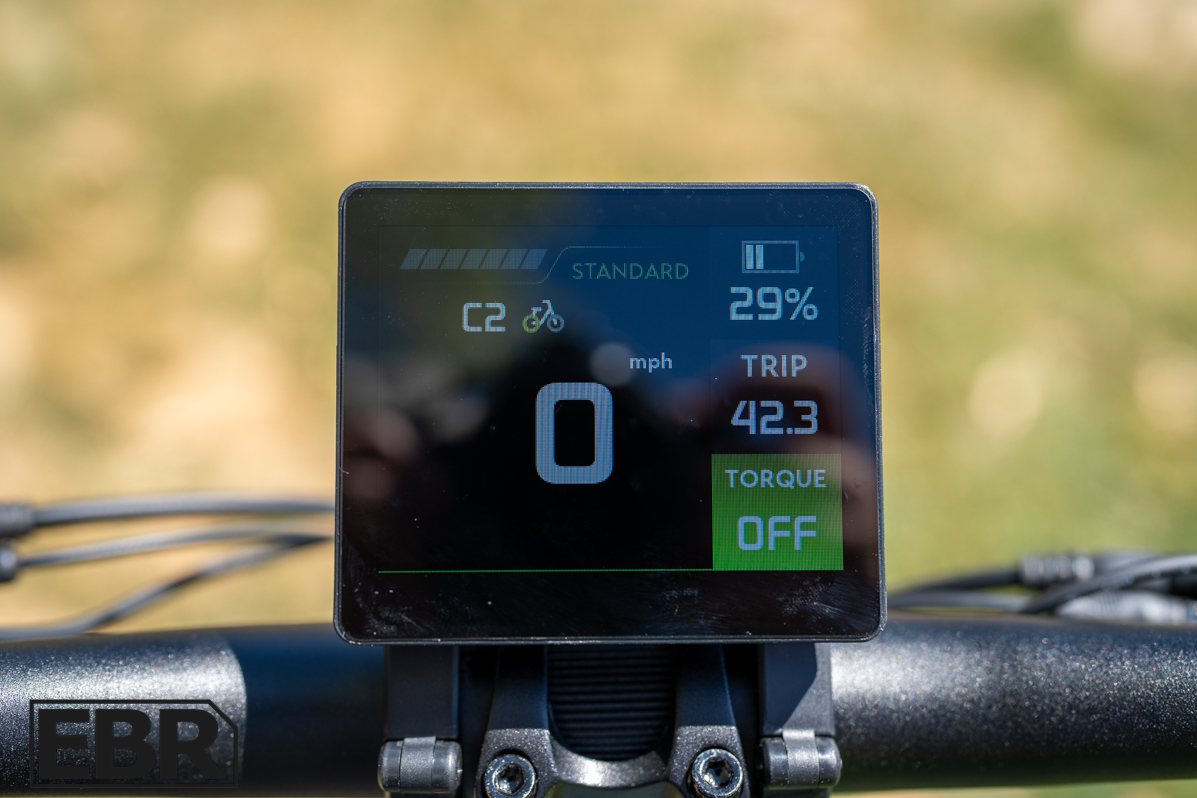
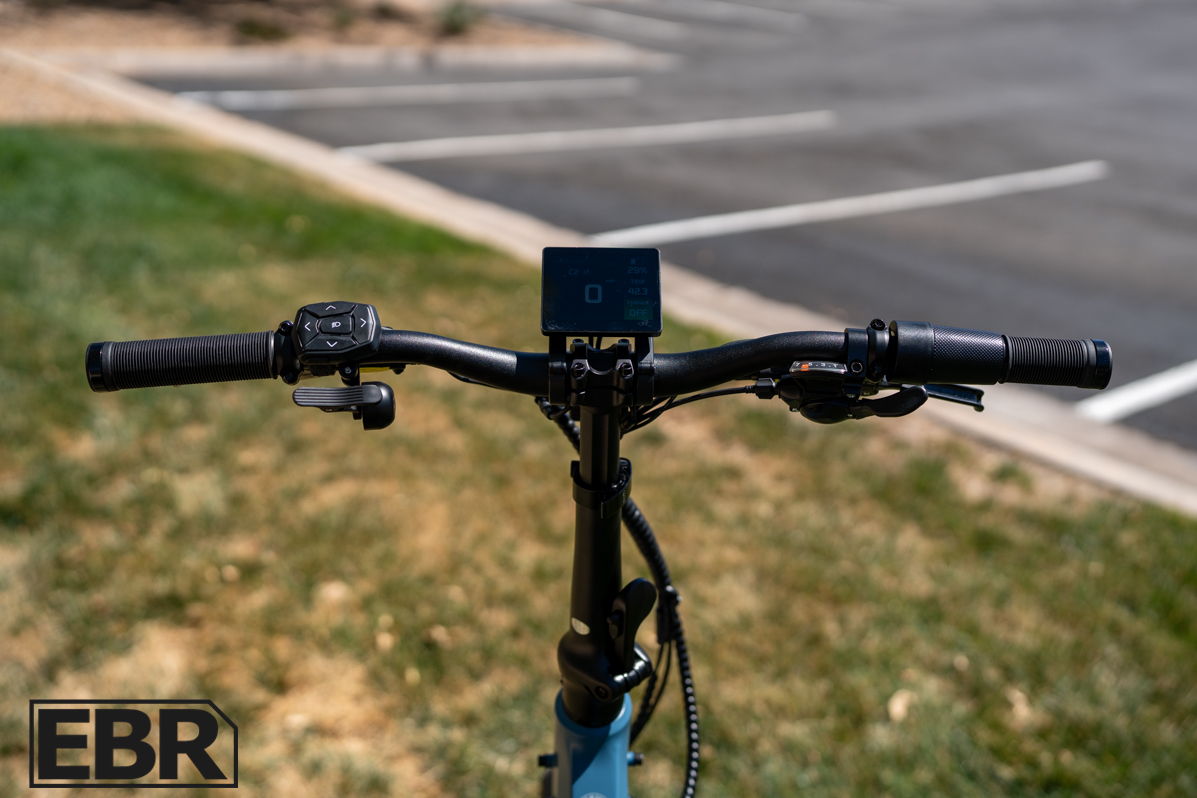
The Latch 2 uses a 3.5″ color display rated at 500 nits with USB-C charging, and it’s positioned well: easy to see while you’re riding, and it powers on with an interesting “Hello, fun” greeting, which fits Pedego’s whole brand personality. It shows pretty much everything you need. The top-left bars indicate motor output (not battery, which is worth knowing), a class indicator shows whether you’re in Class 3 (C3), a light indicator shows auto or always-on, and the top-right battery readout gives you both a percentage and a bar. Because of that sinewave controller, the battery percentage reads more accurately than what you get on cheaper systems, which I like. The middle shows trip, odometer, and time, and the bottom-right shows your current mode and assist level.
You can do essentially all of your adjusting right from the display, no app required. Holding the bottom button opens the settings menu, where you can set throttle top speed (up to but not above 20 mph), switch between torque and cruise (cadence) sensing, choose your performance mode (Mellow, Standard, Pedego), set a power-on password, adjust brightness, and toggle the auto light. One quirk: to move between menu sections you press select again rather than just arrowing down, which was briefly confusing until I got used to it.
The most useful setting for me is the assist tune, available only in torque mode, which lets you customize the output for assist levels one, two, and three. I found level one a touch light for my taste, so being able to bump it up is handy. The system is also OTA-updatable and can connect to the new Pedego app. The app is pretty barebones right now, but Pedego has told me the app is a work in progress and they have a lot of plans to build out the app in the very near future.
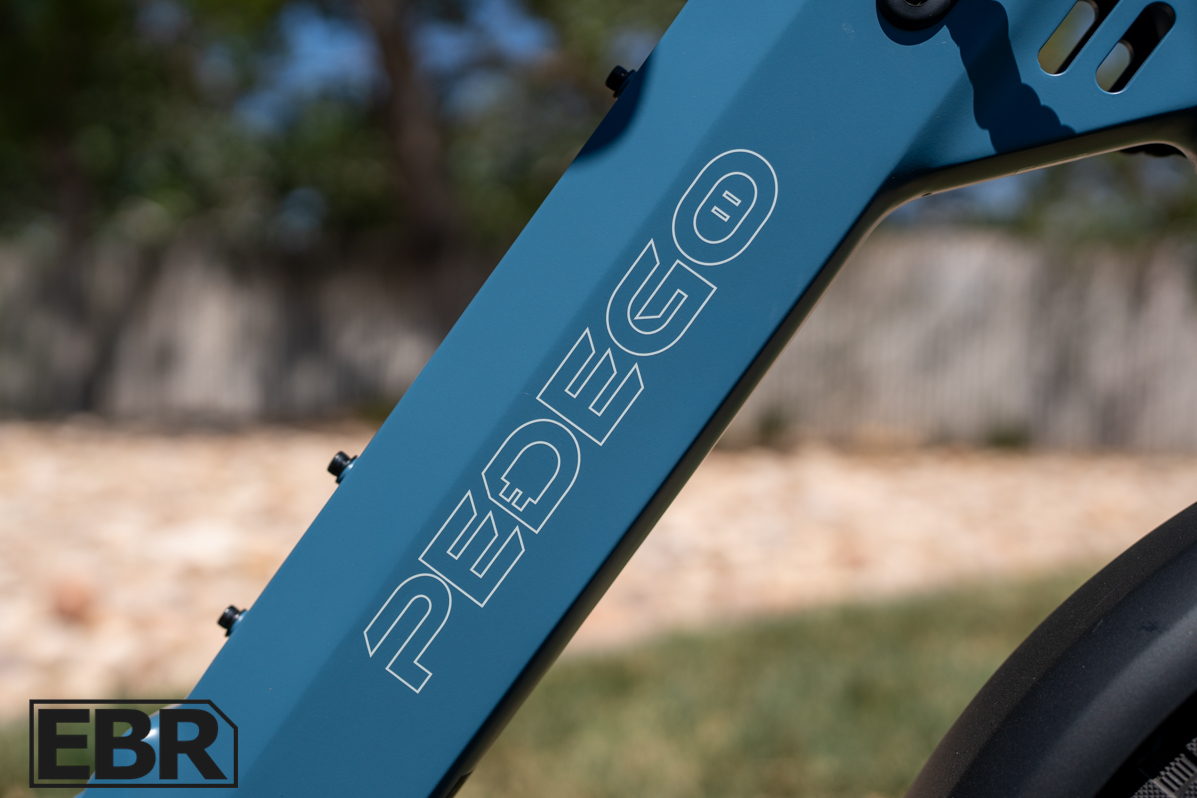
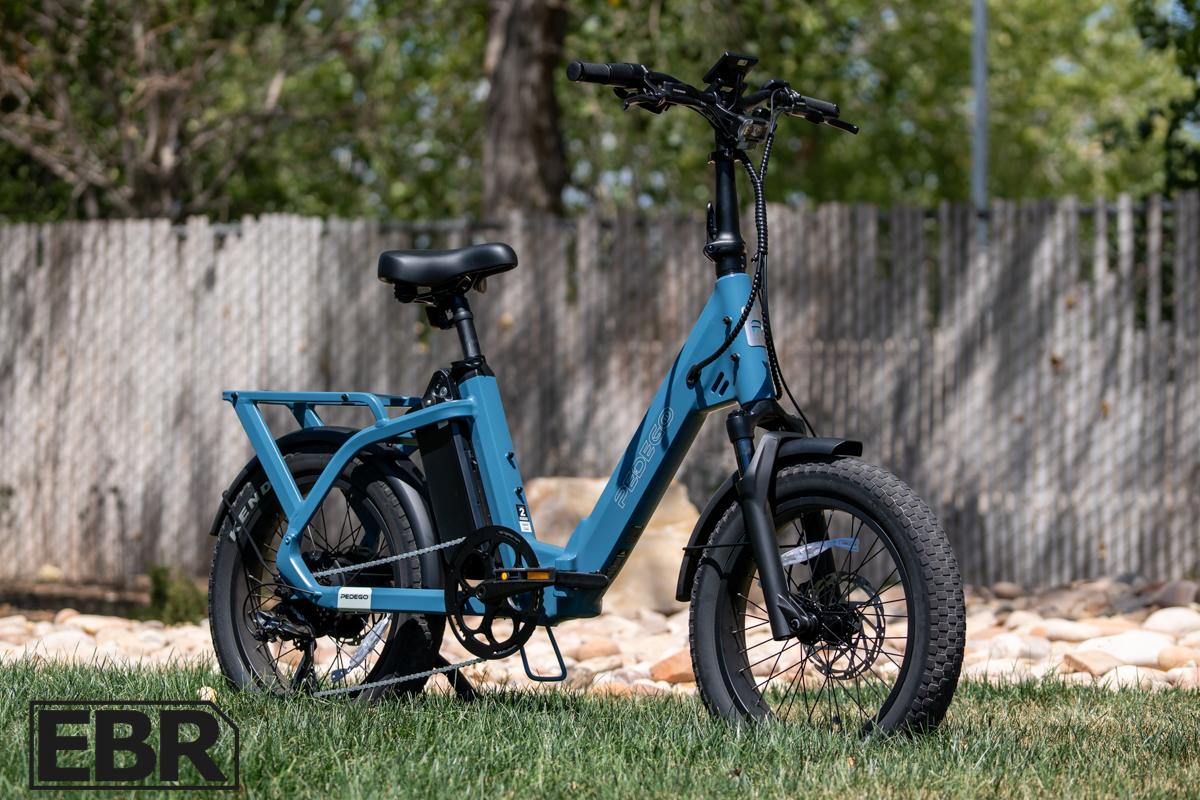
The Latch 2 comes in one frame size and one frame style, a step-thru folding frame, and Pedego offers it in three colors: Blue Fusion, Hematite (a grey), and Cloud Dancer (a pearl white). Personally I’m a fan of the blue; it’s a clean, right-down-the-middle look that most people will like, but it’s good that there are three options to choose from.
Going with a single size and frame style is a reasonable call on a folder like this. The step-thru design already makes it easy for a wide range of riders to get on and off, and keeping it to one configuration helps hold the price down. Pedego backs the single size up with a genuinely adjustable fit: 7.5 inches of seatpost height adjustment and a stem with three to four inches of adjustability range, which together cover a stated 5’1″ to 6’1″ range (and, based on our 6’3″ tester, a bit beyond). So while there’s only one size on paper, the adjustability works to make it fit a variety of riders.
There isn’t a separate high-step or larger-frame option, so if you’re well outside that height range, it’s worth sitting on one at a dealer first. But for most riders in the target range, the single well-executed size plus three colors is a sensible lineup.
Short answer: for the right rider, yes, and the reason comes down to more than the spec sheet.
As a folding, mid-fat tire e-bike, the Latch 2 is straight down the center of what you’d want. Sturdy frame, good quality components throughout, a strong 750W motor that climbs well, hydraulic brakes with no fade, good fit and geometry, and a ride that feels like a full-size bike rather than a wobbly folder. It folds to about 4.65 square feet (38″ long, 18″ wide, 31″ high), so it’ll go in an RV or the back of a truck, even though at 74 pounds you’ll want to pull the battery, which knocks off eight or nine pounds, before you lift it much.
So who is this for? It’s a strong fit for the RV and travel crowd, campground explorers, apartment and condo dwellers who need it to fold and store, and anyone who wants one versatile bike to commute during the week and cruise or lightly explore on the weekend. If you’re a rider who wants a dealer relationship and a warranty behind your purchase, that’s exactly what Pedego is selling here, and they clearly care about their riders.
The caveats are minor: the front fork’s clang at full bottom-out, and the small finish items like the grip end caps and missing chainstay protection. None of them change the fundamentals nor would be a reason to not buy the bike.
If the warranty, the dealer support, and a solid, comfortable full-size-feel folder are what you’re after, the Latch 2 is easy to recommend.



A lot of e-bikes try to win you over with flashy features and gimmicky tech. That’s not the approach Pedego took with the Latch 2.
Instead, they built a folding bike that’s comfortable, has a solid feel, and has good components throughout. There really wasn’t much, if anything, to complain about the bike. It folds nicely, is on par with the industry standards for power and range, and has good, name-brand components.
The thing that stands out most about riding the Latch 2 is how little it feels like a folding bike. Folders often tend to be a little loose, and that flex hurts the ride.
This one is the opposite. The frame is sturdy, the rear rack is sturdy, the fold latch is sturdy, and the whole bike has a rigid feel that gives you a better ride than I expected from a folding platform.
Folding e-bikes also tend to have weird geometry. It’s likely due to the fact that brands are making a bike that literally folds in half, but folders usually have longer reaches than what I would consider natural. The stem cants forward in relation to the fork, which both extends the reach further than needed and makes turning feel less natural than it otherwise would.
The Latch 2 still has that forward-canted stem, but the reach is only 17″, which is shorter than average and makes it so my arms are not stretched out straight like a zombie in a folding bike apocalypse. Instead, I still was able to have a slight, natural bend in my elbows which gave me better control over the bike.
The bike is spec’d for riders from 5’1″ to 6’1″, and I think that range is honest. At the low end, a 5’1″ rider will have the saddle slammed down and their hands sitting a little higher on the adjustable stem; at the top end, our six-foot-three tester in the office was comfortable, so you can probably push past the stated 6’1″ a bit.
On adjustability, the stem gives you a good three to four inches of range to raise or lower the bars, and the seatpost offers 7.5 inches of height adjustment, so most riders can dial in a fit. The 660mm handlebars are a good natural width, fairly flat with a little rise and not much sweep, and the lock-on grips have some vibration dampening that takes the edge off.
Comfort-wise, the bike performed well. The front fork is a little stiffer than most, which I actually liked since most inexpensive forks feel divey (i.e. they just sink down as soon as you hit any kind of bump). The comfort saddle, using “BF Foaming Technology” is also surprisingly comfortable.
Between the saddle, the grips, and the stiff-but-composed frame, it’s a good setup for a daily driver or something to cruise around on.
The Latch 2 has a 750W rear hub motor with 90 Nm of torque that peaks at 1,200 watts. That’s right in line with what I’d want to see on a folding mid-fat bike like this.
On our hill test it climbed the ‘Black Hill” in 92 seconds on throttle at a 13.6 mph average, and 92 seconds on pedal assist at the same 13.6 mph average. We’ve run this hill with about 10 to 12 bikes so far, and the Latch 2 lands toward the top of that group, even though I did the test in the ‘Standard’ setting instead of ‘Pedego’ mode (which is the bike’s most powerful mode).
Overall, the motor is powerful yet controlled, and I had no complaints there. It’s a little louder than some motors, but the engagement is smooth at the start of the pedal stroke, and the motor doesn’t have excessive overrun when you stop pedaling.
A big reason the motor feels so composed is the controller. It’s a 25-amp, 48-volt sinewave, field-oriented-control (FOC) unit, which delivers more precise power so the bike feels predictable and natural rather than surging. Pedego’s PedalSense system also lets you switch between torque and cadence sensing depending on the feel you want, with throttle available in either mode.
I personally found riding in torque mode to be more natural even though the power output is very high to where you don’t forget you are riding an e-bike.
Min Assist: Coming soon – test not yet complete
Max Assist: 38.8 miles
The battery is a 48V, 17.4Ah pack, which works out to 835 watt hours – which is a nice sized battery and gives you a lot of range.
We were able to get almost 40 miles when we tested the bike on MAX assist, which is very impressive in the folding bike category. While we haven’t been able to do our full MIN assist range test, we think that Pedego’s estimate of 84 miles is likely accurate (we also are assuming they used some kind of mathematical calculation to come up with that range given they estimate something other than a more round number like 80, 85, or 90). I guess sometimes the math actually works out!
The great range is likely a result of a combination of a larger battery (835Wh) and good quality LG 21700 cells paired with a high-quality sinewave controller that ensures power is delivered more efficiently.
For charging, Pedego includes a 48V 3A charger, so it will take around 6.5 hrs to fully re-charge your battery from 0 to 100%.
At $1,695 the Latch 2 is a little more expensive than the industry average. However, when you look at the entire package, that pricing starts to make sense – and seems to be a great value in the long-run.
Component-wise, Pedego has specc’d the Latch 2 with fairly standard, but high-quality components.
The drivetrain is a Shimano Tourney 7-speed drivetrain with rapid-fire shifters (tourney usually comes with over-the-handlebars shifters, so this is possibly a mix of a Tourney-level derailleur and Altus shifters). The cassette range is 11-32T in the rear, and is paired with a 52T front chainring. That combination worked well for the bike. With only 7 speeds I was expecting some ghost pedaling, so I was pleasantly surprised when I still had good engagement and a natural cadence while riding at 28 mph.
The brakes are Tektro hydraulic disc, 2-piston, with 180mm rotors front and rear at 1.85mm thickness. That’s exactly what I’d expect on a folding mid-fat bike at this price. On our 2-3 minute long brake test down the Black Hill (a total of about ½ a mile) I slammed on the brakes 6-7 times, and even rode a stretch where I was constantly riding the brakes to keep the bike under 10 mph. I had no issues down that entire stretch and the bike didn’t have any brake fade.
The suspension is a 60mm coil fork with a through-axle, which is a nice touch: the thru-axle adds rigidity through corners and improves the ride feel. The fork is on the stiff side, which works well for average-weight riders and resists bottoming out for heavier ones. The one catch, and it’s the main thing I’d ask Pedego to fix, is that there’s no rubber gasket or stopper at the bottom of the fork travel, so a full bottom-out produces a metal clang. It doesn’t hurt performance, but it can startle you.
Tires are 20″ × 3.0″ and are fast-ish on pavement but with enough tread to handle light offroad trails around a campground. The fenders front and rear are aluminum, so they are going to make some noise when rocks hit; I’d personally prefer a harder plastic there, but they do the job.
Rounding out the build: the comfort saddle is a little better than average, the lock-on grips have vibration dampening, and there’s a 100-lux front light plus rear lighting integrated with turn signals and a brake light. There’s also a bell that’s crisp enough that people actually hear it, which I appreciate on any kind of e-bike.
A few small finish notes: the grip end caps work loose over time, and there’s no chainstay protection, so I’d add a strip of chainstay tape to keep the chain from chipping the paint.
Overall the component package would normally place the bike around the $1,500 price-point – so on the surface this looks a bit like a bike where your paying a bit more to be able to buy from a bike shop.
HOWEVER, when you add the 5 year warranty and 6 free tune-ups that significantly changes the value proposition. Given a standard tune-up generally costs around $75, you would need to compare the Latch 2 more to a folding bike in the $1,200 – $1,300 price range.
The Latch 2 uses a 3.5″ color display rated at 500 nits with USB-C charging, and it’s positioned well: easy to see while you’re riding, and it powers on with an interesting “Hello, fun” greeting, which fits Pedego’s whole brand personality. It shows pretty much everything you need. The top-left bars indicate motor output (not battery, which is worth knowing), a class indicator shows whether you’re in Class 3 (C3), a light indicator shows auto or always-on, and the top-right battery readout gives you both a percentage and a bar. Because of that sinewave controller, the battery percentage reads more accurately than what you get on cheaper systems, which I like. The middle shows trip, odometer, and time, and the bottom-right shows your current mode and assist level.
You can do essentially all of your adjusting right from the display, no app required. Holding the bottom button opens the settings menu, where you can set throttle top speed (up to but not above 20 mph), switch between torque and cruise (cadence) sensing, choose your performance mode (Mellow, Standard, Pedego), set a power-on password, adjust brightness, and toggle the auto light. One quirk: to move between menu sections you press select again rather than just arrowing down, which was briefly confusing until I got used to it.
The most useful setting for me is the assist tune, available only in torque mode, which lets you customize the output for assist levels one, two, and three. I found level one a touch light for my taste, so being able to bump it up is handy. The system is also OTA-updatable and can connect to the new Pedego app. The app is pretty barebones right now, but Pedego has told me the app is a work in progress and they have a lot of plans to build out the app in the very near future.
The Latch 2 comes in one frame size and one frame style, a step-thru folding frame, and Pedego offers it in three colors: Blue Fusion, Hematite (a grey), and Cloud Dancer (a pearl white). Personally I’m a fan of the blue; it’s a clean, right-down-the-middle look that most people will like, but it’s good that there are three options to choose from.
Going with a single size and frame style is a reasonable call on a folder like this. The step-thru design already makes it easy for a wide range of riders to get on and off, and keeping it to one configuration helps hold the price down. Pedego backs the single size up with a genuinely adjustable fit: 7.5 inches of seatpost height adjustment and a stem with three to four inches of adjustability range, which together cover a stated 5’1″ to 6’1″ range (and, based on our 6’3″ tester, a bit beyond). So while there’s only one size on paper, the adjustability works to make it fit a variety of riders.
There isn’t a separate high-step or larger-frame option, so if you’re well outside that height range, it’s worth sitting on one at a dealer first. But for most riders in the target range, the single well-executed size plus three colors is a sensible lineup.
Short answer: for the right rider, yes, and the reason comes down to more than the spec sheet.
As a folding, mid-fat tire e-bike, the Latch 2 is straight down the center of what you’d want. Sturdy frame, good quality components throughout, a strong 750W motor that climbs well, hydraulic brakes with no fade, good fit and geometry, and a ride that feels like a full-size bike rather than a wobbly folder. It folds to about 4.65 square feet (38″ long, 18″ wide, 31″ high), so it’ll go in an RV or the back of a truck, even though at 74 pounds you’ll want to pull the battery, which knocks off eight or nine pounds, before you lift it much.
So who is this for? It’s a strong fit for the RV and travel crowd, campground explorers, apartment and condo dwellers who need it to fold and store, and anyone who wants one versatile bike to commute during the week and cruise or lightly explore on the weekend. If you’re a rider who wants a dealer relationship and a warranty behind your purchase, that’s exactly what Pedego is selling here, and they clearly care about their riders.
The caveats are minor: the front fork’s clang at full bottom-out, and the small finish items like the grip end caps and missing chainstay protection. None of them change the fundamentals nor would be a reason to not buy the bike.
If the warranty, the dealer support, and a solid, comfortable full-size-feel folder are what you’re after, the Latch 2 is easy to recommend.
July 20th, 2026 02:54 pm
| # | Наименование новости | Тональность | Информативность | Дата публикации |
|---|---|---|---|---|
| 1 | Ride1Up Portola 02 Review: A Top Rated Folding Fat Tire E-Bike at $1,095 | 0 | 10.64 | 18-08-2026 |
| 2 | GoTrax F3 Review: A $999 Fat Tire Folder That Gets the Basics Right | 0 | 6.92 | 17-09-2026 |
| 3 | Pedego Ridge Rider 2 Review: One E-Bike for the Commute and the Campground | 0 | 7.7 | 17-07-2026 |
| 4 | Mooncool TK2 Review: A $1,499 Folding Electric Trike With Reverse and a Rear Differential | 0 | 8.83 | 25-08-2026 |
| 5 | Euphree Stellar Falcon 2 Review: The All-Terrain Commuter Built Around Comfort | 0 | 11.59 | 28-08-2026 |
| 6 | Ride1Up unveils new and improved $895 Portola 02 folding e-bike – and I tested it | 0 | 28.99 | 18-08-2026 |
| 7 | Here are the best electric bikes you can buy at every price level in September 2026 | 0 | 14.14 | 14-09-2026 |
| 8 | This fascinating folding e-bike is lighter than Brompton’s lightest electric bike | 0 | 25.6 | 20-08-2026 |
| 9 | Wallke H9 Ultra Review; Seriously Fun and Built For MORE | 0 | 7.07 | 22-05-2026 |
| 10 | Segway Muxi Review: A Short-Tail Cargo E-Bike With Cruiser Comfort | 0 | 11.05 | 23-09-2026 |