Просмотр новости
Найдите то, что Вас интересует
 Спутники
 РН
РН SpaceX
 Роскосмос
 NASA
NASA
СпутникиРНSpaceXРоскосмосNASAFintech lenders manage a constant stream of credit applications, sometimes from customers with limited or no formal credit history. To remain efficient, they must assess applicants swiftly and accurately. Delays […]
The post How Credit Risk Analytics Software Helps Fintechs Approve the Right Customers Faster appeared first on The European Business Review.
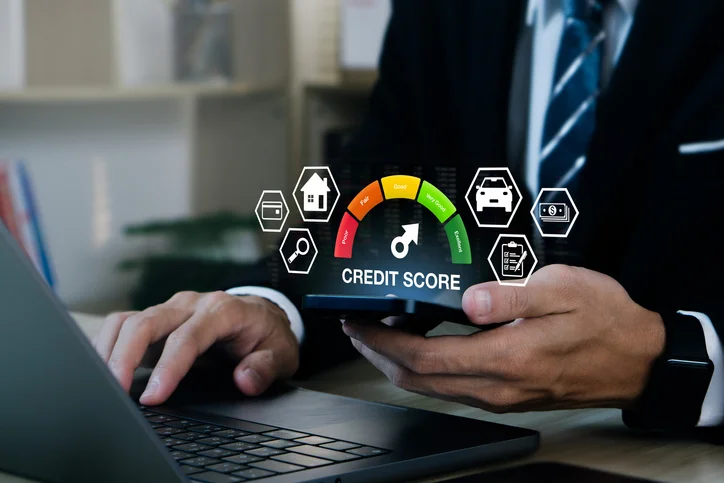
Fintech lenders manage a constant stream of credit applications, sometimes from customers with limited or no formal credit history. To remain efficient, they must assess applicants swiftly and accurately. Delays can impact user experience, while rushed decisions may introduce risk. A structured approach is needed to balance speed with reliability.
Credit risk analytics software helps fintechs address this challenge by providing clear behavioural insights from digital interactions. It uses mobile metadata, transaction patterns, and app usage to build meaningful borrower profiles. With this, lenders can evaluate applicants faster and with more consistency across varied customer segments.
Real-Time Analysis Reduces Approval DelaysFast processing is essential for fintechs to stay competitive. Manual checks take time and depend heavily on traditional records. Many applicants, however, show responsible behaviour through mobile and digital patterns that go unnoticed in conventional reviews.
Credit risk models built into software can read these patterns in seconds. They analyse stable behaviour like timely bill responses or regular in-app actions. Lenders use this information to assess reliability without slowing down the process. With real-time scoring, fintechs handle more applications with less review backlog.
Behaviour-Based Data Enhances Customer UnderstandingMany users leave a rich trail of digital actions tied to financial habits. Even without a formal credit file, certain behaviours, like budget tracking or consistent payment reminders, signal strong responsibility. Fintechs benefit from identifying these signs early.
Scoring tools within the software focus on measurable actions over assumptions. They translate app activity into structured indicators aligned with risk profiles. This builds fuller applicant views that go beyond static financial documents. With better context, lenders approve with more clarity and less hesitation.
Automation Supports Scale and UniformityGrowth in customer volume requires systems that can scale. Manual underwriting cannot expand at the same rate without reducing accuracy. Automation offers a solution by applying standard logic across all applications, regardless of origin or volume.
Software allows lenders to manage thousands of applications while maintaining consistency. As new data flows in, the models refine their scoring paths, always based on real inputs. Automation ensures that each applicant is evaluated using the same criteria, reducing bias and human error without slowing approvals.
Transparent Logic Builds Internal ConfidenceLenders need to trust the systems they rely on. Credit software with clear logic pathways allows internal teams to trace how scores are generated. When outcomes link back to visible behaviours, the process becomes easier to validate.
Key inputs sometimes include:
A good credit risk analytics platform uses mobile behavioural data to generate structured, real-time scores. It works with anonymised metadata collected with user consent, focusing on non-personal signals tied to financial habits. The software must offer clear outputs that connect to risk indicators, fraud detection, and segmentation.
Efficient tools integrate easily with mobile apps through SDKs or APIs. They include transparent scoring logic and dashboards that provide detailed behaviour-based insights. Privacy standards must also be built in to ensure only relevant, ethical data is used for scalable, accurate decision-making.
Credit risk analytics software helps fintechs improve how they evaluate customers. It brings speed, structure, and clarity to the approval process through the use of relevant behavioural data. Instead of relying only on financial records, fintechs can now assess real actions that reflect creditworthiness. The result is faster decision-making grounded in clear, repeatable scoring. As the market grows, these tools provide the flexibility and control that lenders need.
| # | Наименование новости | Тональность | Информативность | Дата публикации |
|---|---|---|---|---|
| 1 | Cross-Border Banking for European Digital Platforms: What’s Changing in 2026 | 0 | 11.45 | 16-07-2026 |
| 2 | Contract Intelligence vs Traditional Contract Management: Which Offers Better Risk Mitigation? | 0 | 7.32 | 30-08-2026 |
| 3 | The Rising Cost of Business Software and How Companies Can Bring It Under Control | 0 | 5.68 | 19-08-2026 |
| 4 | Exits records et acheteurs en pagaille : que révèle la grande braderie de la fintech européenne ? | 0 | 4.96 | 08-07-2026 |
| 5 | How to Pilot AI Sales Agents Safely | 0 | 7.27 | 20-08-2026 |
| 6 | Revenue Is Up, but Your Product Is Slipping. How to Tell | 0 | 6.54 | 10-07-2026 |
| 7 | How Generative AI Is Creating New Opportunities for Digital Businesses | 0 | 8.8 | 11-08-2026 |
| 8 | The Real Cost of Vendor Churn After Go-Live | 0 | 11.76 | 17-09-2026 |
| 9 | Crux Analytics raises €1.9M to help banks win and retain small business customers | 0 | 8.93 | 24-09-2026 |
| 10 | Comment utiliser un logiciel de crédit management pour mieux piloter le risque client ? | 0 | 6.67 | 22-05-2026 |