Просмотр новости
Найдите то, что Вас интересует
 Спутники
 РН
 SpaceX
 Роскосмос
 NASA
СпутникиРНSpaceXРоскосмосNASAOn the TV show, these New Englanders transform, facelift, or downright save historic cottages and cabins
The post Get your winter home ready with advice — or even a renovation – from the ‘Maine Cabin Masters’ appeared first on Boston.com.
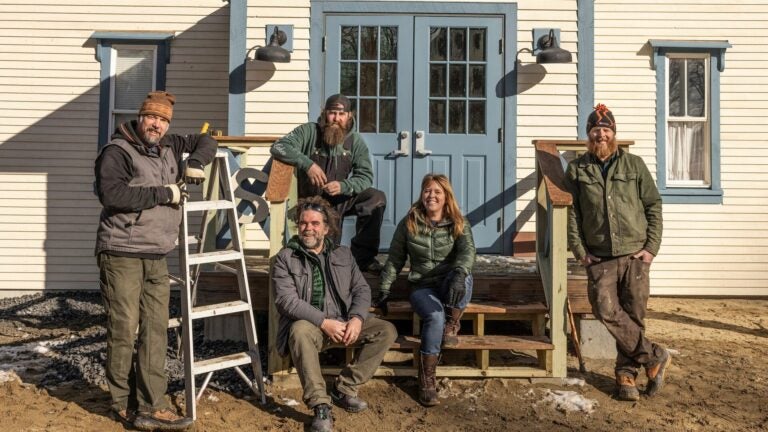 The cast of "Maine Cabin Masters" in front of one of their projects. Magnolia Network
Send this article to your social connections.
If you love home renovation shows, chances are you’ve seen a troop of Grateful Dead-loving Mainers renovating cottages and cabins in their home state.
For about a decade, lead builder Chase Morrill, with his sister and brother-in-law — jam-band fans Ashley Morrill-Eldridge and Ryan Eldridge — have used their skills to transform, facelift, or downright save historic cottages and cabins or “camps” as they’re called on “Maine Cabin Masters.”
With Morrill leading, Morrill-Eldridge designing, and Eldridge’s construction, the team of Central Maine natives is rounded out by carpenters Matt Dix and Jared “Jedi” Baker.
Morrill has been working on camps since he was a kid. “We had our own family camp, and I learned from my father and my grandfather,” he said.
Advertisement:
“Around 2015, I joined forces with Ryan, Jedi. and Dix. We were all working on a project together [when] Dorsey Pictures put out a casting call for a carpentry crew in Maine. They told us, ‘One in 500 pilots gets picked up.’ We’re like, ‘That’s fine.’ We just wanted a story to tell our buddies. The pilot aired around Thanksgiving 2016 and it kept going from there.”
Season 13 is out now on Magnolia Network, and they just wrapped season 14. The show also airs on HGTV, a Roku channel, and various seasons stream on Discovery+, Hulu, and HBO Max. Morrill and his wife Sarah recently renovated a historic bed and breakfast in Monmouth. Opening their inn, Waters Run Bed & Breakfast, was the subject of a recent spin-off season: “Maine Cabin Masters: All Inn.”
Advertisement:
Kennebec Cabin Company, a retail store/restaurant in Manchester, Maine, serves as their homebase — and yes, they sell tie-dye shirts and stealies.
“We all love the Grateful Dead — but Ryan’s a huge Deadhead,” said Morrill. “One of his favorite parts of the show is wearing different shirts fans have sent him over the years.”
Aside from T-shirts from fans, the group accepts applications for Maine homes to renovate via their website, where they also list the vendors used on each episode.
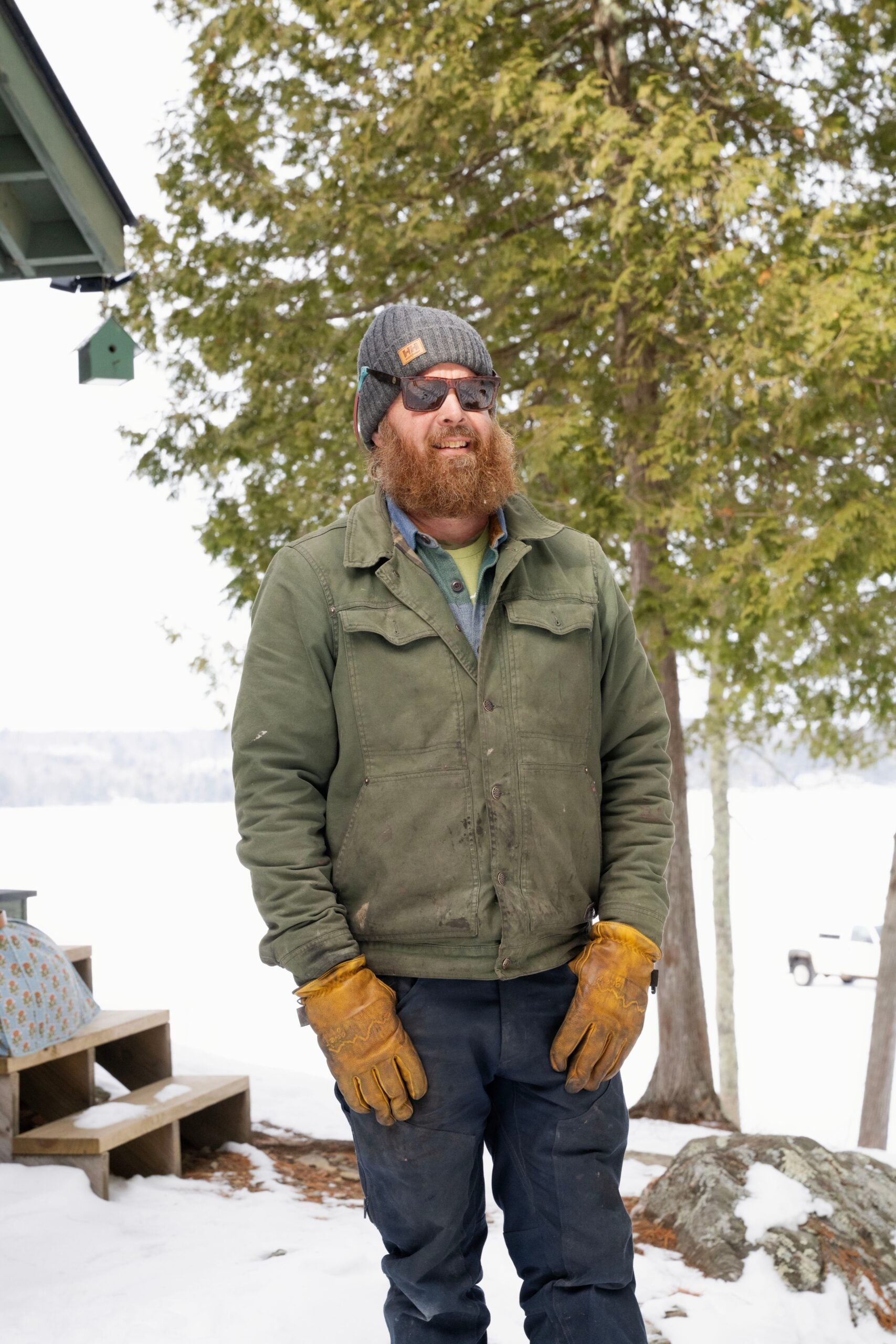 Chase Morrill of “Maine Cabin Masters.”
Have a winter cabin of your own? Morrill sat down to talk New England cabins:
What stands out to you in an application?
We do typically 16 houses a season. We start lining them up in early winter. Around February, we’ll go through applications. We’re looking for a good transformation, a reasonable amount of work — a good story doesn’t hurt. We’ll travel about two hours from our home base in Manchester.
We like the traditional Maine camps, but we also like the fun, unique ones as well. We’ve done a geodesic dome. But I really like the traditional Maine camps made of wood.
We’re not talking crazy budgets. It’s just making a home more comfortable for owners to use and pass on to future generations, so they can get their kids up to Maine, to make memories and enjoy the space.
Advertisement:
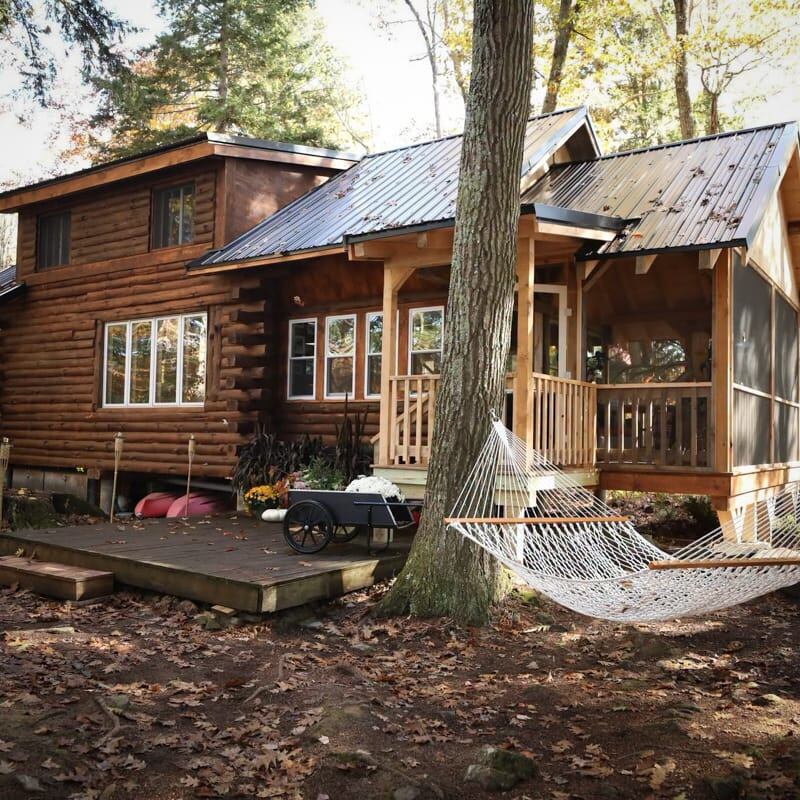 One of the homes featured on “Maine Cabin Masters.”
With winter coming, what typically needs to be done with these homes?
Block up any critter holes where a cold draft can get in and potentially cause frozen pipes. Critters are starting to find warm spots to hide. [They] love to get in, make nests, dig holes. They’ll start digging and chewing. Spray-foam insulation is a great way to seal up any gaps because it expands, seals it in. You can also take a metal hardware cloth, staple that into the area, then spray foam. So even if a critter was interested in chewing, they’ll hit the wire mesh.
READ MORE: How to winterize your New England vacation home
Get leaves away from camp so that it doesn’t build up. Leaves and branches make insulation for critters. Cut back branches; overhanging branches tend to snap off with a big snow load. That allows critters to climb from trees and access higher areas. Plus downed branches can mean power loss.
A lot of heat is lost out drafty windows. Replace older, leaky windows. Clear plastic inserts help with drafts. There are also curtains and blinds designed to help hold heat.
What might you do for a ski cabin?
Advertisement:
If we’re lucky, we’ll have a really snowy winter. Ski lockers are big because you want access to your toys. We just built a sled shed for Dix at his camp in Rangely — a nice spot for his snowmobiles to bring them out of the weather after a day of riding so snow melts off of them. You drive your sled in, and then when you next morning, it’s ready to drive right out the other side. [It keeps] all your gear nice and dry.
What kinds of projects do you like?
I like the projects where we’re really saving the camps. Where most contractors come in and say, ”It’s got to be torn down” – that’s where we come in.
This interview has been edited and condensed. Lauren Daley is a freelance culture writer. She can be reached at [email protected]. She tweets @laurendaley1, and Instagrams at @laurendaley1.

Lauren Daley is a longtime culture journalist who covers music, books, comedy, TV, and New England life.
Our weekly digest on buying, selling, and design, with expert advice and insider neighborhood knowledge.

Want to leave a comment?