Просмотр новости
Найдите то, что Вас интересует
 Спутники
 РН
РН SpaceX
 Роскосмос
 NASA
NASA
СпутникиРНSpaceXРоскосмосNASAShipping an oil tanker from the United States to China now costs more than a SpaceX rocket launch
Current section
Shipping an oil tanker from the United States to China now costs more than a SpaceX rocket launch

Print in a simple, ad-free format
Ad-free and in a comfortable reading format
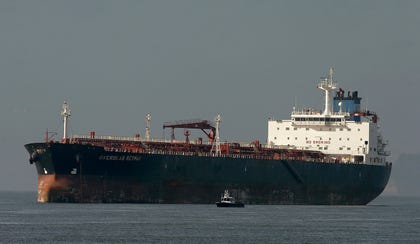
Oil tanker at sea Credit: AP
October 10, 2026
Global oil shipping costs have skyrocketed amid the volatile security situation in the Gulf, with shipping a tanker from the United States to China costing more than a space rocket launch, Bloomberg reported on Friday.
Brokers at SSY, a large shipbroking house, note that even after adjusting for inflation, current shipping rates are the highest since the first supertankers began operating in the 1960s, surpassing the peaks of the 1980s "Tanker War" between Iran and Iraq in the Gulf.
According to Bloomberg, the drastic spike in expenses is due to a global shortage of tankers, Iranian pressure on the Strait of Hormuz, Houthi attacks in the Gulf and a global shortage of oilers.

Gibson, a shipbroking firm, said that shipping oil from the United States to China costs about $80 million, compared with $74 million for a standard launch of a SpaceX Falcon 9 rocket. At the beginning of the year, this amount was enough to purchase full ownership of a tanker.
The root of the crisis lies in a logistical bottleneck: "There's really not quite enough shipping to go around," said Vitol Group CEO Russell Hardy, one of the world's biggest oil traders. "We've had pretty parabolic pricing."
The uncertainty surrounding the Strait of Hormuz led to tankers looking for business elsewhere. Now, with the Gulf's recovery, their return to the scene takes weeks.
Additionally, the halt of Iranian oil exports to China is forcing Beijing to purchase oil from alternative sources through the regular commercial market, which increases demand for tankers.
Also, damage from Iranian attacks has idled vessels for repairs, while other ships are circumnavigating Africa to evade Houthi attacks, adding thousands of miles to their routes.
Middle Eastern oil producers are being forced to offload and transfer oil between vessels outside the Strait of Hormuz, a process that adds a week to each journey and pushes the global tanker fleet to its limits. Shipping through the strait has recovered to only about 80 percent of prewar levels, further straining capacity.
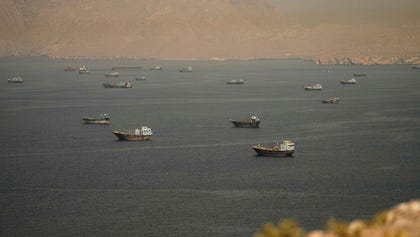
The Strait of Hormuz, June. Credit: Stringer/Reuters
This week, a U.S. shipping deal was struck at a rate equivalent to $41 per barrel of oil, compared with an average of just $4.50 per barrel on the same route last year. The rate amounts to about 45 percent of the price of a barrel of West Texas Intermediate crude, which traded at around $91.
For tanker owners, a relatively exclusive group of Greek shipping families, Norwegian tycoons and a South Korean shipping magnate, the surge in rates translates into enormous profits. The largest publicly traded companies in the sector have a combined market value of more than $70 billion.
The industry is adapting to the squeeze on capacity. Cargoes from West Africa and South America that would normally be shipped on supertankers are being split between two smaller vessels, freeing up the larger tankers for oil shipments.
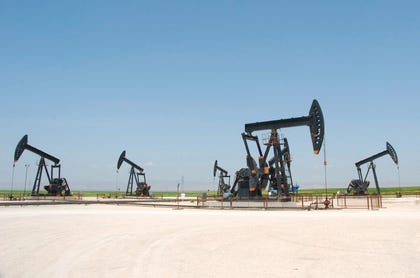
Oil pump jacks. Credit: Reuters
This shift has spread the shortage of available vessels to other markets, pushing average daily earnings for these ships to more than $680,000, five times the level at the beginning of October.
Oil producers including Iraq, the United Arab Emirates and Kuwait have also begun buying their own tankers to hedge against supply risks, driving secondhand tanker prices to a record $240 million per vessel.
The crisis is also taking a toll on the refining sector. Although European refiners initially benefited from higher prices amid a diesel shortage, data from RBC Capital Markets shows that refining margins fell by more than half in October as shipping costs surged.
Analysts warn that if freight rates continue to rise, refineries may be forced to cut output, potentially disrupting or even halting global trade flows.
In the News Colombia Opens Embassy in Jerusalem After Restoring Diplomatic Ties With Israel
 Israeli City Bars Municipal Employees From Posting Political Views Online
 Gaza's Raw Sewage Floods Mediterranean Sea as Israel Restricts Reconstruction
 Yoseph Haddad Is Israel's 'Good Arab' – Until He Seeks Political Power
 '60 Minutes' Exposes Ben-Gvir's 'Compassionate' Ethnic Cleansing Plan
 Remembering and rebuilding two years laterICYMI
 Thousands Are Held in Israeli Torture Camps. This Is What Happens Inside
 Netanyahu Seeks to Join Saudi's Fight Against Houthis, Crown Prince Opposes Move
 Goebbels Isn't Applauding Navi Pillay – but What Israel Has Become
 IDF Testimonies: After Oct. 7, Even Lowest-Level Target Justified Civilian Death
 Netanyahu Orders to Uncover Identity of Soldiers Interviewed in 'NAZA'
 America's Right Is Tired of Israel and Jews. NatCon Jerusalem Confirms It
| # | Наименование новости | Тональность | Информативность | Дата публикации |
|---|---|---|---|---|
| 1 | Maritime shipping costs have surged to record highs due to conflicts, climate factors — FT | 0 | 11.77 | 17-08-2026 |
| 2 | Hormuz disruption puts cost pressure on shipping lines even as freight rates rise | 0 | 12.74 | 14-08-2026 |
| 3 | Стоимость перевозки российского угля взлетела | 0 | 10 | 24-09-2026 |
| 4 | WP: санкции против России приводят к нарушениям глобальных цепочек поставок | 0 | 0 | 20-03-2022 |
| 5 | Подержанные нефтяные танкеры стали дороже новых на фоне дефицита флота | 0 | 10 | 16-10-2026 |
| 6 | Стоимость контейнерных перевозок из Китая в Россию достигла максимума | 0 | 10 | 19-08-2026 |
| 7 | FT: стоимость морских перевозок рекордно выросла из-за конфликтов | 0 | 14.76 | 17-08-2026 |
| 8 | US retailer rations motor oil as prices quadruple and supplies run dry | 0 | 10 | 20-09-2026 |
| 9 | Beyond energy prices: the ripple effects of Gulf supply disruptions | 0 | 7 | 02-07-2026 |
| 10 | US critical minerals stockpile risks driving up prices, defence groups warn | 0 | 10 | 08-10-2026 |