Просмотр новости
Найдите то, что Вас интересует
 Спутники
 РН
РН SpaceX
 Роскосмос
 NASA
NASA
СпутникиРНSpaceXРоскосмосNASAPrices for whey protein are soaring, which could affect the cost of infant formula, experts warn
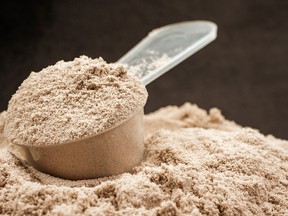 Whey protein, a byproduct of cheesemaking, is being added to everything, from sports beverages to chocolate bars, but it’s also a crucial ingredient in infant formula. Photo by Getty Images
The protein craze could have another knock-on effect, besides empty shelves where the cottage cheese used to be. Experts warn that “proteinmaxxing” — in which people try to pack as much protein into their diets as possible — may lead to price hikes in infant formula.

Enjoy the latest local, national and international news.
Enjoy the latest local, national and international news.
Create an account or sign in to continue with your reading experience.
Create an account or sign in to continue with your reading experience.
Whey protein, a byproduct of cheesemaking, is being added to everything, from sports beverages to chocolate bars, but it’s also used to make infant formula. Consumers could pay more as formula manufacturers contend with higher ingredient costs, industry experts told the Guardian.
According to Statistics Canada’s most recent data for June, the average monthly retail price for infant formula has increased by 11 per cent over the past two years — up from $44.98 per 900 grams in 2024 to $49.94 in 2026.

Join Laura Brehaut on a weekly food adventure with mouth-watering reads delivered Fridays.
By signing up you consent to receive the above newsletter from Postmedia Network Inc.
A welcome email is on its way. If you don't see it, please check your junk folder.
The next issue of Cook This will soon be in your inbox.
We encountered an issue signing you up. Please try again
From Tims’ bagels packing 20 grams of the stuff to TikToks so enticing they’ve triggered shortages in the dairy aisle, North America’s protein obsession is going strong. Adding to the growing appetite, as the number of people taking GLP-1 drugs rises, so does demand for high-protein foods. The nutrient helps maintain muscle mass, which is especially important during weight loss.
The global whey protein market was estimated at US$13.7 billion in 2026 and is expected to reach US$52 billion in the next decade, an annual growth rate of 14.2 per cent, according to Market Decipher.
Demand for whey protein has increased dramatically and so have prices, with no signs of slowing. According to Food Navigator, the price of whey protein concentrate (80 per cent protein) reportedly rose 120 per cent from October 2025 to July 2026, while whey protein isolate (90 per cent protein) increased 59 per cent and whey powder (roughly 12 per cent protein) increased 47 per cent.
“Whey is a major ingredient in infant formula, so significant increases in its price risk increasing the price of formula itself,” Dr. Vicky Sibson, the director of the U.K. public health non-profit First Steps Nutrition Trust, told the Guardian.
Sibson warned that the potential for passing on rising costs to consumers was “hugely concerning,” citing “mounting evidence that many families using formula to feed their babies find it unaffordable, and the coping strategies they use — like watering down feeds — may be harmful.”
Tom Booijink, a senior dairy specialist focused on Europe and Africa for RaboResearch Food & Agribusiness, echoed whey’s importance as an ingredient, telling Food Navigator that infant formulas typically have a protein composition of 40 per cent casein and 60 per cent whey, to resemble breast milk better. “As a result, whey is one of the most important protein ingredients used in infant nutrition.”
Jose Saiz, who focuses on the European dairy market at Expana, told the Guardian that many infant formula manufacturers have reformulated their recipes in response to higher ingredient costs over the past six months.
He said rising whey protein costs have already trickled down to consumers of many dairy and nutrition products, “although the extent of cost pass-through varies by market and brand.”
Booijink expects the impact on infant formula prices to be low to moderate. “The main bottleneck in the market is not the availability of whey itself, but rather the capacity to convert liquid whey into high-protein ingredients.”
Products designed for an aging population and sports nutrition, on the other hand, may bear the brunt of rising whey prices. “Historically, producers in this category have been able to absorb part of the cost increases due to relatively healthy margins,” Booijink said of the latter, “but there are limits to how long this can continue.”
This website uses cookies to personalize your content (including ads), and allows us to analyze our traffic. Read more about cookies here. By continuing to use our site, you agree to our Terms of Use and Privacy Policy.
| # | Наименование новости | Тональность | Информативность | Дата публикации |
|---|---|---|---|---|
| 1 | "Известия": производители детского питания заявляют о риске роста цен из-за маркировки | 0 | 0 | 16-02-2022 |
| 2 | Warum wird Proteinpulver immer teurer? | 0 | 6.87 | 16-06-2026 |
| 3 | Мировые цены на какао взлетели | 0 | 5 | 06-07-2026 |
| 4 | Мировые цены на популярный продукт достигли максимума | 0 | 10 | 27-08-2026 |
| 5 | Мировые цены на популярный продукт питания заметно выросли | 0 | 5 | 06-07-2026 |
| 6 | Fat jabs help users shed the pounds... but may be driving up the cost of your supermarket shop | 0 | 7 | 19-01-2026 |
| 7 | Эксперты предупредили о возможности скачка цен на мед | 0 | 0 | 11-07-2019 |
| 8 | Ударная доза белка // Протеиновые БАДы в России подешевели почти на 10% | 0 | 9.57 | 28-08-2026 |
| 9 | Рыбная мука дорожает не только из-за сезонности | 0 | 16.45 | 17-08-2026 |