Просмотр новости
Найдите то, что Вас интересует
 Спутники
 РН
 SpaceX
 Роскосмос
 NASA
СпутникиРНSpaceXРоскосмосNASABackground Landslide occurrence is strongly influenced by the physical and mechanical properties of subsurface soil; this study evaluates these properties in residual soil from Kampung Cihuni, Lebak Regency, as a controlling factor in landslides. Methods Thirty residual soil samples were collected at a depth of 0–1 m using a grid sampling method. Laboratory testing covered natural water content (w); specific gravity and unit weight, used to derive void ratio (e); the plasticity index (PI) from the Atterberg limits; and Unconsolidated Undrained (UU) triaxial testing for cohesion (c) and internal friction angle (φ). The distribution of each parameter was evaluated using histograms, Q-Q plots, and the Shapiro-Wilk normality test, while inter-parameter relationships were analysed using linear regression (R2) and Spearman correlation (ρ). Results The Shapiro-Wilk test showed that cohesion (c) and void ratio (e) are normally distributed, whereas water content (w), PI, and friction angle (φ) are not. PI values for the plastic samples (n = 26) ranged from 13.8% to 86.7%, and φ ranged from 5.48° to 20.5°; the relationship between the two was weakly positive (R2 = 0.151, p = 0.050; Spearman ρ = 0.244, p = 0.229). Cohesion ranged from 4.41–52.47 kPa but showed a very weak, non-significant relationship with water content (R2 = 0.028, p = 0.376), as did void ratio with φ (R2 = 0.089, p = 0.110). Conclusions Relationships among the physical and mechanical parameters were weak and mostly non-significant, so the reduction in soil shear strength cannot be explained by any single parameter alone. Because the UU triaxial test represents total-stress conditions, it cannot directly explain rainfall infiltration and pore-water pressure change as a landslide trigger, though it offers an initial picture of the residual soil’s engineering characteristics as a controlling factor in the area’s landslide susceptibility.
Research Article
Revised
[version 2; peer review: 1 approved, 2 approved with reservations]
https://orcid.org/0009-0000-0468-6124
1, Zufialdi Zakaria2, Nana Sulaksana2, [...] Teuku Yan W.M Iskandarsyah2, Dea Tyas Fatmalahttps://orcid.org/0009-0009-7484-0989
3, Fatma Kusuma Probodanihttps://orcid.org/0009-0009-4087-2560
3, Anastasya Pattiasinahttps://orcid.org/0009-0004-5936-3946
3, Yosi Asterina Maharanihttps://orcid.org/0009-0005-2286-0620
3, Marhamah Nur Azizah Tubakahttps://orcid.org/0009-0002-7101-9238
4, Cannavaro V.R. Pattiasinahttps://orcid.org/0009-0006-5580-3232
5, Nabila Kalsum Tuananyhttps://orcid.org/0009-0007-9359-6681
6https://orcid.org/0009-0000-0468-6124
1, Zufialdi Zakaria2, [...] Nana Sulaksana2, Teuku Yan W.M Iskandarsyah2, Dea Tyas Fatmalahttps://orcid.org/0009-0009-7484-0989
3, Fatma Kusuma Probodanihttps://orcid.org/0009-0009-4087-2560
3, Anastasya Pattiasinahttps://orcid.org/0009-0004-5936-3946
3, Yosi Asterina Maharanihttps://orcid.org/0009-0005-2286-0620
3, Marhamah Nur Azizah Tubakahttps://orcid.org/0009-0002-7101-9238
4, Cannavaro V.R. Pattiasinahttps://orcid.org/0009-0006-5580-3232
5, Nabila Kalsum Tuananyhttps://orcid.org/0009-0007-9359-6681
6PUBLISHED 16 Sep 2026
1 Doctoral Program Faculty of Geological Engineering, Universitas Padjadjaran, Bandung, West Java, 45363, Indonesia
2 Faculty of Geological Engineering, Universitas Padjadjaran, Bandung, West Java, 45363, Indonesia
3 Master Program in Natural Disaster Management Engineering, Department of Civil and Environmental Engineering, Faculty of Engineering, Universitas Gadjah Mada, Yogyakarta, Special Region of Yogyakarta, 55281, Indonesia
4 Master Program in Civil Engineering, Graduate School, Universitas Muhammadiyah Surakarta, Surakarta, Central Java, 57169, Indonesia
5 Master Program in Urban and Regional Planning, School of Architecture, Planning, and Policy Development, Institut Teknologi Bandung, Bandung, West Java, 40132, Indonesia
6 Master Program Faculty of Geological Engineering, Universitas Padjadjaran, Bandung, West Java, 45363, Indonesia
Arini Syafri
Roles: Data Curation, Formal Analysis, Investigation, Writing – Original Draft Preparation, Writing – Review & Editing
Zufialdi Zakaria
Roles: Conceptualization, Methodology, Supervision, Validation, Writing – Review & Editing
Nana Sulaksana
Roles: Conceptualization, Methodology, Supervision, Validation, Writing – Review & Editing
Teuku Yan W.M Iskandarsyah
Roles: Conceptualization, Methodology, Supervision, Validation, Writing – Review & Editing
Dea Tyas Fatmala
Roles: Data Curation, Investigation, Writing – Review & Editing
Fatma Kusuma Probodani
Roles: Data Curation, Investigation, Writing – Review & Editing
Anastasya Pattiasina
Roles: Data Curation, Investigation, Writing – Review & Editing
Yosi Asterina Maharani
Roles: Data Curation, Investigation, Writing – Review & Editing
Marhamah Nur Azizah Tubaka
Roles: Data Curation, Investigation, Writing – Review & Editing
Cannavaro V.R. Pattiasina
Roles: Data Curation, Investigation, Software, Writing – Review & Editing
Nabila Kalsum Tuanany
Roles: Formal Analysis, Software, Visualization, Writing – Original Draft Preparation, Writing – Review & Editing
OPEN PEER REVIEW
REVIEWER STATUS
Corresponding author: Nabila Kalsum Tuanany Competing interests: No competing interests were disclosed.
Grant information: This publication was supported by the Indonesia Endowment Fund for Education Agency (Lembaga Pengelola Dana Pendidikan/LPDP). The funders had no role in study design, data collection and analysis the decision to publish or preparation of the manuscript.
The funders had no role in study design, data collection and analysis, decision to publish, or preparation of the manuscript.
Copyright: © 2026 Syafri A et al. This is an open access article distributed under the terms of the Creative Commons Attribution License, which permits unrestricted use, distribution, and reproduction in any medium, provided the original work is properly cited. How to cite: Syafri A, Zakaria Z, Sulaksana N et al. Physical and Mechanical Characteristics of Soil as a Controlling Factor in Landslides in Curug Panjang Village, Cihuni Hamlet, Lebak, Banten: Analysis of Distribution, Normality, and Inter-parameter Relationships [version 2; peer review: 1 approved, 2 approved with reservations]. F1000Research 2026, 15:1195 (https://doi.org/10.12688/f1000research.184697.2) First published: 22 Jul 2026, 15:1195 (https://doi.org/10.12688/f1000research.184697.1) Latest published: 16 Sep 2026, 15:1195 (https://doi.org/10.12688/f1000research.184697.2)
This revision responds to two peer review reports and involves substantive corrections to the reported data and analysis. Data transposition errors between the original laboratory tables were identified and corrected against the raw laboratory sheets, and the three original results tables have been consolidated into two: physical properties and mechanical properties. The regression analysis for plasticity index versus friction angle and water content versus cohesion was recalculated using all 30 individual raw data points rather than an averaged subset, which changes the reported relationships from strong and highly significant to weak and mostly non-significant (R² = 0.151 for plasticity index versus friction angle, R² = 0.028 for water content versus cohesion). The Discussion and Conclusion have been revised accordingly, along with an expanded discussion of the limitations of total-stress triaxial testing for interpreting rainfall-induced slope failure. Cohesion values are now also reported in kPa alongside the original kg/cm² values. The Abstract has been restructured into Background, Methods, Results, and Conclusions sections and shortened to meet the journal's word limit. New figures and a summary table covering the distribution and normality of all five soil parameters have been added, along with new figures and a summary table for the relationships between parameters, including a new void ratio versus friction angle pair. The underlying dataset was reorganized on Zenodo, which changed its DOI; the Data availability statement and reference list have been updated to reflect this. Language and terminology have been revised throughout the manuscript
See the authors' detailed response to the review by Nugroho Aji Satriyo
See the authors' detailed response to the review by Merley Misriani
Indonesia is highly vulnerable to geological hazards because it sits at the meeting point of active tectonic plates (Luthfiya, 2025). One of the most frequent and recurring of these hazards is landslides, in which a mass of soil moves down a slope under gravity once triggered by specific controlling factors (Vulcanological Survey of Indonesia, 2024). These controlling factors include slope morphology, the geological character of the material that makes up the slope, and external triggers such as extreme rainfall and human activity (Rahardjo et al., 2008).
This vulnerability is evident in Curug Panjang Village, specifically Kampung Cihuni, Cikulur District, Lebak Regency, Banten Province. The area is regionally underlain by rock of the Pleistocene Bojong Formation (Qpb), whose lithology is dominated by sandy marl, sandy clay, and tuffaceous sandstone (Rusmana et al., 1991). Under the region’s tropical climate and high rainfall, this rock has weathered intensively, forming a thick residual soil layer with a dominant clay fraction. Geomorphologically, following the classification of (Van Zuidam, 1985), the area shows a marked contrast in terrain, with about 23.33% of it falling into the moderately steep to steep unit, at slope angles of 8 to 35°. The combination of steep slopes, a thick, clay-rich weathered soil layer, and low permeability creates a subsurface condition that is critical and highly susceptible to slope failure (Das & Sobhan, 2018). This vulnerability was borne out in early 2022, when a large landslide damaged dozens of homes, places of worship, and educational facilities, and cut the main road network, forcing a local evacuation (Rizkoh, 2022).
Studies of landslide susceptibility have so far relied largely on macro-scale approaches, such as slope-angle analysis, land-use mapping, or geophysical subsurface mapping, leaving out the fundamental engineering aspect that laboratory testing can provide. Physical and mechanical soil characterisation of this kind can give a more representative picture of landslide susceptibility, yet it remains comparatively underused (Rahmawati & Virgawati, 2024).
Building on this background, the present study characterises the physical and mechanical properties of the soil in Kampung Cihuni through laboratory testing. The distribution of each soil parameter is evaluated statistically, and the pattern of relationships among parameters is examined to understand how soil strength tends to change. The results are intended to give a picture of the engineering parameters that act as controlling factors for landslides in the study area, and to serve as a scientific basis for policymakers.
The soil characteristics used in this study comprise physical properties (water content, void ratio, and plasticity index (PI)) and mechanical properties (cohesion (c) and internal friction angle (φ)). The research process is outlined in the following stages:
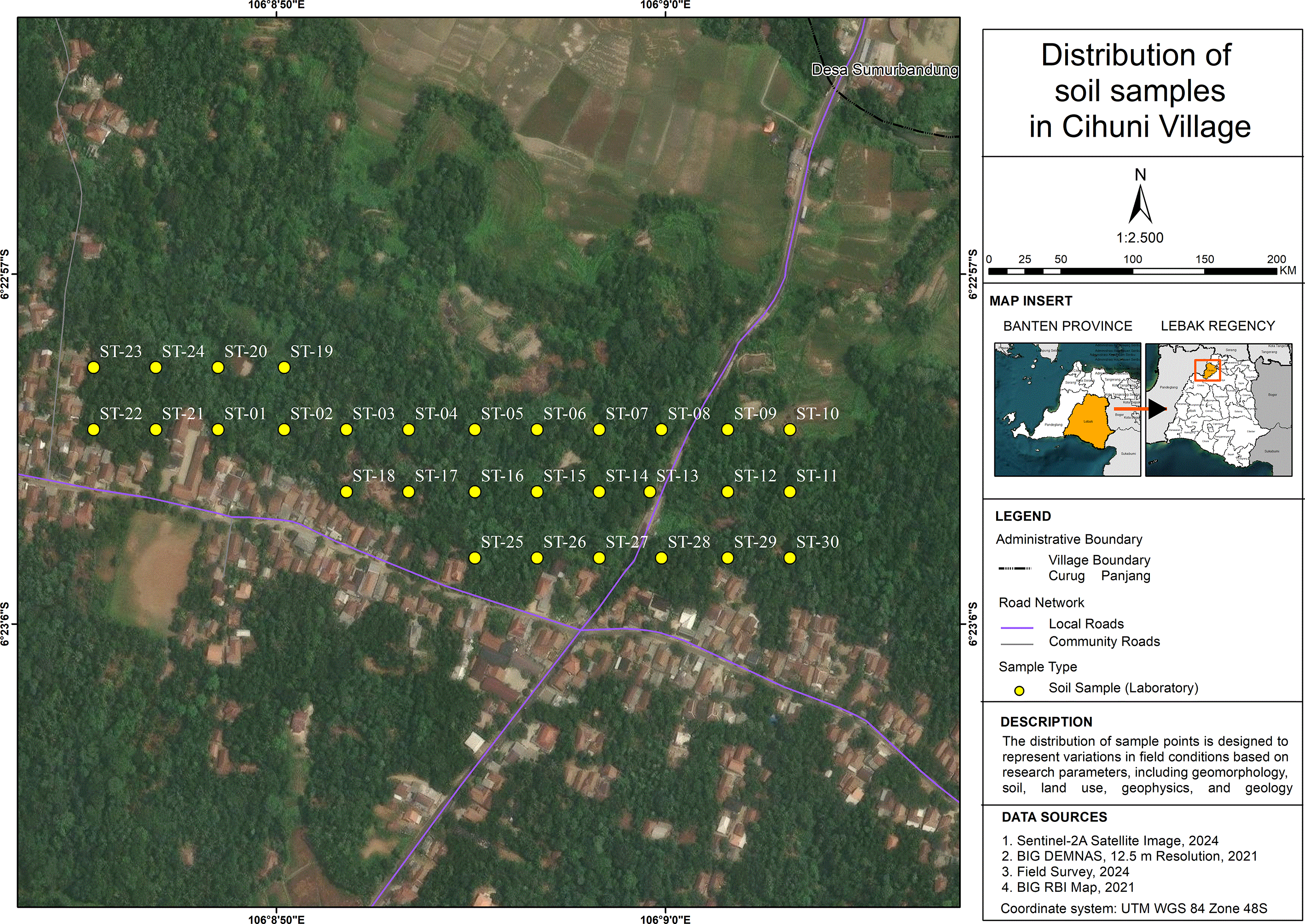
Samples were collected around Cihuni Village, Cikulur Sub-district, Lebak Regency, Banten Province. Physical and mechanical soil testing was carried out on 30 soil samples. The sampling method used was the Grid Sampling, a form of systematic sampling (Harjayanti et al., 2022). The study area was divided into 50 x 50 m grid cells, which served as the reference for determining the observation points.
Laboratory testing was carried out to determine the physical and mechanical characteristics of the soil as a basis for evaluating slope stability and analysing landslide susceptibility. Were performed on the soil samples collected in the previous stage and fell into two main groups:
a. Soil Physical Property Testing
Soil physical property testing was carried out to determine natural state and index characteristics of the soil at the study site. Water content was determined following ASTM D2216 (ASTM International, 2019). Specific gravity (Gs) was determined following ASTM D854 (ASTM International, n.d.), while unit weight (natural, saturated, and dry) was determined on undisturbed samples using the ring/core cutter method. Void ratio, porosity, and degree of saturation were not measured directly in the laboratory; instead, they were calculated from the soil phase relationships using the specific gravity, water content, and unit weight values obtained above. Atterberg limit tests (liquid limit and plastic limit) were also carried out following ASTM D4318 (ASTM International, 2017) to obtain the plasticity index (PI) and to classify the soil under the USCS and AASHTO systems.
b. Soil Mechanical Property Testing
Soil mechanical properties were determined through Unconsolidated Undrained (UU) triaxial testing following ASTM D2850 (ASTM International, 2015), to obtain the shear strength parameters cohesion (c) and internal friction angle (φ) based on the Mohr-Coulomb failure criterion. Because the test does not allow the sample to drain or consolidate during loading, the resulting shear strength parameters describe the soil under conditions of (total stress), rather than effective stress.
Soil characteristics were analysed for five parameters: water content, void ratio, plasticity index, cohesion, and internal friction angle. The analysis proceeded in two stages. First, the distribution and normality of each parameter were assessed using histograms, Q-Q plots, and the Shapiro-Wilk normality test, to determine whether the data were consistent with a normal distribution. Second, the relationships among parameters were analysed for three parameter pairs, plasticity index against friction angle, water content against cohesion, and void ratio against friction angle, using linear regression (the fitted equation and coefficient of determination, R2) and Spearman correlation (ρ), to evaluate the strength and significance of each relationship.
The study area in Cihuni Village was divided into 50 x 50 m blocks using a grid sampling approach. Thirty sampling points were identified and distributed across the study area. Soil samples were taken at a shallow depth of 0–1 m, the zone of active weathering in the Bojong Formation, and also the layer most exposed to saturation from direct rainfall infiltration. The spatial distribution of the sampling points is shown in Figure 1.
The 30 residual soil samples collected during the sampling stage were subsequently tested in the laboratory to determine their physical and mechanical properties. The complete laboratory results are presented in Table 1 and Table 2.
a. Physical Property Test Results
The physical properties of the 30 residual soil samples, comprising the natural-state parameters (water content, wet unit weight, saturated unit weight, dry unit weight, void ratio, porosity, and degree of saturation) and the Atterberg limits (liquid limit, plastic limit, and plasticity index), are presented in Table 1. It should be noted that four samples (ST-06, ST-07, ST-12, and ST-29) are non-plastic and therefore have no measurable plasticity index.
b. Mechanical Property Test Results
The mechanical properties of the soil, cohesion (c) and internal friction angle (φ), were obtained from Unconsolidated Undrained (UU) triaxial testing carried out on each of the 30 samples. The complete results are presented in Table 2.
Soil characteristics were analysed in two stages: distribution and normality analysis for each soil parameter, and analysis of the relationships among parameters. Both stages covered the five parameters used in this study: water content (Wn), void ratio (e), plasticity index (PI), cohesion (c), and internal friction angle (φ)
a. Distribution and Normality of Soil Parameter Data
The distribution and normality of the five soil parameters were analysed using histograms, Q-Q plots, and the Shapiro-Wilk test at a 5% significance level.
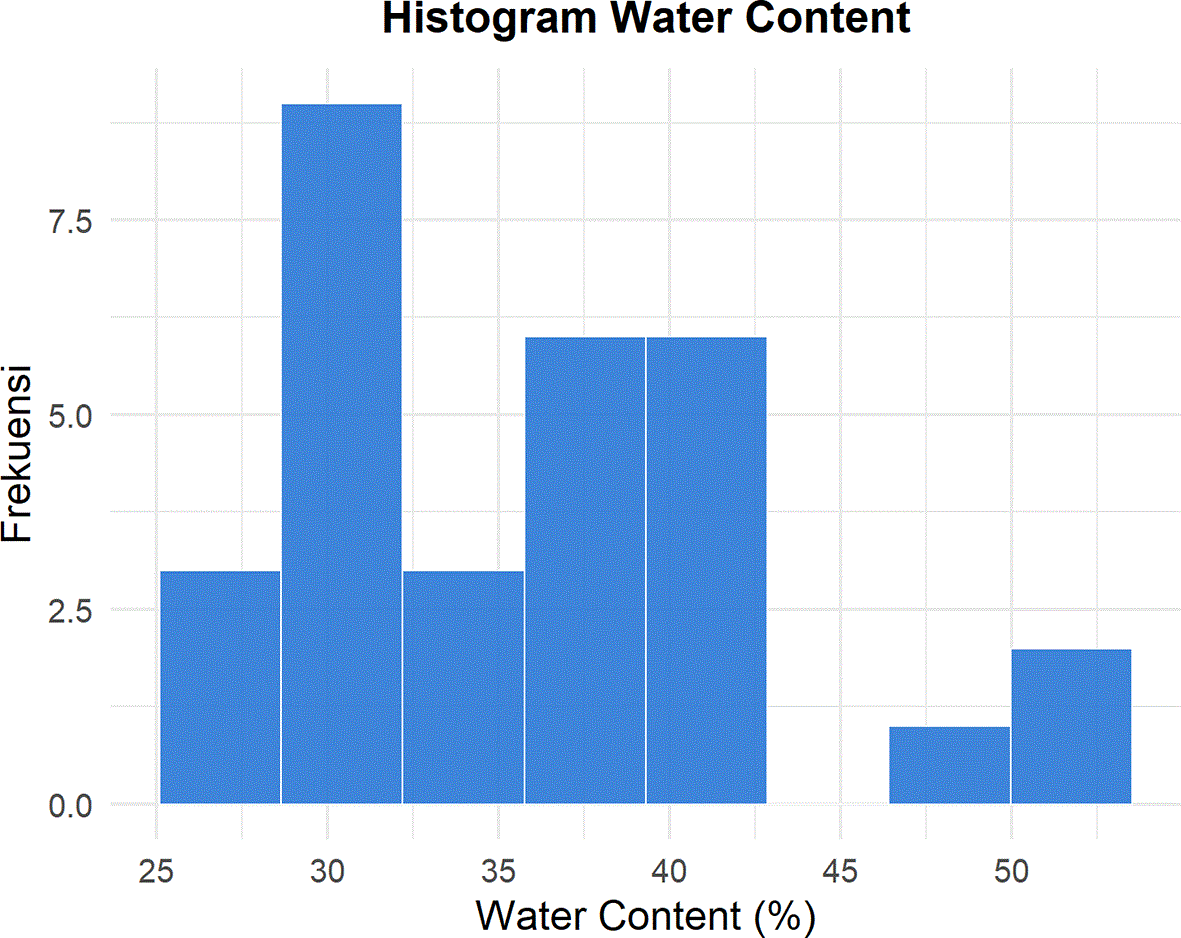
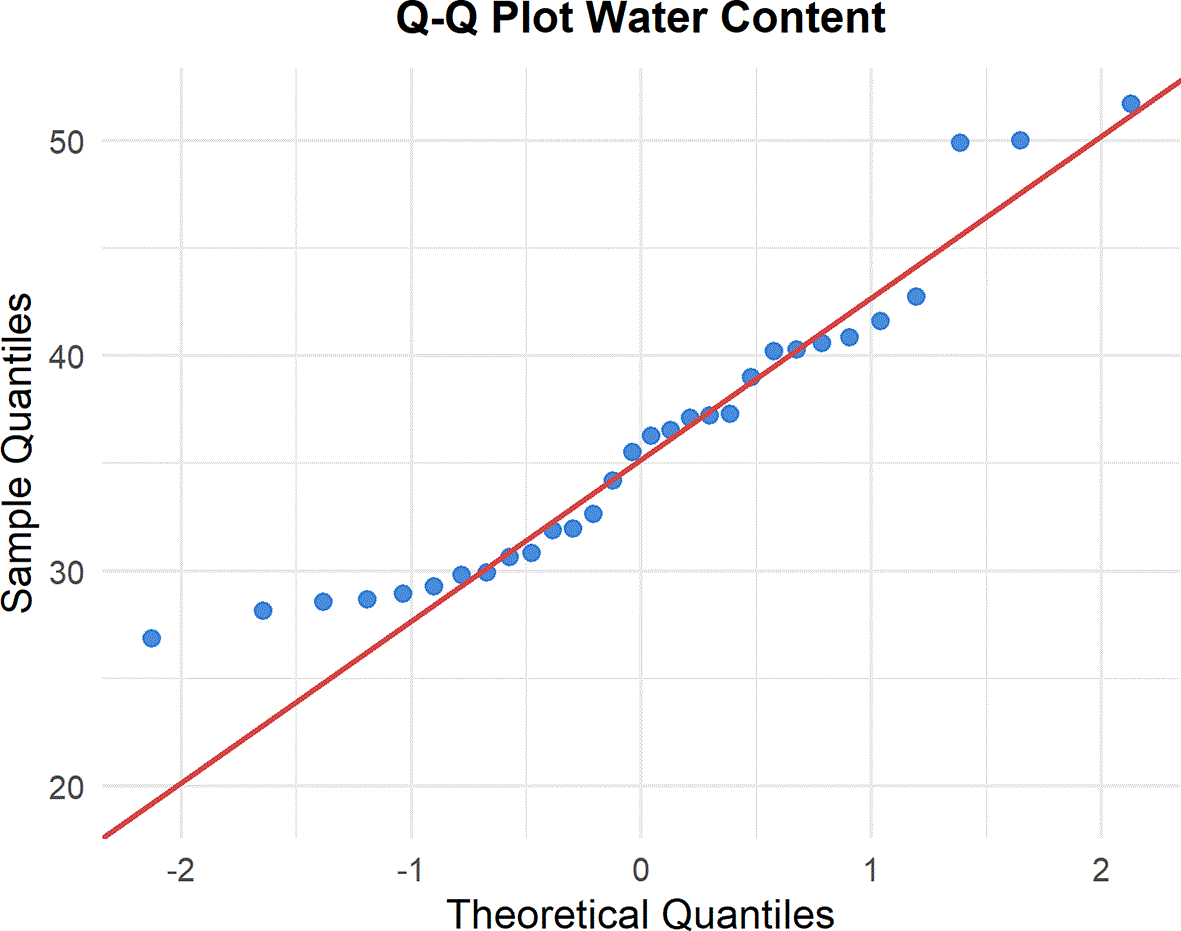
The water content (Wn) data show a right-skewed histogram (skewness = 0.75) (Figure 2), with most samples falling in the 27%–36% range. The Q-Q plot (Figure 3) shows some points departing from the reference diagonal at the extremes. The Shapiro-Wilk test gave p = 0.025 (< 0.05), indicating that the water content data are not statistically consistent with a normal distribution.
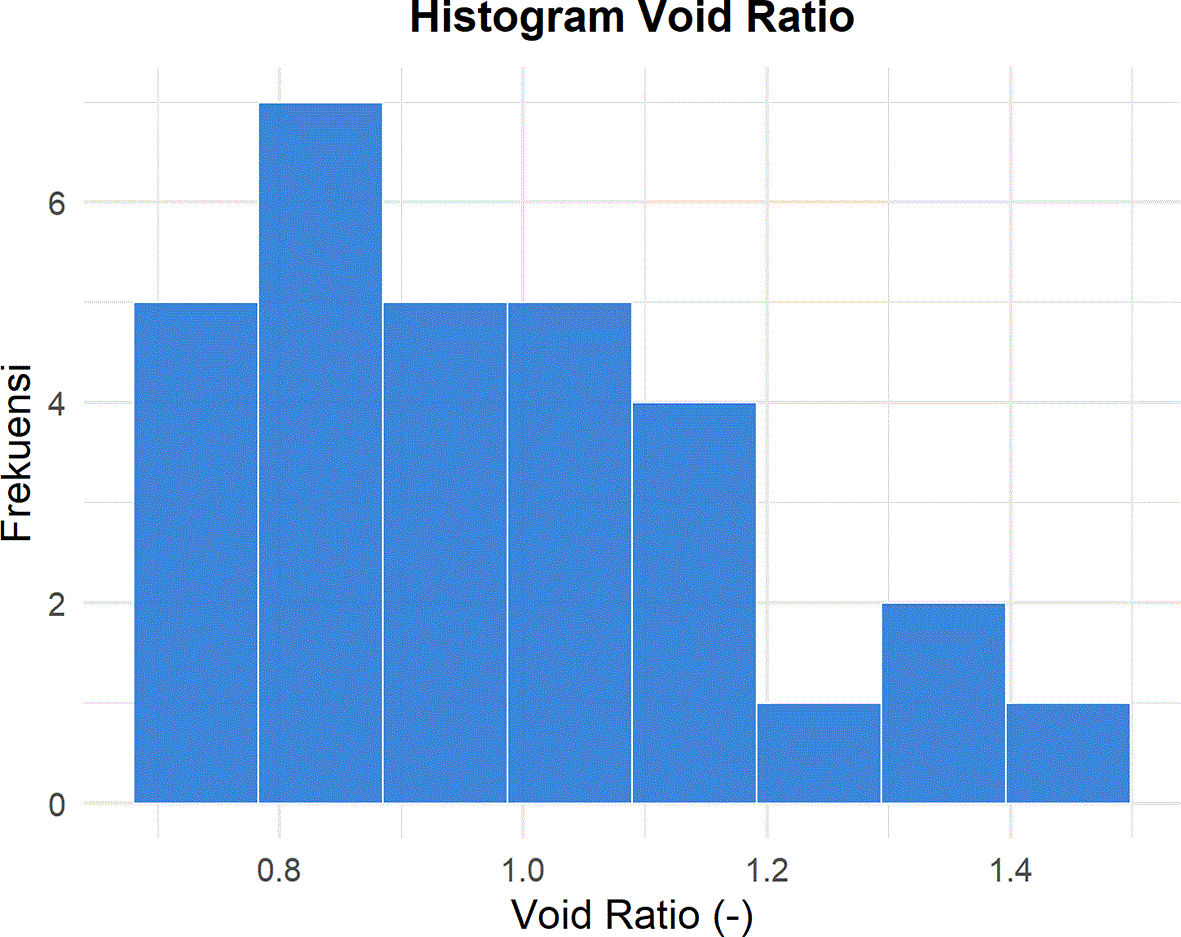
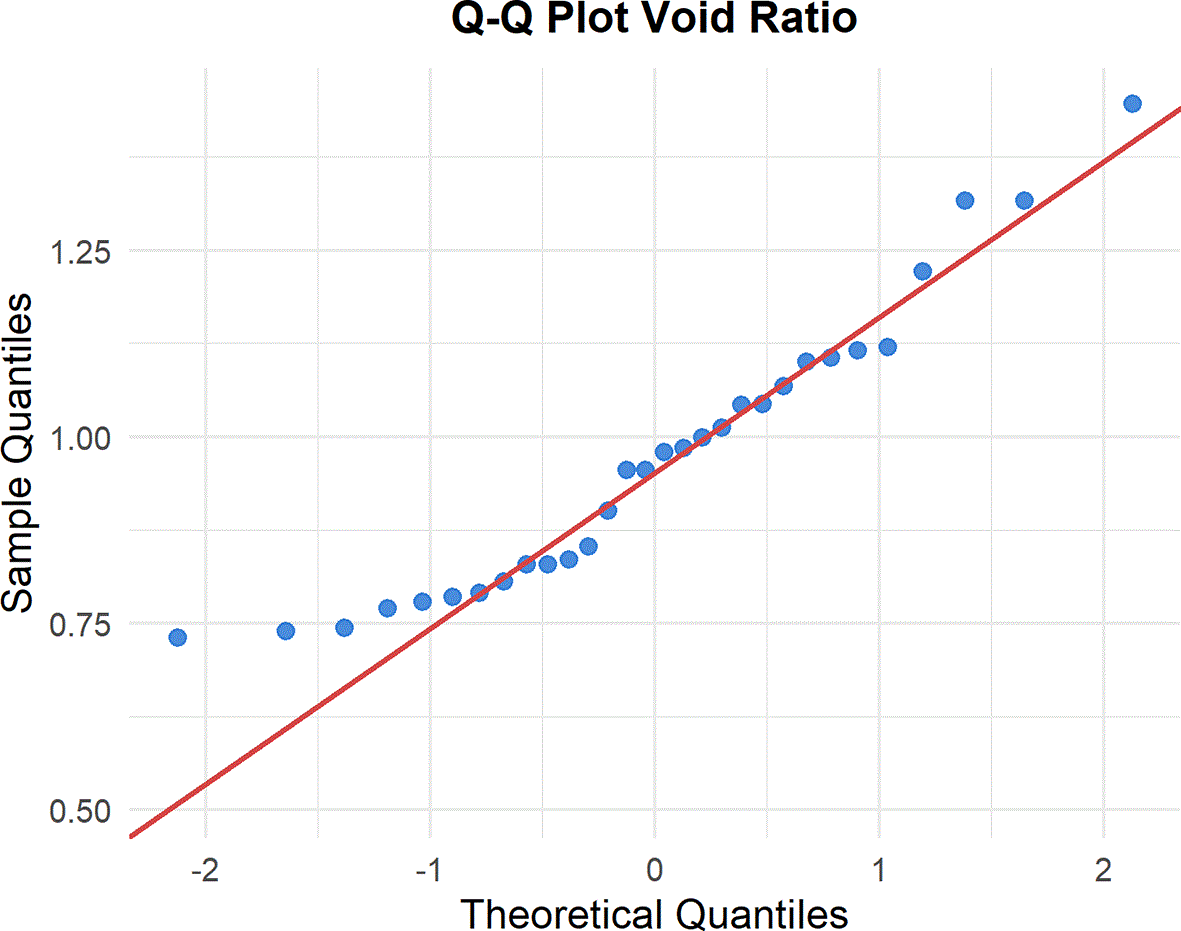
The void ratio (e) data show a slightly right-skewed histogram (skewness = 0.69) (Figure 4), with the Q-Q plot points (Figure 5) lying close to the diagonal overall. The Shapiro-Wilk test gave p = 0.051, right at the 5% significance threshold, so the void ratio data can be described as close to, but not fully satisfying, the assumption of normality.
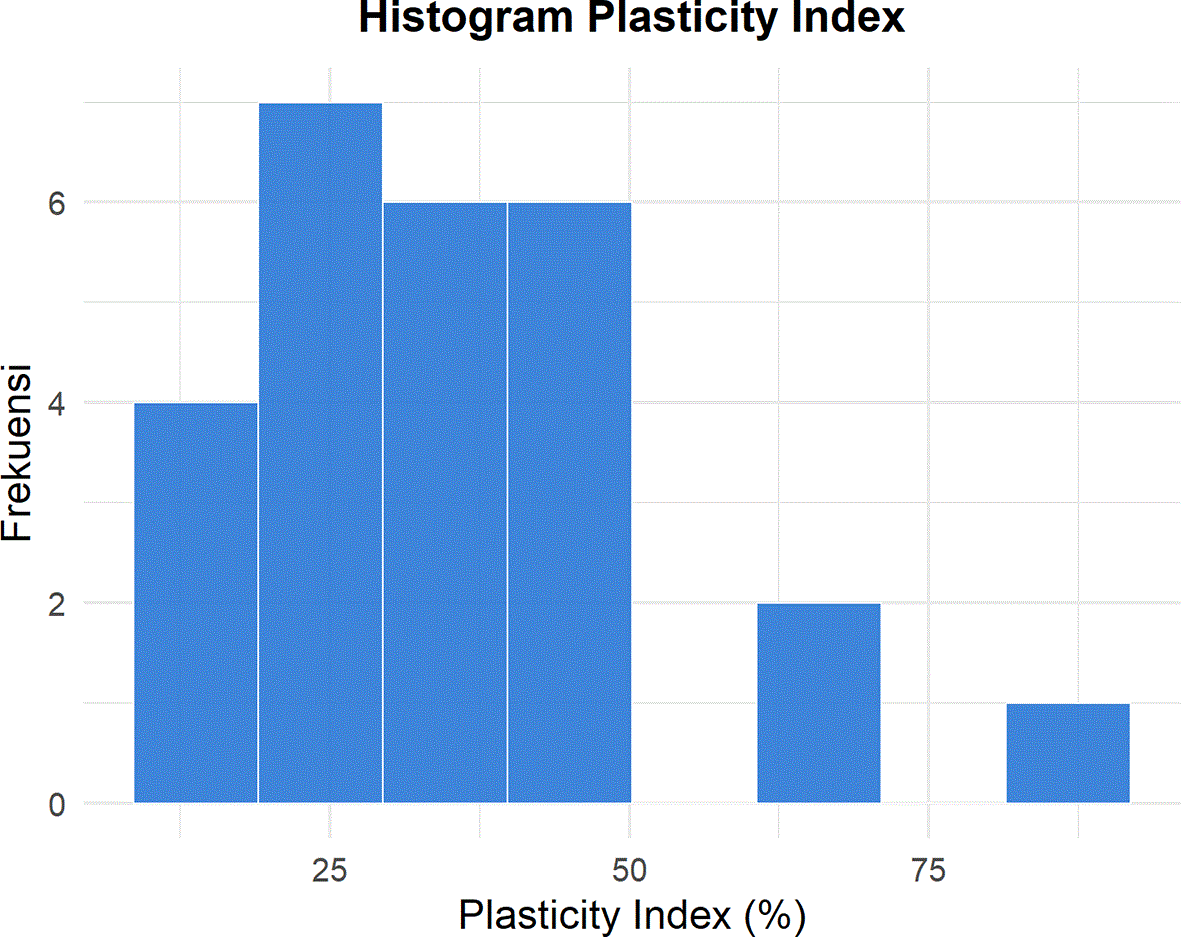
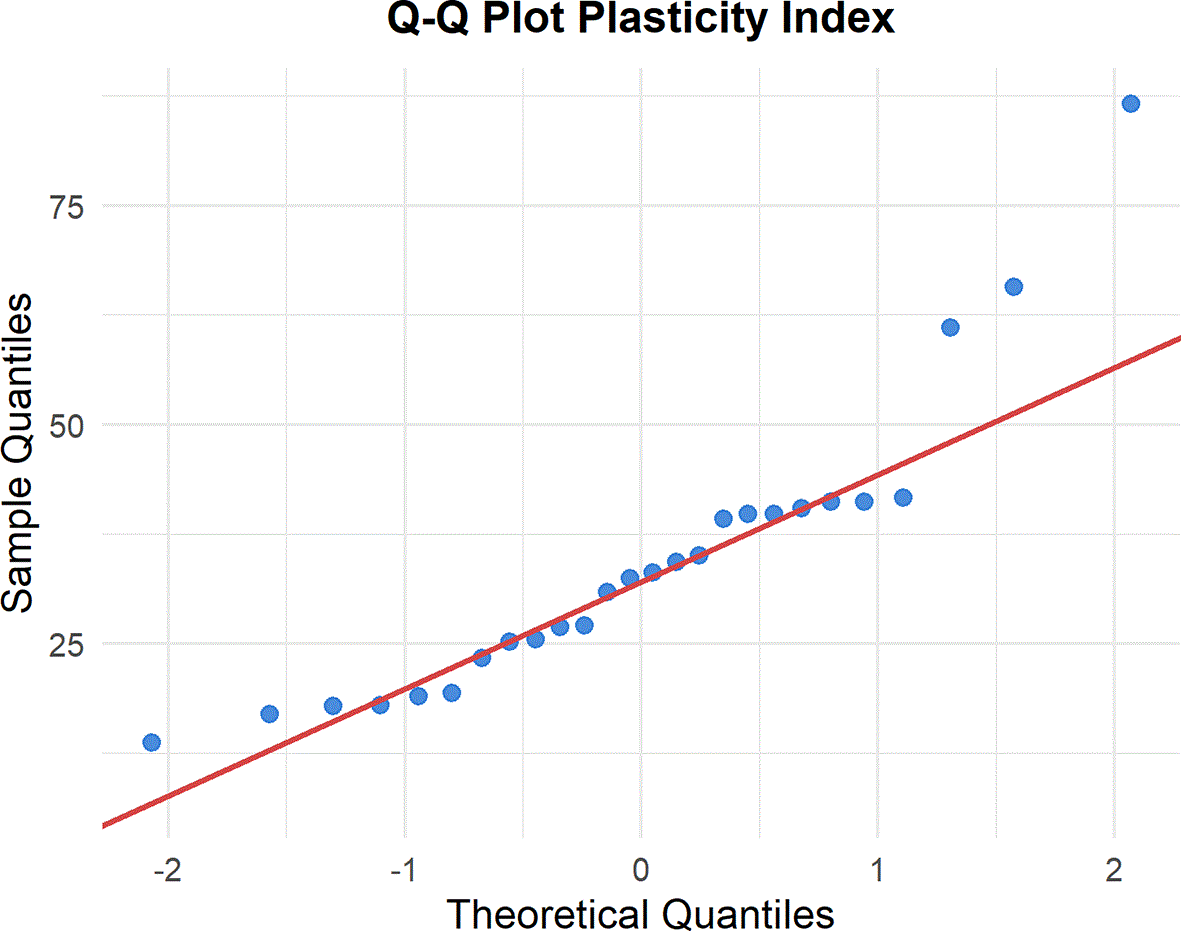
The plasticity index (PI, n = 26, excluding the four non-plastic samples) shows a sharply right-skewed histogram (skewness = 1.44) (Figure 6), and the Q-Q plot (Figure 7) shows a marked departure from the diagonal at high values. The Shapiro-Wilk test gave p = 0.003, indicating a significant departure from normality.
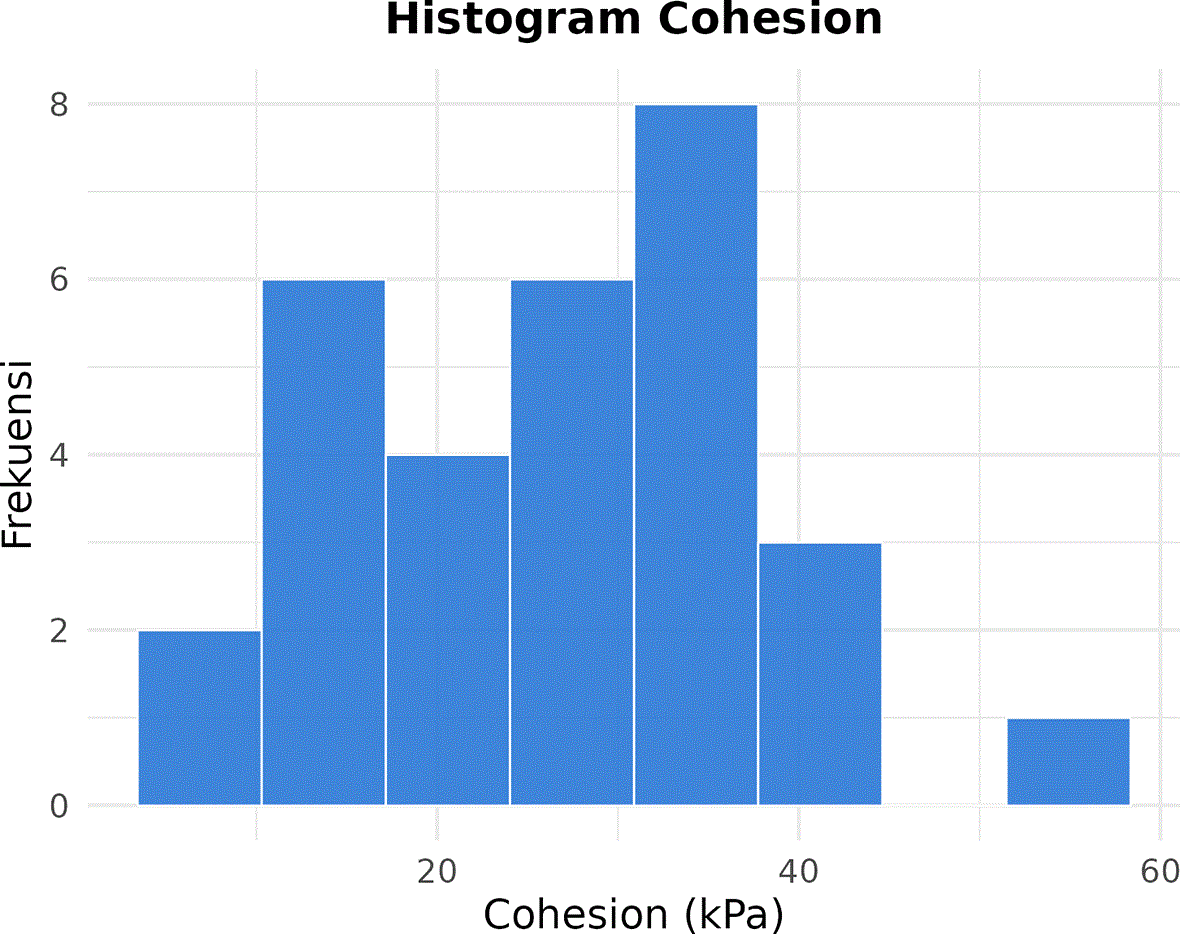
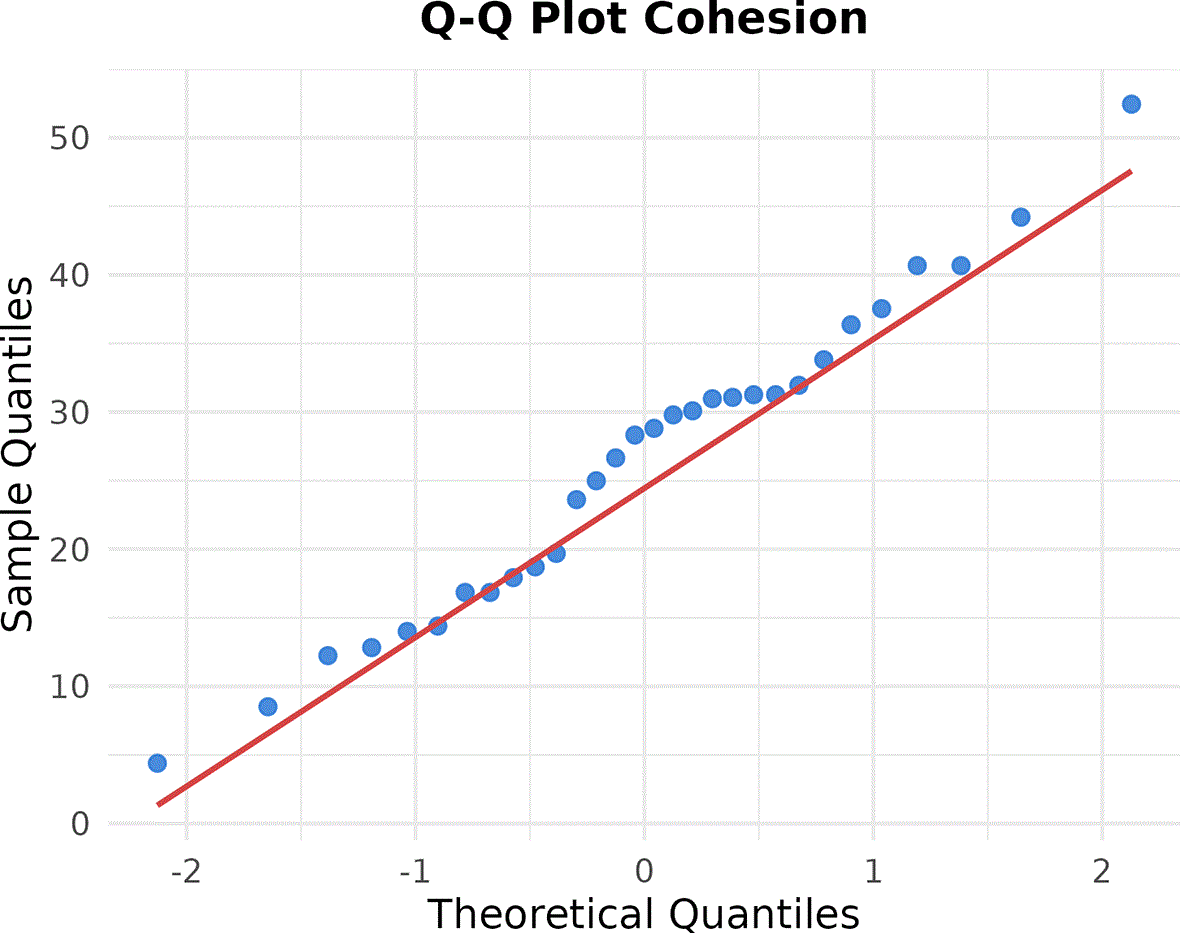
The cohesion (c) data show a fairly symmetric histogram (skewness = 0.11) (Figure 8), with the Q-Q plot points (Figure 9) consistently following the reference diagonal. The Shapiro-Wilk test supports this (p = 0.854), indicating that the cohesion data are consistent with a normal distribution.
The friction angle (φ) data show a sharply right-skewed histogram (skewness = 1.40) (Figure 10), with the Q-Q plot (Figure 11) showing departure from the diagonal mainly at high values. The Shapiro-Wilk test gave p = 0.002, indicating a significant departure from normality.
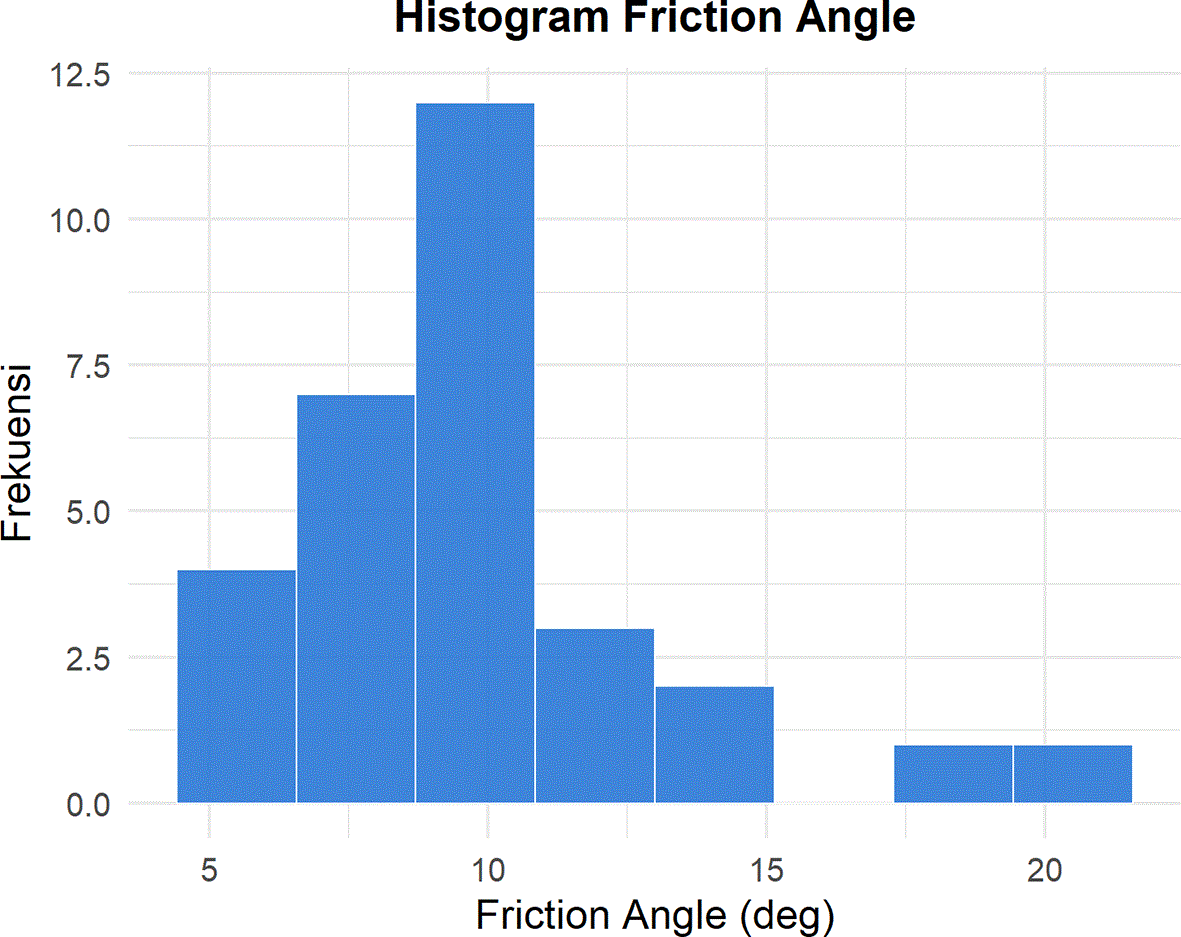
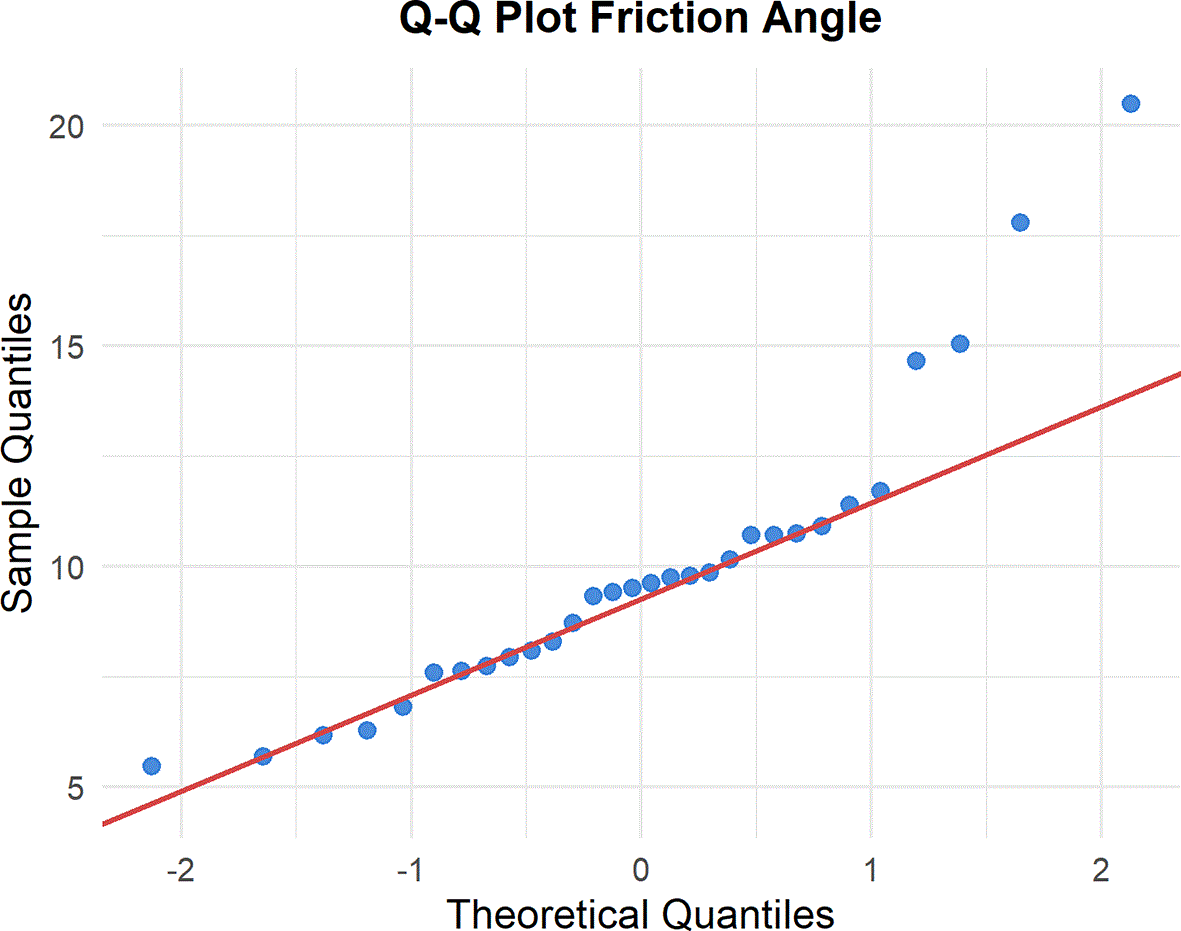
A summary of the normality test results for all five parameters is given in Table 3. Overall, only cohesion (c) is consistent with a normal distribution; water content, plasticity index, and friction angle all show a significant, right-skewed departure from normality, and void ratio sits right at the threshold.
b. Relationships Among Soil Parameters
The relationships among soil parameters were analysed to examine how the physical and mechanical properties of the residual soil at the study site relate to one another. Because the Shapiro-Wilk results above show that most parameters are not consistent with a normal distribution, this analysis used two complementary approaches: linear regression (to obtain the fitted equation and R2) and Spearman correlation, a non-parametric method that does not assume normality.
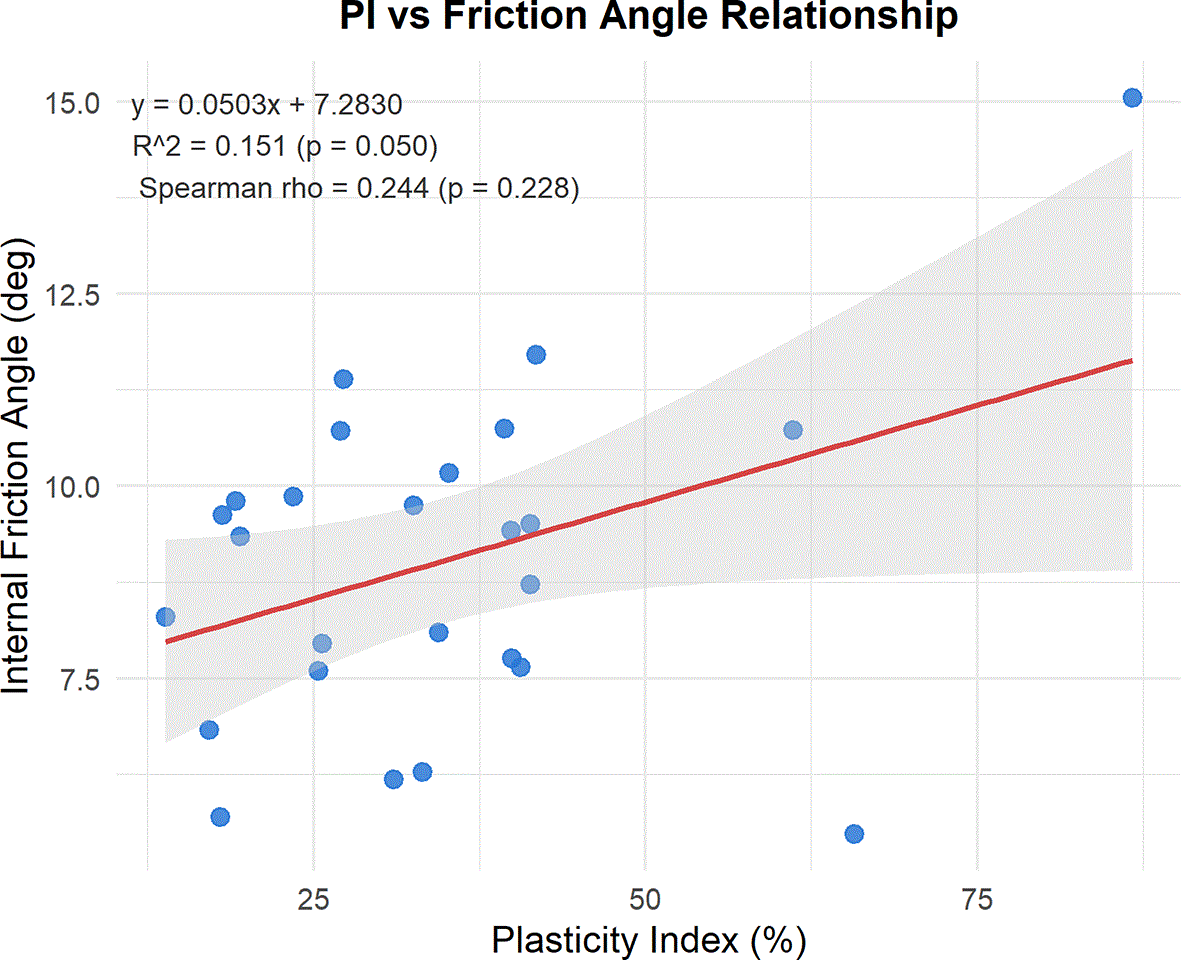
The relationship between plasticity index (PI) and friction angle (φ) is shown in Figure 12. Of the 30 samples tested, 26 had a measurable PI value (the four non-plastic samples were excluded from this analysis). Linear regression gave a positive relationship, φ = 0.0503·PI +7.283 (R2 = 0.151, p = 0.050), indicating a weak linear relationship that sits right at the threshold of statistical significance. Spearman correlation gave ρ = 0.244 (p = 0.229), indicating that the monotonic relationship between the two parameters is not statistically significant.
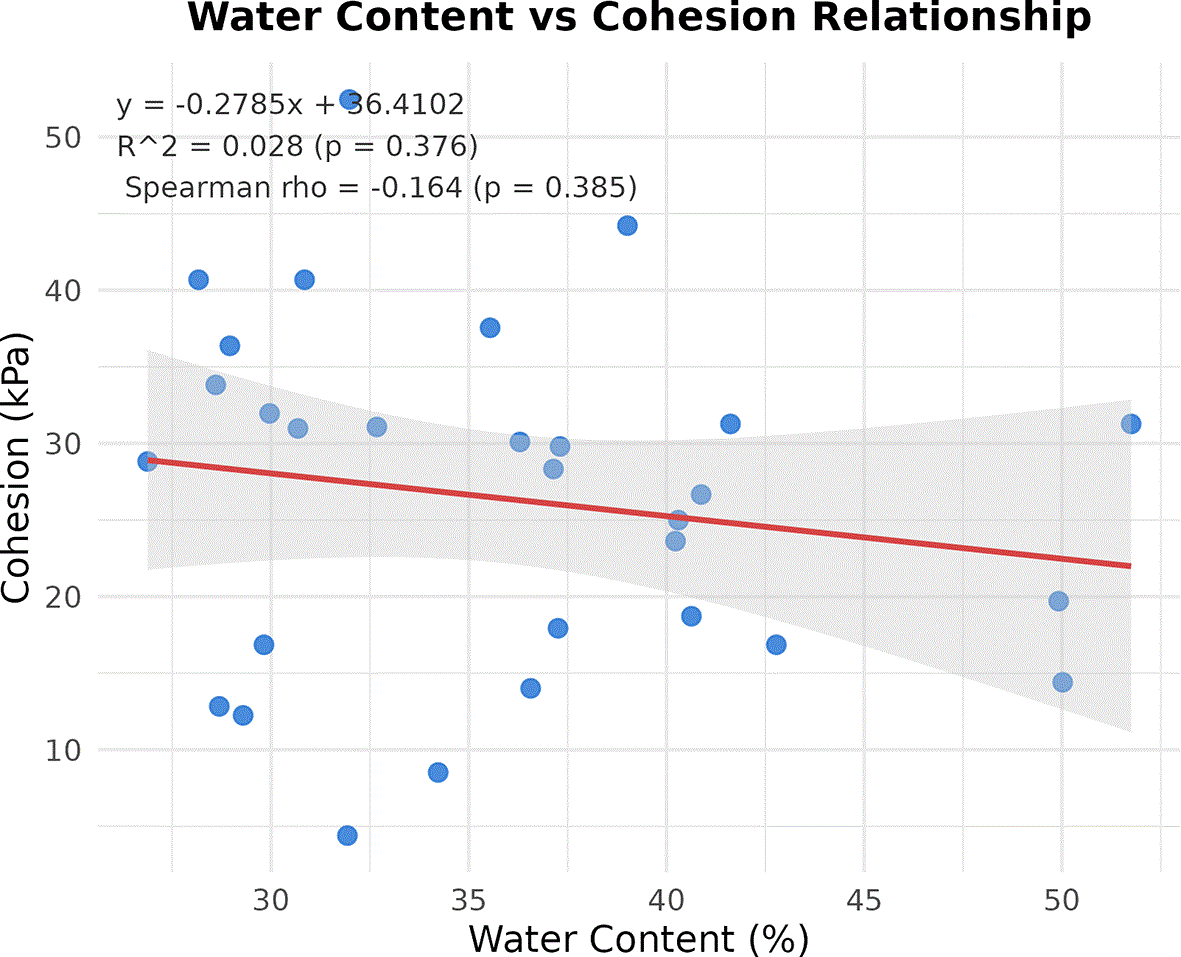
The relationship between water content (Wn) and cohesion (c) is shown in Figure 13. Linear regression over the 30 samples gave c = −0.0028·Wn + 0.371, with R2 = 0.028 and p = 0.376. Spearman correlation gave ρ = −0.165 (p = 0.385). Both approaches agree that there is no statistically significant relationship between water content and cohesion in this dataset.
The relationship between void ratio (e) and friction angle (φ) is shown in Figure 14. Linear regression gave φ = 5.322·e + 4.767, with R2 = 0.089 and p = 0.110. Spearman correlation gave ρ = 0.070 (p = 0.713). These results show that the relationship between void ratio and friction angle in this dataset is weak and not statistically significant.
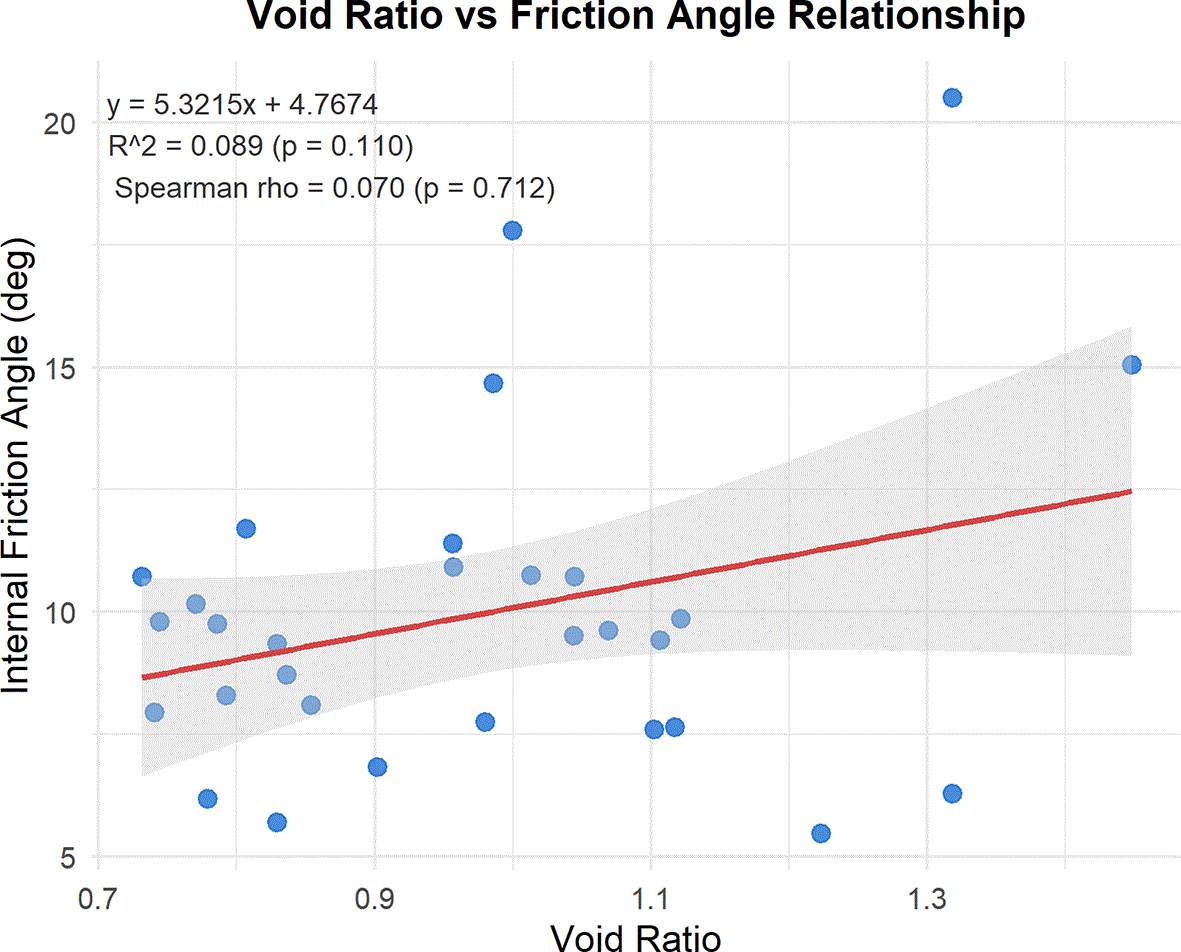
A summary of the relationship analysis for all three parameter pairs is given in Table 4. Overall, all three pairs show weak to very weak relationships (R2 ranging from 0.028 to 0.151), and most are not statistically significant at α = 0.05. This high variability is consistent with the natural behaviour of tropical residual soil, whose heterogeneity reflects varying degrees of weathering from one sampling point to another, even within a single geological formation.
The physical and mechanical characteristics obtained from the laboratory testing reflect the strong influence of the regional geology and geomorphology of Curug Panjang Village. Lithologically, the study area is characterised by the Bojong Formation (Qpb), dominated by sandy marl, sandy clay, and tuffaceous sandstone (Rusmana et al., 1991). Under the region’s tropical climate, this Pleistocene rock has undergone intensive biochemical weathering, producing a thick, clay-rich residual soil layer (Departemen Permukiman dan Prasarana Wilayah, 2002). This material is inherently much weaker than its parent rock, with lower shear strength and much greater susceptibility to deformation (Das & Sobhan, 2018). The heterogeneity in weathering and local water infiltration is borne out by the spread in natural water content across the site (27% to 52%). Samples ST-06, ST-17, and ST-26 exhibit notably higher void ratios (e = 1.318 to 1.448) than the rest of the dataset. Mineralogical composition, microporosity, and organic matter content were not tested in this study, so the specific cause cannot be confirmed; however, the pattern is consistent with localized zones of more advanced weathering within the residual soil profile, and would benefit from targeted mineralogical or organic-content testing in future work.
The UU triaxial test under ASTM D2850 (ASTM International, 2015) measures shear strength under total-stress, undrained loading, and so does not directly represent the gradual loss of matric suction that occurs in unsaturated residual soil during rainfall infiltration. In the field, an advancing wetting front reduces matric suction and, with it, the effective stress within the soil mass, which in turn lowers the shear strength mobilised along the potential slip surface (Rahardjo et al., 2008). The cohesion and friction angle values reported here therefore represent total-stress strength parameters obtained under controlled laboratory conditions, and are best interpreted as an index of the soil’s intrinsic mechanical weakening rather than a direct simulation of field pore-water pressure or effective-stress conditions during an actual rainfall-triggered failure.
The relationship analysis in this study shows that the association between plasticity index (PI) and friction angle (φ), and between water content (Wn) and cohesion (c), is weak and mostly not statistically significant (R2 ranging from 0.028 to 0.151; see Table 4). The direction observed for water content and cohesion, higher water content tending to be followed by lower cohesion, is consistent with the mechanism reported in the geotechnical literature, where water lubricates the surfaces of clay particles and lowers shear strength (Purnomo, 2011; Haris et al., 2018). The plasticity index-friction angle relationship, however, was weakly positive rather than negative, which runs against the more commonly reported pattern of decreasing friction angle with increasing plasticity. Given how weak this relationship is (regression p = 0.050; Spearman p = 0.229), it most likely reflects the high natural variability of tropical residual soil, whose weathering intensity differs markedly from one sampling point to another even within a single geological formation, rather than a genuine departure from the expected mechanism.
Under the Mohr-Coulomb failure criterion, a decline in cohesion and friction angle contributes to a reduction in the soil’s overall shear strength (Sukandi & Malikah Hr, 2021). This mechanical weakening in the residual soil, combined with the steep slope geomorphology (8°–35°) and high potential for rainfall infiltration, may have contributed to the landslide susceptibility at the study site. However, this study did not directly measure pore-water pressure, effective stress, or the actual slip surface of the 2022 landslide, so any conclusion about the triggering mechanism remains interpretive and would need further validation through direct field monitoring.
Based on the laboratory testing and statistical analysis carried out, this study characterised the physical and mechanical properties of the residual soil in Kampung Cihuni, Curug Panjang Village, Lebak Regency. Distribution analysis using histograms, Q-Q plots, and the Shapiro-Wilk test showed that, of the five parameters analysed, only cohesion (c) is consistent with a normal distribution. Water content, plasticity index, and friction angle all show a significant, right-skewed departure from normality, while void ratio sits right at the threshold, reflecting the natural heterogeneity of the residual soil at the study site.
The relationship analysis shows that the association between plasticity index and friction angle, and between water content and cohesion, is weak to very weak (R2 ranging from 0.028 to 0.151) and mostly not statistically significant. The water content-cohesion relationship follows the direction commonly reported in the geotechnical literature, where soil with a higher water content tends to have lower cohesion. The plasticity index-friction angle relationship, however, was weakly positive rather than negative, which departs from the pattern more commonly reported in the literature; given how weak and inconsistent this relationship is, it should not be read as a reliable mechanistic trend.
The weak statistical relationships among parameters in this dataset indicate that the mechanical characteristics of the residual soil at the study site vary considerably from one sampling point to another, most likely reflecting differences in local weathering intensity even within a single geological formation (the Bojong Formation). The combination of mechanical weakening at some sampling points, the steep slope geomorphology (8°–35°), and high potential for rainfall infiltration may have contributed to the landslide susceptibility at the study site. However, this study did not directly measure pore-water pressure, effective stress, matric suction, or the actual slip surface of the 2022 landslide, so any conclusion about the triggering mechanism remains interpretive.
Future research should include direct field measurement of matric suction and pore-water pressure monitoring, to more comprehensively validate the infiltration-triggered landslide mechanism proposed in this study.
Ethics approval was not required as this study is based solely on laboratory test data from soil samples.
During the preparation of this work, the authors utilized Google Gemini (Large Language Model) to assist with language editing, structuring, and formatting the manuscript to adhere to journal guidelines. After using this tool/service, the authors reviewed and edited the content as needed and take full responsibility for the accuracy and originality of the publication.
The authors would like to express their highest gratitude to the Indonesia Endowment Fund for Education (Lembaga Pengelola Dana Pendidikan/LPDP) for the financial support provided during this academic journey. The authors also sincerely thank the Engineering Geology Laboratory, Universitas Padjadjaran for providing the laboratory facilities and technical support during the soil testing phase.
This publication was supported by the Indonesia Endowment Fund for Education Agency (Lembaga Pengelola Dana Pendidikan/LPDP). The funders had no role in study design, data collection and analysis the decision to publish or preparation of the manuscript.
The funders had no role in study design, data collection and analysis, decision to publish, or preparation of the manuscript.
© 2026 Syafri A et al. This is an open access article distributed under the terms of the Creative Commons Attribution License, which permits unrestricted use, distribution, and reproduction in any medium, provided the original work is properly cited.
Download
Export To
metrics
| Views | Downloads | |
|---|---|---|
| F1000Research | - | - |
| PubMed Central Data from PMC are received and updated monthly. | - | - |
Citations
CITE
how to cite this article
Syafri A, Zakaria Z, Sulaksana N et al. Physical and Mechanical Characteristics of Soil as a Controlling Factor in Landslides in Curug Panjang Village, Cihuni Hamlet, Lebak, Banten: Analysis of Distribution, Normality, and Inter-parameter Relationships [version 2; peer review: 1 approved, 2 approved with reservations]. F1000Research 2026, 15:1195 (https://doi.org/10.12688/f1000research.184697.2)
NOTE: If applicable, it is important to ensure the information in square brackets after the title is included in all citations of this article.
track
receive updates on this article
Track an article to receive email alerts on any updates to this article.
Current Reviewer Status: ?
Key to Reviewer Statuses VIEW HIDE
ApprovedThe paper is scientifically sound in its current form and only minor, if any, improvements are suggested
Approved with reservations A number of small changes, sometimes more significant revisions are required to address specific details and improve the papers academic merit.
Not approvedFundamental flaws in the paper seriously undermine the findings and conclusions
Version 2
VERSION 2
PUBLISHED 16 Sep 2026
Revised
Reviewer Report 12 Oct 2026
Mohammed Fattah, College of Civil Engineering, University of Technology – Iraq, Baghdad, Iraq
Approved with Reservations
VIEWS 0
Is the work clearly and accurately presented and does it cite the current literature?
Yes
Is the study design appropriate and is the work technically sound?
Yes
Are sufficient details of methods and analysis provided to allow replication by others?
No
If applicable, is the statistical analysis and its interpretation appropriate?
Yes
Are all the source data underlying the results available to ensure full reproducibility?
Yes
Are the conclusions drawn adequately supported by the results?
Yes
References
1. Hassan H, Ammar Mohammed H, Wasife jassim N, Yousif Fattah M, et al.: Finite Element Analysis of Skirted Strip Footing Resting on Cohesive Slopes. Journal of Engineering and Sustainable Development. 2025; 29 (1): 47-56 Publisher Full TextCompeting Interests: No competing interests were disclosed.
Reviewer Expertise: See the reviewers' comments
CloseReviewer Report 01 Oct 2026
Merley Misriani, University of Riau, Pekanbaru, Indonesia
Approved
VIEWS 0
Competing Interests: No competing interests were disclosed.
Reviewer Expertise: Geotechnical Engineering (Soil mechanics, slope stability and Landslide Hazard Mitigation)
CloseVersion 1
VERSION 1
PUBLISHED 22 Jul 2026
Reviewer Report 28 Aug 2026
Nugroho Aji Satriyo, National Research and Innovation Agency (BRIN), Bandung, Indonesia
Approved with Reservations
VIEWS 0
Is the work clearly and accurately presented and does it cite the current literature?
Partly
Is the study design appropriate and is the work technically sound?
Yes
Are sufficient details of methods and analysis provided to allow replication by others?
Yes
If applicable, is the statistical analysis and its interpretation appropriate?
Partly
Are all the source data underlying the results available to ensure full reproducibility?
Partly
Are the conclusions drawn adequately supported by the results?
Partly
Competing Interests: No competing interests were disclosed.
Reviewer Expertise: Geology, engineering geology, remote sensing, disaster mitigation, disaster management, etc.
CloseReviewer Report 25 Aug 2026
Merley Misriani, University of Riau, Pekanbaru, Indonesia
Approved with Reservations
VIEWS 0
Is the work clearly and accurately presented and does it cite the current literature?
Partly
Is the study design appropriate and is the work technically sound?
Yes
Are sufficient details of methods and analysis provided to allow replication by others?
Partly
If applicable, is the statistical analysis and its interpretation appropriate?
Partly
Are all the source data underlying the results available to ensure full reproducibility?
Yes
Are the conclusions drawn adequately supported by the results?
Partly
Competing Interests: No competing interests were disclosed.
Reviewer Expertise: Geotechnical Engineering (Soil mechanics, slope stability and Landslide Hazard Mitigation)
Close