Просмотр новости
Найдите то, что Вас интересует
 Спутники
 РН
 SpaceX
 Роскосмос
 NASA
СпутникиРНSpaceXРоскосмосNASAThis systematic literature review and bibliometric analysis examines the evolving landscape of Green Human Resource Management (GHRM) and its impact on individual employee performance. While empirical studies in this domain have expanded rapidly, the literature remains conceptually fragmented. This study addresses this gap by mapping the intellectual structure of the field and synthesizing divergent findings into a unified conceptual framework. Utilizing the PRISMA guidelines and an extensive search of the Scopus database, this review synthesizes evidence from 68 peer-reviewed journal articles. The results reveal that GHRM functions as a “dual-performance” engine, simultaneously fostering voluntary employee green behavior and enhancing traditional task efficiency. These outcomes are explained through important psychological and relational mechanisms, while leadership styles and digital infrastructure emerge as relevant contextual factors shaping the GHRM–performance relationship. The analysis culminates in a unified conceptual model that offers a robust blueprint for future research. Practically, this study urges organizations to transition from treating sustainability as an isolated initiative toward embedding it into core HR functions, supported by ethical leadership and AI-driven systems. By bridging the divide between human capital capability, psychological well-being, and technological integration, this review provides a strategic roadmap for cultivating a workforce that is both high-performing and ecologically responsible.
This version has been substantially revised in response to reviewer comments to improve the conceptual positioning, methodological transparency, and consistency of the review. The Introduction and research questions now more clearly distinguish the study from previous GHRM reviews by emphasizing the integration of employee performance outcomes, psychological and relational mechanisms, and leadership and technological contexts. Leadership and digital technologies are explicitly framed as contextual themes emerging from the reviewed literature rather than as independent search domains, while the inclusion of green behavior and pro-environmental behavior in the search strategy is now theoretically justified. The methodology has also been clarified regarding the 2017–2026 review period, the application of English-language and peer-reviewed journal filters, the exclusive use of Scopus, and the removal of the term “high-impact” because citation counts were not used as an inclusion criterion. In addition, the relationship between Sustainable HRM and GHRM has been clarified, terminology and abbreviations have been standardized, and the Conclusion has been expanded to address all components of the research questions and align more closely with the study’s findings and contributions.
See the authors' detailed response to the review by Eka Desy Purnama
See the authors' detailed response to the review by Daniel Lukito
See the authors' detailed response to the review by Needesh Ramphul
Driven by escalating ecological crises and international mandates such as the United Nations’ Sustainable Development Goals (SDGs),1 organizations face mounting stakeholder pressure to transition away from exclusively profit-driven paradigms and embed comprehensive Environmental, Social, and Governance (ESG) frameworks into their corporate strategies.2 While early corporate sustainability efforts heavily prioritized technological innovations and supply chain restructuring, there is a growing consensus that structural and operational changes alone are insufficient to secure long-term ecological resilience.3 Instead, achieving genuine organizational sustainability fundamentally relies on mobilizing human capital and cultivating proactive, environmentally responsible behaviors at the individual employee level.4
To operationalize sustainability at the employee level, organizations have increasingly adopted Green Human Resource Management (GHRM), which is conceptually defined as the systemic alignment of human resource policies, encompassing recruitment, training, performance appraisal, and compensation, with overarching organizational environmental objectives.5,6 While environmental management in human resources was historically relegated to a reactive administrative function focused on regulatory compliance,7 contemporary organizational science has repositioned GHRM as a proactive, strategic asset capable of cultivating a pervasive green corporate culture.8 By embedding ecological consciousness directly into the employee lifecycle, GHRM not only signals the organization’s ethical commitment to stakeholders but also serves as a critical mechanism for attracting, mobilizing, and retaining environmentally conscious talent in a competitive global market.9,10
As the strategic importance of GHRM continues to grow, scholars have increasingly directed their attention toward its direct impact on individual employee outcomes.11 Modern organizations face intense pressure to remain economically competitive while simultaneously fulfilling stringent ecological mandates.12 Consequently, corporate leaders and researchers need to understand whether sustainable human resource practices merely stimulate voluntary environmental actions or if they also improve traditional task productivity.13 A rapidly expanding body of empirical literature addresses this crucial intersection by proposing a synergistic relationship between sustainability and operational output.14,15 This literature suggests that GHRM acts as a fundamental catalyst for a dual-performance paradigm, where organizations utilize environmental training and green incentive structures to foster discretionary ecological behaviors while concurrently boosting core operational efficiency and overall job engagement.16
Despite the rapid proliferation of empirical studies linking GHRM to individual outcomes, the literature remains conceptually diverse, with studies examining different employee outcomes, mediating mechanisms, and contextual conditions.17,18 Previous research has predominantly adopted reductionist approaches by investigating isolated variables, such as focusing exclusively on a single psychological mediator or a specific leadership style, which ultimately fails to capture the complex reality of modern workplace dynamics.18 While several systematic reviews have previously attempted to synthesize this expanding domain, they have primarily concentrated on broad theoretical conceptualizations19 or generalized employee well-being.20 These prior reviews lack a cohesive architectural map that comprehensively connects sustainable HR practices to a dual-performance paradigm. Furthermore, existing literature reviews have notably overlooked the emerging integration of Artificial Intelligence and digital human resource platforms within the sustainability context.21 More recently, AlKetbi and Rice22 reviewed GHRM practices in relation to employee green attitudes, employee green satisfaction, employee green behavior, client green satisfaction, and organizational green performance. However, the present review adopts a more specific focus on the GHRM–individual employee performance nexus by integrating conventional task-related performance and environmentally responsible employee behavior with the psychological and relational mechanisms through which these outcomes may develop. Recent empirical studies further indicate that leadership and digital technologies can operate as important contextual factors within this relationship, including green leadership, digital knowledge-sharing systems, and AI-enabled HRM. Accordingly, leadership and technological factors are treated in this review as contextual themes emerging from studies retrieved within the broader GHRM–employee performance literature, rather than as independent search domains.
Building on these previous reviews, the primary objective of this study is to systematically synthesize the literature connecting GHRM with individual employee outcomes and to develop an integrative framework that brings together performance outcomes, explanatory mechanisms, and relevant contextual factors. Specifically, the review examines the psychological and relational mechanisms identified within the retrieved studies and explores contextual factors, including leadership and technological conditions, that emerge as shaping the relationship between sustainable human resource practices and individual performance. To guide this systematic review and achieve a holistic synthesis of the field, this study addresses the following two overarching research questions:
• RQ1: How has the academic literature on Green Human Resource Management and individual employee performance evolved over time in terms of its geographical distribution, structural themes, and conceptual trajectory?
• RQ2: What psychological and relational mechanisms, and what leadership and technological contextual factors, emerge from the retrieved literature in explaining the relationship between sustainable human resource practices and individual employee performance?
The primary theoretical novelty of this review lies in the subsequent development of a Unified Conceptual Model. Rather than examining these elements separately, the proposed framework integrates core GHRM practices, individual performance outcomes, psychological and relational mechanisms, and emerging leadership and technological contexts into a single structural blueprint.
Within the broader sustainable human resource management perspective, GHRM can be positioned as the environmental dimension of sustainable HRM because it focuses specifically on integrating environmental objectives into human resource policies and practices.20 While sustainable HRM addresses sustainability from a broader organizational perspective, GHRM emphasizes the environmental aspects of managing employees and their contribution to organizational sustainability.16 This conceptual relationship also explains the relevance of studies using the term sustainable human resource management when they examine environmentally oriented HR practices and their employee-level outcomes.16,20
GHRM operates as a synergistic bundle of practices rather than isolated administrative functions. By integrating ecological criteria into recruitment processes, organizations selectively acquire human capital that intrinsically aligns with corporate sustainability objectives.5,6 Subsequent investments in environmental training and development equip these employees with the specific knowledge and technical competencies required to execute green initiatives effectively within their daily roles.23 Furthermore, linking performance appraisals and compensation structures to environmental metrics establishes a formal accountability mechanism to ensure that ecological responsibilities are prioritized alongside traditional operational targets.7
The deployment of these integrated human resource practices profoundly influences individual employee outcomes by shaping both their workplace attitudes and their corresponding behaviors.8 When organizations actively invest in environmental initiatives, employees often perceive a heightened sense of corporate responsibility and ethical support, which subsequently fosters deeper organizational commitment.4 This enhanced commitment manifests primarily as employee green behavior, encompassing voluntary actions that minimize the ecological footprint of daily operations.24 Beyond ecological actions, the positive psychological fulfillment derived from participating in meaningful environmental practices often translates into broader job engagement, thereby elevating core individual task performance and overall workplace productivity.25
Employee green behavior and pro-environmental behavior are particularly relevant to the GHRM–performance relationship because they represent employee-level behavioral responses to environmentally oriented HR practices.6 Prior research has shown that GHRM practices can encourage employees to engage in voluntary pro-environmental and green behaviors in the workplace. Importantly, these behaviors are not necessarily separate from conventional employee performance, as employee green behavior can make a positive contribution to overall job performance evaluations.24 Therefore, examining green behavior and pro-environmental behavior alongside traditional task performance provides a broader understanding of how GHRM may simultaneously support environmentally responsible behavior and individual work performance.25
The primary objective of this study is to systematically synthesize the fragmented literature concerning GHRM and individual employee performance to develop a unified conceptual framework. To achieve this overarching aim, this systematic literature review was designed and executed in strict accordance with the Preferred Reporting Items for Systematic Reviews and Meta-Analyses (PRISMA) guidelines.26 Adhering to the updated PRISMA framework ensures comprehensive transparency, rigorous methodological standards, and a highly reproducible review process.
The literature search for this review was conducted exclusively using the Scopus database. While utilizing multiple databases is a common practice, Scopus was selected as the sole database due to its established reputation as the largest abstract and citation database of peer-reviewed literature. It offers extensive and comprehensive coverage of high-quality journals, particularly in the fields of business, management, and social sciences.27 Furthermore, methodological comparisons have demonstrated that Scopus provides robust coverage that captures the vast majority of impactful literature in these disciplines, making it a highly reliable and sufficient standalone source for systematic reviews while minimizing the redundancy often caused by multi-database searches.28
The search was executed on June 24, 2026. To ensure a highly targeted retrieval of relevant articles, the search strategy was designed to identify terms within the title, abstract, and keyword fields (TITLE-ABS-KEY). The Boolean search string was constructed by combining two primary concepts: GHRM constructs and employee performance outcomes. The exact search string applied was:
TITLE-ABS-KEY ((“Green Human Resource Management” OR “Green HRM” OR “GHRM” OR “environmental human resource management” OR “sustainable human resource management”) AND (“employee* performance” OR “job performance” OR “staff performance” OR “task performance” OR “employee* green performance” OR “green behavior*” OR “pro-environmental behavior*”)).
To ensure the selected literature aligned strictly with the research objectives and maintained a high standard of academic rigor, specific inclusion and exclusion criteria were established. Only peer-reviewed journal articles published in English and within the 2017–2026 publication period were considered eligible for the review. The journal source and English-language restrictions were applied directly as filters during the Scopus database search, meaning that records outside these categories were not included in the initial set of retrieved studies. The detailed inclusion and exclusion criteria used in the study are presented in Table 1.
The publication period from 2017 to 2026 was deliberately selected as a ten-year review window. This period was considered sufficiently broad to capture recent developments in the relationship between GHRM and employee performance while allowing the review to examine changes in publication trends, thematic development, and the conceptual evolution of the field over time. Accordingly, studies published before 2017 were outside the predefined temporal scope of the review.
Article-level citation counts or citation-based impact thresholds were not used as eligibility criteria. The studies included in the final review were selected based on their compliance with the predefined eligibility criteria and their relevance to the objectives of the review, rather than on the number of citations received by individual articles. Therefore, citation impact did not determine whether a study was included or excluded from the final corpus.
The systematic literature selection subsequently followed the PRISMA framework. As the journal source and English-language filters had already been applied during the Scopus search, the 91 records identified at the initial stage of the PRISMA process already reflected these restrictions. The records were then screened based on their titles and abstracts, resulting in the exclusion of six records. Of the 85 records sought for full-text retrieval, four could not be retrieved, leaving 81 articles for full-text eligibility assessment. A further 13 articles were excluded because they represented non-relevant study types or did not address the targeted outcomes. This process resulted in 68 articles being included in the final synthesis, as illustrated in Figure 1.
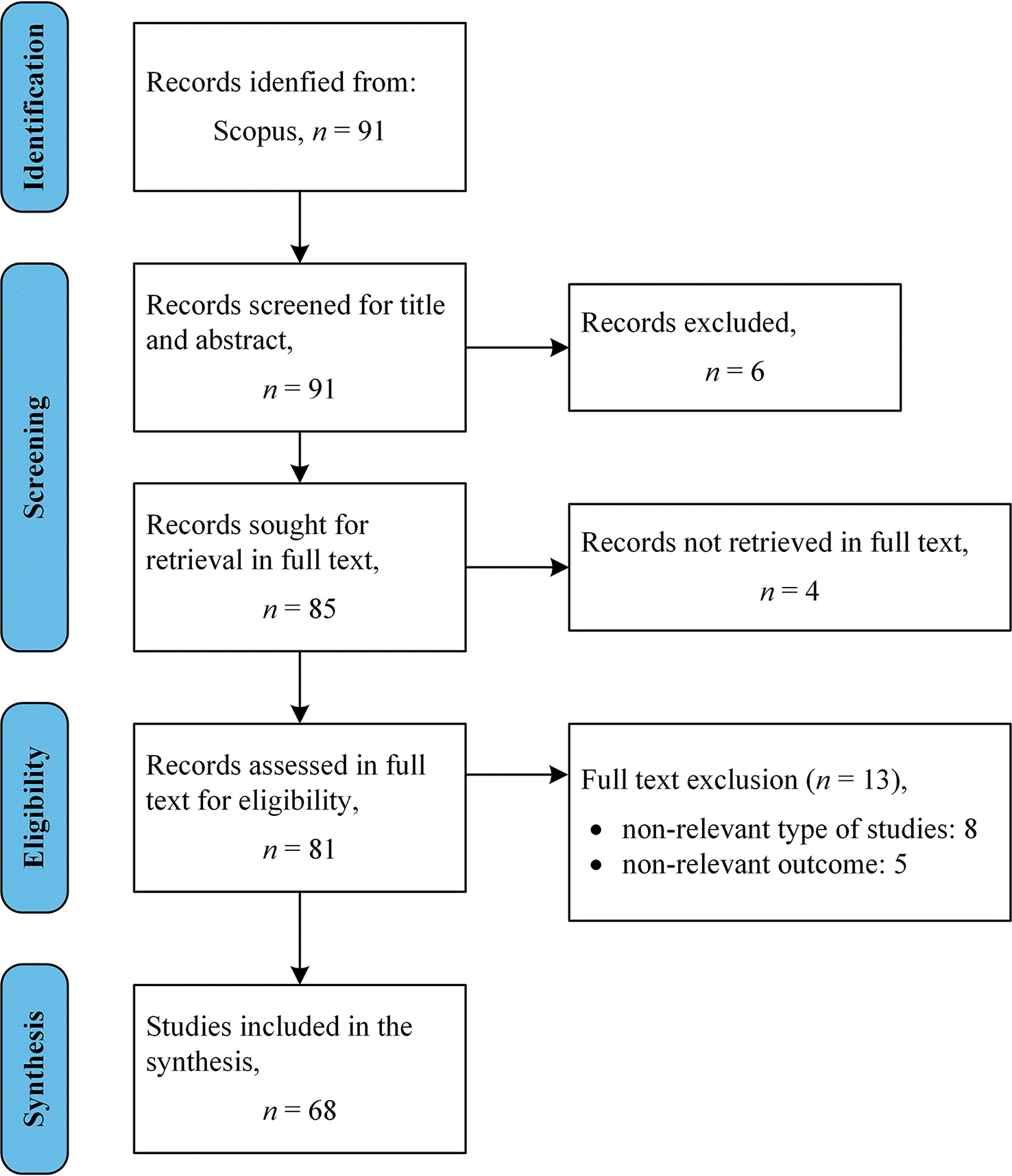
Source: Adapted from Page et al.26
To systematically organize the literature, a standardized data extraction protocol was applied to all included articles. The extracted information encompassed author details, publication year, geographical context, industry sector, research methodology, examined variables, and key empirical findings. A representative summary of the data extracted from a sample of the selected studies is provided in Table 2.
| Author(s) & Year | Industry Context | Methodology | Key Variables Examined | Primary Findings |
|---|---|---|---|---|
| Hong et al.30 | Hotels (Vietnam) | Mixed method, Structural Equation Modeling (SEM) | GHRM, Employees’ Green Behavior (EGB) | GHRM activities (e.g., green recruitment, training, compensation) strongly influence EGB in the hotel industry. |
| Farmanesh et al.31 | Universities (Northern Cyprus) | Quantitative, PLS-SEM | Sustainable HRM, Trust in leaders, Job performance | Sustainable HRM practices have a significant impact on employees’ job performance, with trust in leaders playing a crucial role. |
| Vadithe et al.32 | IT Sector (India) | Quantitative, PLS-SEM | Green HRM, Meaningfulness of work, Job satisfaction, Organizational sustainability | Green HRM implementation positively influences organizational sustainability, partially mediated by employee job satisfaction and meaningfulness of work. |
| Dahinine et al.33 | Pharmaceutical (Saudi Arabia) | Quantitative, PLS-SEM | Green Transformational Leadership, GHRM, Green Supply Chain Management | Green Transformational Leadership enhances GHRM aspects, which subsequently positively influence Green Supply Chain Management practices. |
For the data analysis phase, a robust two-stage synthesis approach was employed. First, to provide a comprehensive macro-level overview of the research landscape, a bibliometric analysis was conducted using the bibliometrix package in R.29 The application of this analytical tool facilitated the quantitative mapping of the field’s intellectual structure, enabling the objective identification of publication trends, leading academic venues, geographic distributions, and keyword co-occurrence networks. This bibliometric mapping established a foundational understanding of how the literature on green and sustainable human resource management has evolved.
For the data analysis phase, a narrative synthesis approach was adopted to interpret and integrate the findings. A statistical meta-analysis was explicitly not conducted due to the significant conceptual and methodological heterogeneity present across the included studies. The selected literature encompassed vastly different industry contexts—ranging from hospitality to pharmaceuticals and telecommunications—and utilized varied operationalizations of central constructs, including both GHRM and Sustainable Human Resource Management (SHRM). Furthermore, the studies investigated a wide array of distinct mediating and moderating variables, such as employee engagement, organizational identification, psychological distress, and trust in leaders. As established by methodological guidelines for systematic reviews,34,35 when primary studies exhibit such extensive diversity in sample populations, study designs, and variable measurements, a narrative synthesis provides a more robust and scientifically rigorous method to identify overarching themes and relationships without forcing incompatible data into a statistical model. The synthesized literature was subsequently categorized into four synthesis dimensions, as detailed in Table 3.
| Synthesis Dimension | Synthesized Empirical Findings | Theoretical and Practical Implications | Representative Studies |
|---|---|---|---|
| Dual-Impact on Performance Outcomes | The aggregated literature consistently demonstrates that GHRM and SHRM practices yield a dual benefit regarding employee outcomes. These practices not only foster pro-environmental behaviors and green performance but also significantly enhance traditional, task-related job performance, employee retention, and overall productivity. | Organizations do not need to choose between environmental sustainability and operational efficiency. Implementing green HR practices (e.g., green training, green recruitment) serves as a strategic investment that simultaneously elevates both ecological responsibility and core business performance. | Bohlmann et al.24; Davidescu et al.25; Hong et al.30; Palupiningtyas et al.36; Ramachandaran et al.37 |
| Psychological and Relational Mediators | The transition from sustainable HR practices to enhanced performance is rarely direct; rather, it is heavily governed by internal psychological and relational pathways. The literature identifies that GHRM/SHRM fosters performance by building trust in leaders, enhancing meaningfulness of work, establishing moral identity, and significantly boosting employee engagement and perceived organizational support. | To maximize the effectiveness of sustainable HR, managers must focus on the psychological well-being and moral alignment of their workforce. Policies should be designed not just as functional mandates, but as tools to cultivate a supportive, engaging, and ethically resonant workplace culture. | Aboramadan & Karatepe38; Karatepe et al.39; Krishna et al.40; Lu et al.41; Salama et al.42; Vadithe et al.32 |
| Leadership and Technological Enablers | The efficacy of sustainable HR practices is highly contingent upon contextual enablers, particularly leadership styles and technological integration. Transformational, visionary, and servant leadership styles act as critical catalysts that amplify the effects of GHRM. Furthermore, emerging studies highlight that integrating artificial intelligence (AI) and digital knowledge-sharing systems significantly moderates and strengthens the relationship between sustainable HR and employee performance. | Sustainable HR initiatives cannot operate in a vacuum. Successful implementation requires strong, environmentally conscious leadership to champion the initiatives, alongside the adoption of modern digital infrastructures to facilitate green knowledge management and streamline HR processes. | Alam et al.43; Dahinine et al.33; Dinh et al.44; Jia & Hou45; Qiang et al.46 |
| Macro-Organizational and ESG Alignment | Beyond individual employee metrics, the literature illustrates that sustainable HR acts as a foundational pillar for achieving macro-level organizational objectives. GHRM is frequently cited as a necessary precursor to effective Green Supply Chain Management (GSCM) and is a critical internal mechanism for achieving broader Environmental, Social, and Governance (ESG) targets and overall organizational sustainability. | GHRM and SHRM must be elevated from operational HR functions to core corporate strategies. By aligning HR practices with ESG frameworks and supply chain logistics, organizations can secure long-term competitive advantages and improve their corporate image and attractiveness. | Ali et al.47; Amjad et al.48; Makki et al.49; Parida et al.50; Wongleedee51 |
The final corpus of this systematic literature review consists of 68 peer-reviewed journal articles published between 2017 and 2026. Methodologically, the reviewed literature is heavily dominated by quantitative research designs. A significant majority of the studies employed cross-sectional, survey-based data collection methods and utilized advanced statistical modeling techniques, particularly Partial Least Squares - Structural Equation Modeling (PLS-SEM), to test complex mediated and moderated relationships. However, the dataset also includes a select number of qualitative and mixed-method studies (e.g., Ramgolam et al.52; Zongyu & Chienwattanasook53), which provide deeper exploratory insights into the adoption and conceptualization of sustainable human resource practices.
Contextually, the research spans a highly diverse array of geographical settings and industry sectors. Geographically, there is a pronounced representation of empirical studies originating from emerging economies and the Asian region, highlighting a growing regional imperative to align economic growth with environmental sustainability. In terms of industry application, a substantial portion of the research is concentrated within the hospitality and tourism sector, reflecting the industry’s critical need to adopt green initiatives (e.g., Aboramadan & Karatepe38; Hong et al.30; Sudiyani et al.54). Other prominently featured sectors include manufacturing and textiles (e.g., Ali et al.47; Amjad et al.48), the information technology (IT) industry (e.g., Sharma & Kaur55; Vadithe et al.32), higher education (e.g., Farmanesh et al.31), and the pharmaceutical industry (e.g., Dahinine et al.33).
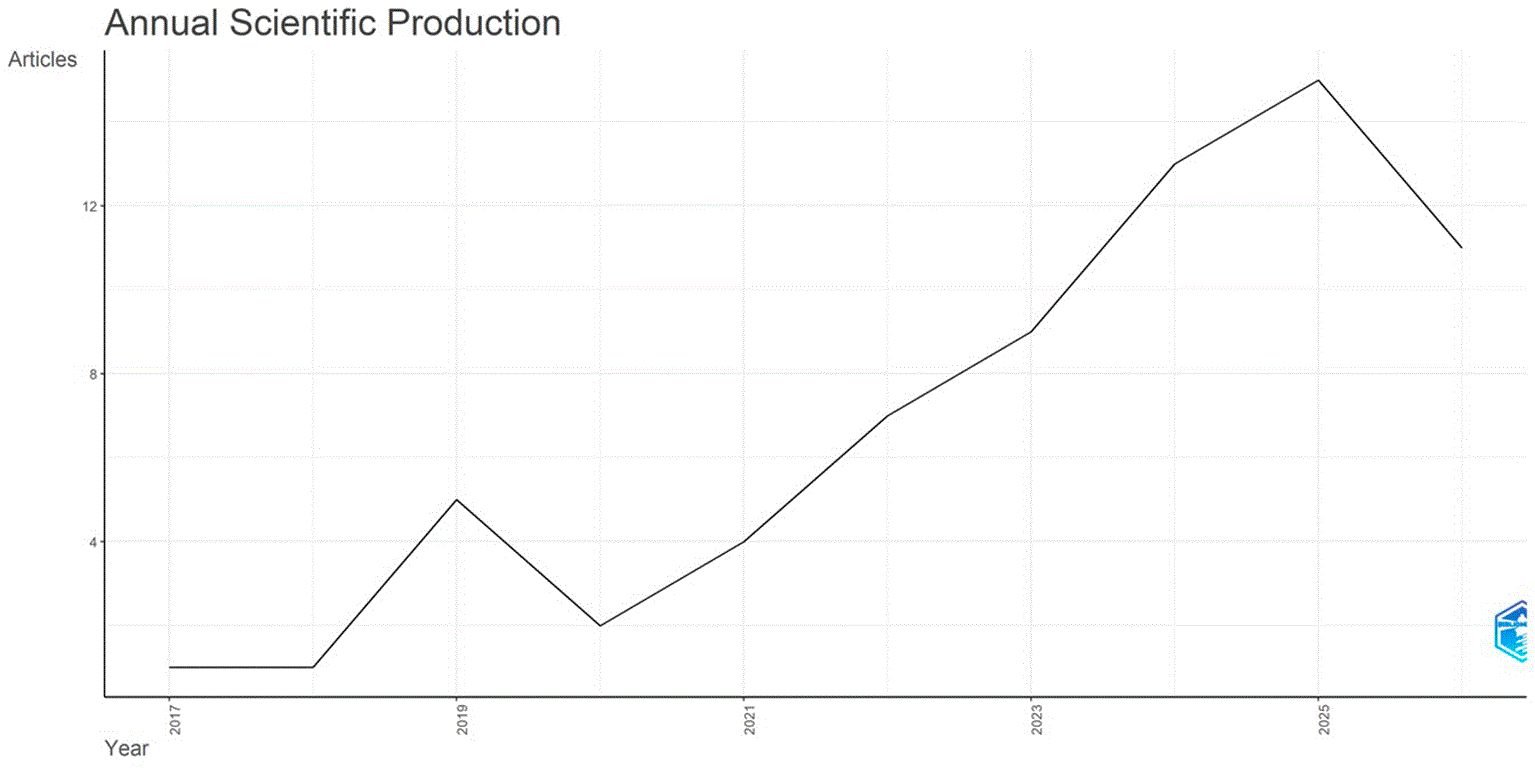
Annual scientific production The temporal distribution of the selected literature, as illustrated in Figure 2, reveals a remarkable acceleration in scholarly attention directed toward the intersection of sustainable human resource practices and employee performance. Between 2017 and 2020, research output in this specific domain remained relatively nascent, characterized by a slow and sporadic publication rate. However, beginning in 2021, the field experienced a robust and consistent upward trajectory, ultimately peaking at 15 publications in 2025. This pronounced annual growth rate of 30.53% signifies a critical conceptual shift within contemporary organizational sciences; it indicates that the integration of ecological sustainability into human resource frameworks has rapidly transitioned from a peripheral academic niche into a mainstream, strategic imperative for driving employee outcomes. The minor numerical reduction observed in 2026 (11 articles) reflects the mid-year cutoff of the data collection period rather than a waning of research momentum, confirming that the academic momentum surrounding Green and Sustainable HRM remains exceptionally strong and continuously expanding.
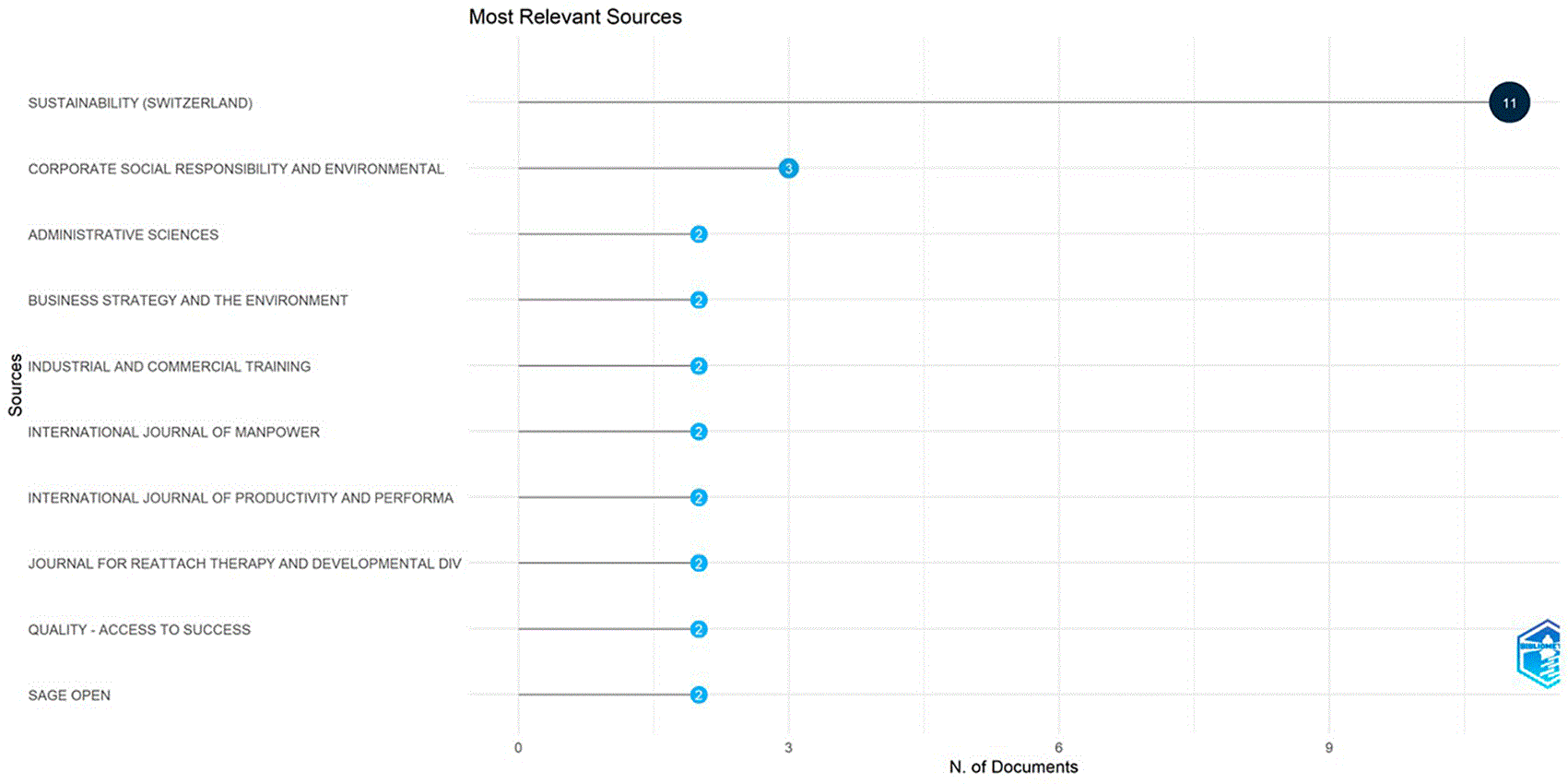
Most relevant sources As illustrated in Figure 3, the analysis of publication venues highlights a strong concentration of research within interdisciplinary sustainability and environmental strategy journals. Sustainability (Switzerland) emerges as the unequivocally dominant source, contributing 11 articles to the corpus, followed by Corporate Social Responsibility and Environmental Management (3 articles). Other prominent venues include Business Strategy and the Environment and Administrative Sciences, contributing two articles each. This specific distribution indicates that green and sustainable human resource practices are increasingly recognized not merely as isolated administrative HR functions, but as integral, strategic components of broader corporate sustainability and environmental governance frameworks.
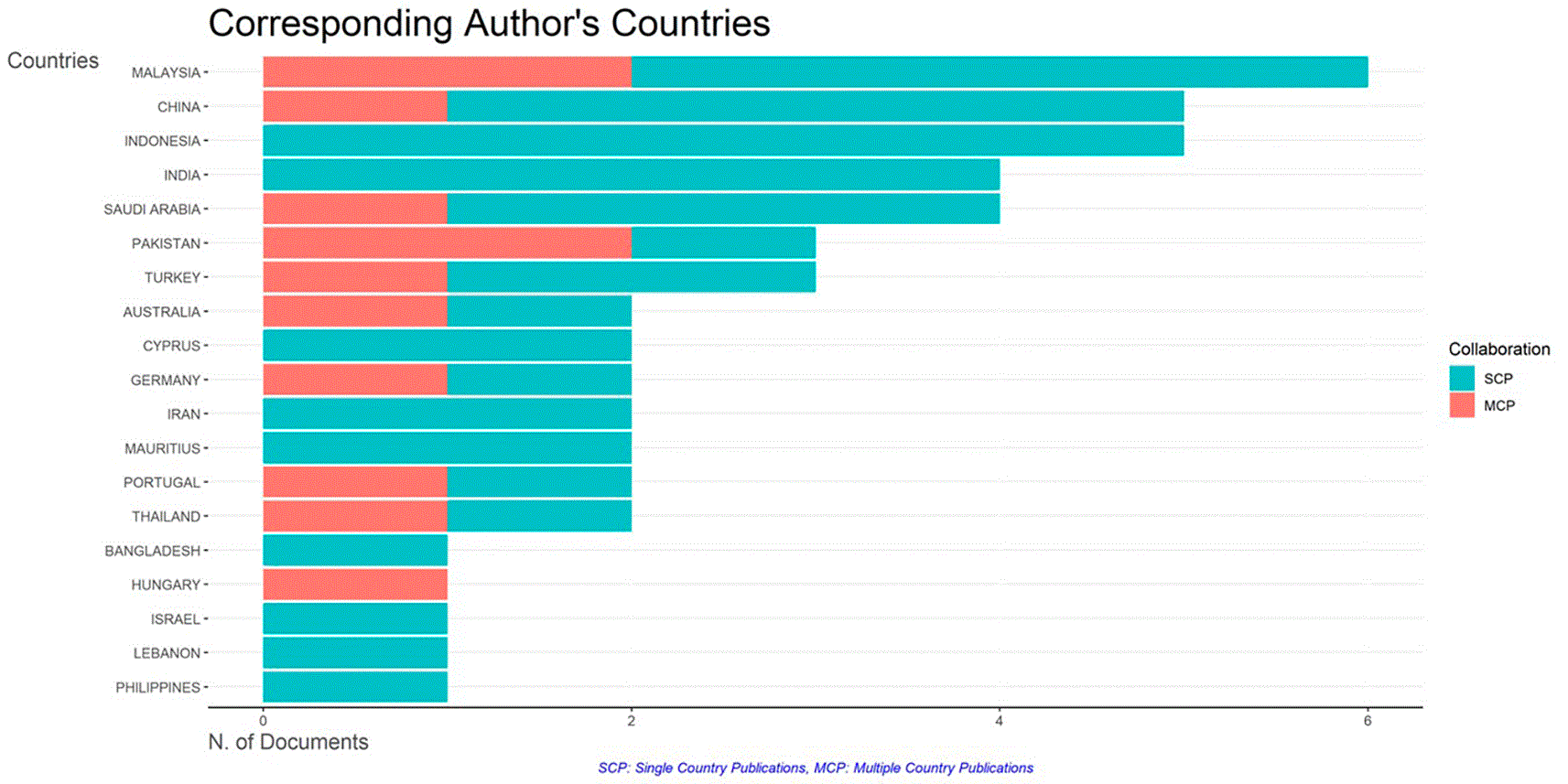
Corresponding authors’ countries The geographical distribution of the research, based on the corresponding authors’ countries depicted in Figure 4, reveals a pronounced concentration of scholarship originating from Asian nations and emerging economies. Malaysia leads the scientific production with six articles, closely followed by China and Indonesia (five articles each), and India (four articles). An analysis of the collaboration indices—Single Country Publications (SCP) versus Multiple Country Publications (MCP)—indicates a strong reliance on intra-national research efforts within these leading nations. For instance, while Malaysia and China exhibit some degree of international collaboration (MCP), the outputs from Indonesia and India consist entirely of domestic research (SCP). This geographic and collaborative pattern suggests that rapidly industrializing regions are proactively driving the academic discourse on green and sustainable human resource practices, likely in response to their distinct local environmental challenges and the urgent need to balance rapid economic growth with sustainable organizational performance.
Thematic map The conceptual structure of the research domain is visualized through a thematic map in Figure 5, which categorizes keyword clusters based on their centrality (relevance to the field) and density (degree of development). In the lower-right quadrant, representing Basic Themes, the prominent cluster comprising “human resource,” “resource management,” and “sustainability” forms the foundational bedrock of the literature. The high centrality and lower density of these terms indicate that they serve as the broad, overarching context that transversally unites the diverse empirical studies within this domain, establishing the fundamental boundaries of the research.
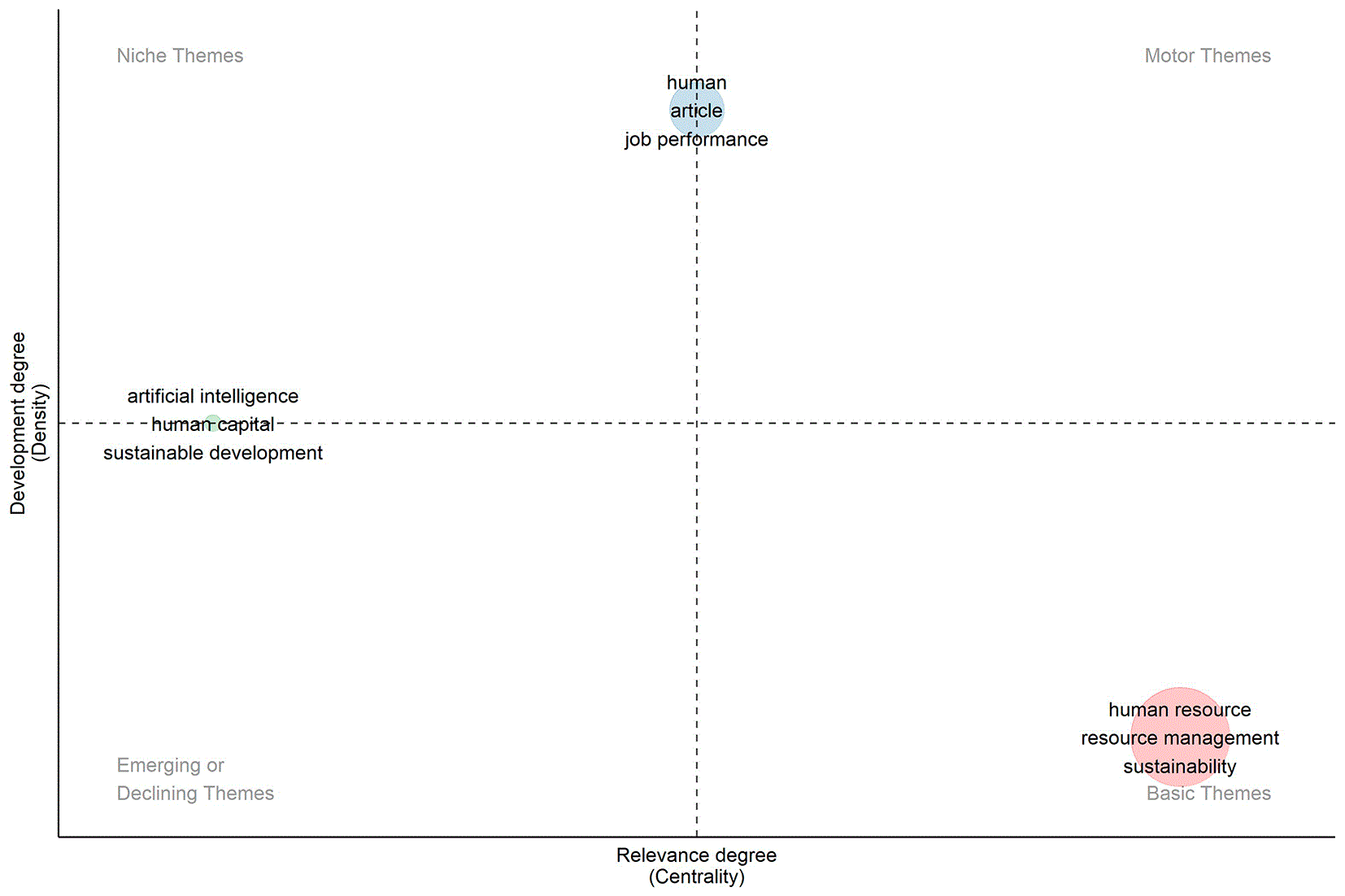
Conversely, the map highlights the maturation and emergence of specific focal points. The cluster situated at the top-center—featuring “job performance” alongside “human” and “article”—represents a highly developed area of research. Its high density signifies that evaluating concrete employee job performance outcomes is a well-established, rigorously studied, and mature methodological focus in the current literature. Furthermore, the presence of terms such as “artificial intelligence,” “human capital,” and “sustainable development” positioned on the left side of the map (bordering emerging and niche themes) reveals a newly evolving frontier. This specific positioning suggests that the intersection of digital transformation, AI integration, and sustainable human capital is currently a specialized and rapidly developing sub-field that is beginning to gain traction within the broader organizational sustainability discourse.
Thematic evolution To understand the historical trajectory and conceptual consolidation of the research domain, a thematic evolution analysis was conducted, as depicted in the Sankey diagram in Figure 6. The analysis divides the research timeline into two distinct periods: an initial development phase (2017–2021) and a recent maturation phase (2022–2026). During the initial period, the literature was characterized by a relatively fragmented conceptual focus, with discrete thematic streams centering independently on foundational terms such as “hrm,” “employees,” “sustainable,” “green,” and “performance.” This distribution indicates that early scholarship primarily concentrated on defining the basic constructs of environmental initiatives and establishing their standalone presence within human resource frameworks.
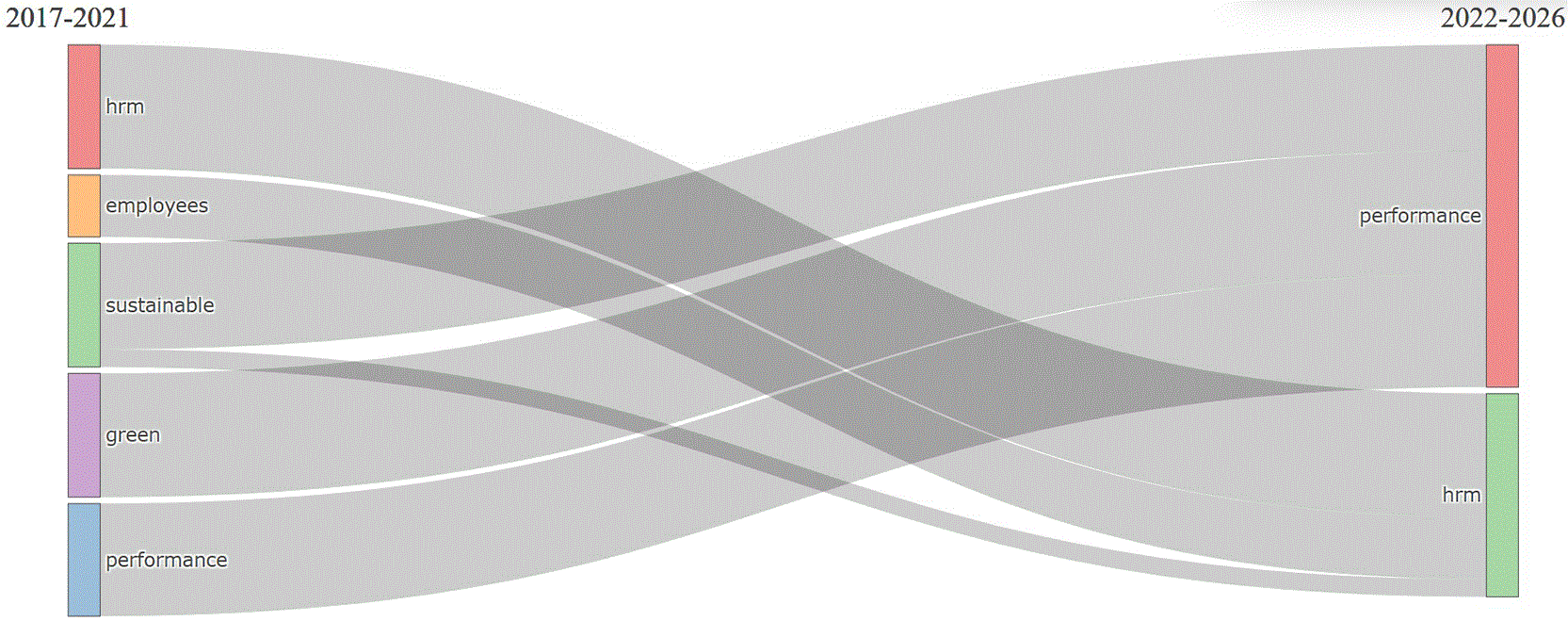
In the subsequent period (2022–2026), the structural evolution reveals a significant paradigm shift toward consolidation and outcome-oriented research. The diverse thematic streams from the first phase overwhelmingly converge into a single, dominant focus on “performance.” Simultaneously, core environmental concepts such as “sustainable” and “green” have merged directly into the “hrm” cluster. This visual trajectory illustrates a critical maturation in the literature: ecological considerations are no longer treated as isolated, peripheral employee initiatives. Instead, they have been fully integrated into core human resource management functions, with the contemporary academic focus shifting rigorously toward evaluating how these integrated green practices tangibly drive both employee and organizational performance.
Beyond the structural mapping of the field, an in-depth thematic analysis of the 68 included articles revealed several distinct mechanisms through which Green and Sustainable Human Resource Management (GHRM/SHRM) influence employee outcomes. The synthesized findings are categorized into five primary thematic clusters that represent the core empirical consensus of the reviewed literature.
Core GHRM practices and performance linkages A foundational segment of the literature establishes a direct, positive relationship between specific green HR functions and dual performance outcomes. Studies consistently report that the implementation of targeted practices—such as green recruitment, green training and development, and environment-based performance appraisals—significantly enhances employees’ pro-environmental behaviors while simultaneously improving their traditional, task-related job performance.30,56 Furthermore, these core practices serve as vital mechanisms for talent retention, particularly among younger workforces, by aligning organizational operations with employees’ environmental values.36
Psychological, cognitive, and moral mechanisms The synthesis reveals that the translation of sustainable HR policies into improved performance is largely mediated by internal psychological and cognitive pathways. The literature identifies that GHRM effectively fosters performance by instilling a deeper meaningfulness of work and increasing overall job satisfaction.32 Moreover, advanced studies emphasize the moral dimension, demonstrating that GHRM shapes employees’ moral self and moral integrity, which subsequently act as the central psychological conduits driving sustainable employee behavior and performance.42 Organizational identification also emerged as a critical mediator, indicating that as employees increasingly identify with their firm’s green initiatives, their willingness to exhibit organizational citizenship behaviors significantly rises.57
Leadership styles and relational dynamics The reviewed studies highlight that the success of sustainable HR practices is heavily contingent upon supportive relational dynamics and specific leadership frameworks. Empirical evidence shows that establishing a trusting relationship between employees and leaders is a crucial factor for maximizing the impact of sustainable HRM on job performance.31 Specifically, green transformational leadership and servant leadership styles act as catalysts that amplify the effectiveness of GHRM.33,46 Additionally, GHRM enhances employees’ perceptions of green organizational support, which in turn activates their job performance and citizenship behaviors toward the organization.38
Technological integration and AI in HRM A rapidly emerging theme within the most recent literature involves the integration of digital tools and artificial intelligence to support sustainable HR objectives. Studies indicate that AI-driven sustainable HRM positively influences employee engagement, leading to enhanced overall performance.44,45 The implementation of digital knowledge-sharing systems and the usability of HR chatbots have been shown to mediate and strengthen the link between green HR practices and sustainable employee performance, highlighting the critical role of technological infrastructure in modern environmental initiatives.43,58
Macro-organizational and ESG alignment Finally, the literature positions GHRM not merely as an internal administrative function, but as a strategic driver for macro-level organizational outcomes. The findings indicate that effective green human resource management is a necessary precursor for optimizing Green Supply Chain Management (GSCM) and overall corporate sustainability.47,48 Furthermore, empirical evidence from crisis-driven environments demonstrates that broader Environmental, Social, and Governance (ESG) practices function through sustainable HRM to act as internal performance and retention mechanisms, solidifying the strategic value of green HR across the organizational ecosystem.49
Theoretical foundations of the analyzed literature To fully grasp the conceptual underpinnings of the synthesized literature, it is crucial to identify the theoretical lenses through which researchers examine the relationship between green and sustainable human resource practices and employee performance. The thematic analysis of the corpus reveals that scholars predominantly rely on a select group of established organizational and behavioral theories to explain how these practices translate into tangible outcomes. Table 4 outlines the five most frequently utilized theoretical frameworks within the reviewed articles, providing their formal definitions and identifying the representative studies that applied them.
| Theoretical Framework | Definition | Representative Studies |
|---|---|---|
| Ability-Motivation-Opportunity (AMO) Theory | This theory posits that organizational performance is driven by human resource systems that enhance employees’ capabilities (Ability), provide incentives for discretionary effort (Motivation), and create avenues for active participation (Opportunity).59 | Dahinine et al.33; Gomes et al.60; Jia & Hou45; Parida et al.50; Prakash et al.61; Waseem et al.62 |
| Social Exchange Theory (SET) | SET conceptualizes workplace interactions as a series of reciprocal exchanges. It suggests that when organizations invest in employee well-being and sustainable practices, employees feel a sense of obligation to reciprocate with positive behaviors and enhanced job performance.63,64 | Almarzooqi et al.65; Gomes et al.60; Loukopoulos et al.66; Yusliza et al.67 |
| Job Demands-Resources (JD-R) Model | The JD-R model categorizes working conditions into job demands (which deplete energy and cause strain) and job resources (which foster motivation and engagement). Sustainable HRM practices are often framed as critical job resources that buffer against stress and drive employee performance.68,69 | Elkhweildi et al.70; Lu et al.41; Peretz71 |
| Resource-Based View (RBV) | RBV argues that a firm achieves a sustained competitive advantage by cultivating internal resources and capabilities that are valuable, rare, inimitable, and non-substitutable. In this context, a green-oriented workforce and sustainable HR systems are viewed as unique strategic assets.72,73 | Dahinine et al.33; Gomes et al.60 |
| Attribution Theory | This theory explores the cognitive processes by which individuals interpret and assign causes to organizational events. In sustainable HRM literature, it explains how employees’ perceptions of management’s motives for implementing green practices subsequently influence their engagement and performance outcomes.74,75 | Amjad et al.48; Gim et al.76 |
An analysis of the theoretical foundations within the synthesized literature reveals a distinct reliance on established organizational and behavioral frameworks to elucidate the mechanisms linking Green and Sustainable Human Resource Management (GHRM/SHRM) to employee outcomes. The Ability-Motivation-Opportunity (AMO) theory emerges as the most predominantly applied framework, utilized to demonstrate how green HR systems drive performance by simultaneously enhancing employee capabilities, providing motivational incentives, and creating opportunities for environmental participation. Furthermore, Social Exchange Theory (SET) is frequently employed to conceptualize the reciprocal dynamics wherein organizational investments in sustainability elicit positive behavioral responses and improved task performance from the workforce. Alongside these dominant lenses, the literature consistently integrates the Job Demands-Resources (JD-R) model to frame sustainable practices as critical workplace resources that foster engagement and buffer against stress, the Resource-Based View (RBV) to position green human capital as a rare strategic asset for competitive advantage, and Attribution Theory to map how employees’ cognitive interpretations of management’s environmental motives subsequently shape their performance and behavioral outcomes.
The marked growth in scholarly output since 2021 signals a significant shift in howf GHRM is conceptualized within organizational sciences. Historically, ecological initiatives within human resource frameworks were frequently marginalized as peripheral activities, driven primarily by the need for external regulatory compliance or superficial corporate social responsibility mandates. However, the synthesized literature unequivocally refutes this outdated perspective, demonstrating that GHRM has matured from a mere compliance checklist into a core strategic imperative.
Crucially, the current empirical consensus establishes that contemporary organizations no longer face a zero-sum trade-off between environmental sustainability and operational efficiency. Instead, GHRM functions as a mutually reinforcing “dual-engine.” On one hand, the targeted implementation of green recruitment, green training, and sustainable compensation directly cultivates employees’ pro-environmental behaviors and ecological awareness.30 On the other hand, these exact same sustainable practices transcend environmental outcomes to significantly elevate traditional, task-related job performance. For instance, recent empirical evaluations confirm that robust green HRM dimensions—particularly green participation—exhibit a strong positive correlation with overall worker productivity, motivation, and job satisfaction.37 Furthermore, foundational studies in this domain indicate that employee green behaviors make an independent, positive contribution to overall managerial performance ratings, proving that ecological engagement does not detract from, but rather enhances, core operational duties.24
Ultimately, this synthesis posits that sustainable HR practices must be viewed as strategic, high-yield investments in human capital rather than burdensome operational costs. By embedding sustainability into the core fabric of human resource management, organizations can concurrently achieve their macro-level environmental targets and secure a highly productive, engaged workforce.
While the direct impact of GHRM on performance is well-documented, critically evaluating how this translation occurs requires unpacking the “black box” of employee cognition and workplace dynamics. The synthesized literature demonstrates that GHRM does not mechanically increase productivity; rather, it fundamentally alters the psychological contract between the employee and the organization. At the cognitive level, the implementation of sustainable practices instills a profound sense of purpose, significantly enhancing the perceived meaningfulness of work.32 More critically, recent scholarship highlights the moral architecture of this relationship. GHRM actively shapes employees’ “moral self” and “moral integrity,” which act as the central psychological conduits driving sustainable behaviors and sustained task performance.42 This implies that when organizations authentically pursue environmental goals, employees perceive their work environment as ethically sound, which significantly reduces psychological distress and fosters higher individual resilience.40,41
Beyond individual psychology, the effectiveness of GHRM is heavily governed by relational mechanisms, a phenomenon best understood through the lens of Social Exchange Theory (SET). From a critical perspective, green HR initiatives are interpreted by the workforce as powerful signals of organizational benevolence and responsibility. When an organization invests in long-term sustainability, it communicates a broader commitment to stakeholder well-being, which subsequently elevates employees’ perceived organizational support. In a reciprocal response, employees reward the organization with heightened work engagement and increased individual performance.60 Furthermore, this reciprocal dynamic strengthens organizational identification; as employees increasingly align their personal values with the firm’s green initiatives, their willingness to go beyond formal job descriptions—manifesting as organizational citizenship behaviors—rises significantly.57
However, these relational benefits are fragile without a foundation of trust. Establishing a trusting relationship between employees and leadership is a vital relational bridge that determines whether sustainable practices will be genuinely embraced or cynically dismissed as corporate “greenwashing”.31,77 Ultimately, the synthesis of these findings suggests that for GHRM to successfully elevate employee performance, environmental policies must transcend administrative compliance. They must be carefully designed to resonate deeply with the ethical, psychological, and relational needs of the modern workforce.
The effectiveness of GHRM can vary across organizational leadership and technological contexts. From a critical standpoint, even well-designed green HR policies may have limited effects unless they are actively supported by organizational leaders. The synthesized literature indicates that specific leadership frameworks—particularly green transformational leadership and servant leadership—can serve as important catalysts in translating formal green policies into tangible employee behaviors.33,46 Furthermore, recent advancements emphasize the role of Environmentally Specific Ethical Leadership (ESEL), demonstrating that leaders who explicitly model green ethics significantly enhance employee job performance by fostering a climate of work engagement and responsible communication.70 This empirical consensus dictates a critical reality for practitioners: sustainable HR cannot be delegated entirely to the human resources department. It requires continuous, visible commitment from frontline and executive management to ensure that ecological goals are perceived by the workforce as genuine operational priorities rather than superficial corporate mandates.
Concurrently, the operational landscape of sustainable HR is undergoing a profound transformation driven by digital integration. The thematic mapping conducted in this review reveals that the intersection of artificial intelligence (AI), digital knowledge sharing, and GHRM constitutes a rapidly expanding frontier in contemporary organizational science. Critical evaluations of recent studies indicate that AI-driven sustainable HRM systems are increasingly deployed to streamline green recruitment, tailor environment-based training, and objectively evaluate green performance, which collectively elevates both employee engagement and overall productivity.44,45 Moreover, the integration of advanced digital tools, such as HR chatbots and electronic sustainability knowledge management platforms, provides the necessary infrastructure to disseminate green knowledge efficiently across the workforce.58,78 However, organizations must navigate this digital transition cautiously. As the literature warns, the implementation of these technologies must be managed to mitigate “technostress,” ensuring that digital HR tools do not inadvertently undermine the sustainable performance they are intended to support.58 Ultimately, the successful fusion of ethical, green-oriented leadership with AI-enabled HR infrastructure represents the optimal contextual environment for maximizing the dual-performance outcomes of GHRM.
The primary theoretical advancement of this systematic review is the development of an integrative conceptual framework that consolidates the diverse literature on GHRM and individual employee performance. Previous studies and reviews have provided valuable insights into specific GHRM outcomes and explanatory mechanisms; however, integrative frameworks that simultaneously connect core GHRM practices, individual performance outcomes, psychological and relational mechanisms, and leadership and technological contexts remain limited. To address this fragmentation, the present review synthesizes these elements into a comprehensive, multi-dimensional framework, as illustrated in Figure 7.
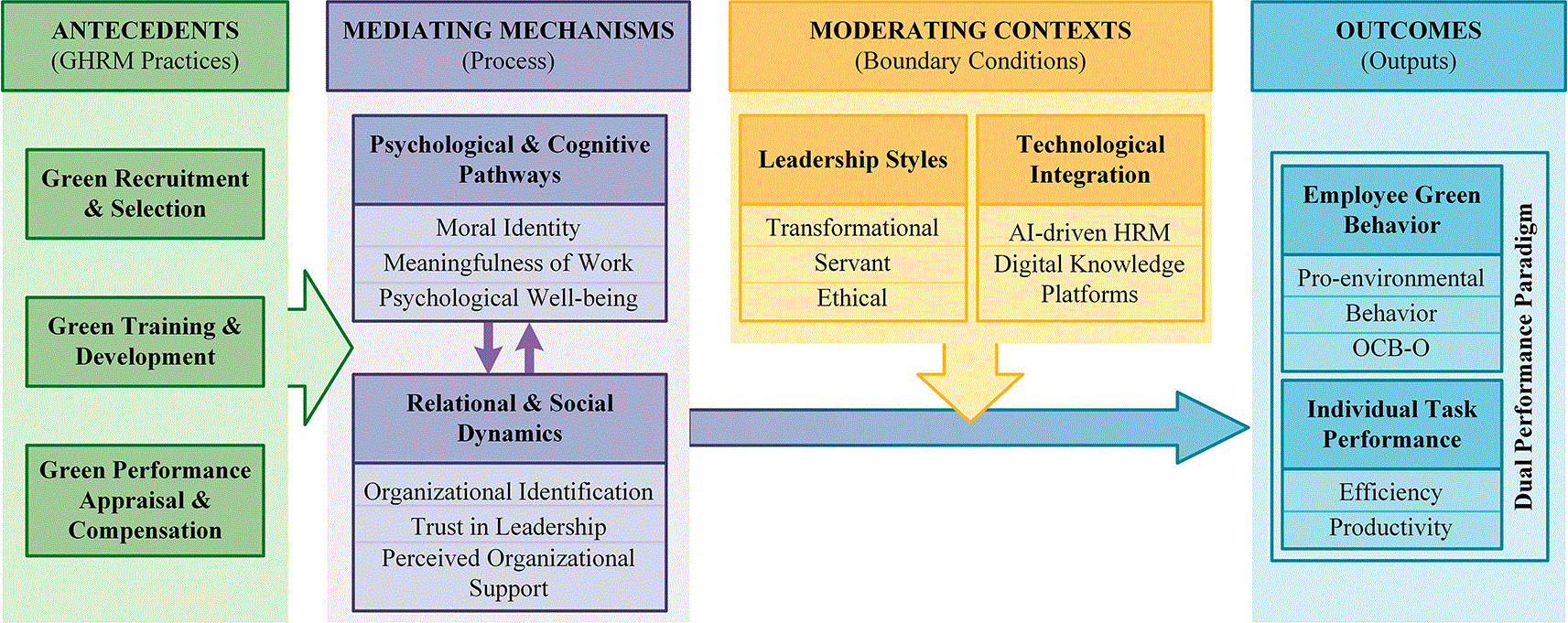
The architecture of this unified model is structured sequentially to capture the complexity of organizational behavior. The framework initiates with core GHRM practices—specifically green recruitment, training, and performance appraisal—acting as the foundational antecedents. Critically, the model posits that these inputs do not generate performance outcomes in a vacuum. Instead, they must pass through a dual-track mediating “engine” comprising both psychological/cognitive pathways (e.g., moral identity, meaningfulness of work) and relational/social dynamics (e.g., organizational identification, trust in leadership).31,42 This synthesis argues that sustainable practices must deeply resonate with an employee’s internal ethical compass and their relational trust in the organization to be genuinely effective.
Furthermore, the framework incorporates leadership and technological factors as important contextual conditions identified across the reviewed literature. These factors may strengthen or constrain the pathways through which green HR practices contribute to individual employee performance. Specifically, supportive leadership styles, such as transformational or servant leadership, and advanced technological infrastructures, including AI-driven HRM and digital knowledge platforms, emerge as relevant organizational contexts within this relationship.44,46
Ultimately, these intricate, interdependent pathways converge into what this review terms the “Dual Performance Paradigm.” The model demonstrates that a fully realized, contextually supported GHRM ecosystem yields a simultaneous maximization of both employee green behavior (e.g., pro-environmental initiatives, organizational citizenship behavior) and traditional individual task performance (e.g., core job efficiency, productivity).30,62 By bridging the theoretical divides between human capital capability, psychological well-being, technological integration, and ethical leadership, this unified model transcends traditional linear conceptualizations. It provides future researchers with a robust, testable blueprint for advanced structural equation modeling, while offering practitioners a holistic diagnostic tool for cultivating a sustainable and high-performing workforce.
The findings of this systematic review offer critical, actionable insights for human resource practitioners and organizational leaders aiming to simultaneously enhance ecological sustainability and workforce productivity. Practically, organizations must transition away from treating environmental initiatives as isolated corporate social responsibility programs and instead embed sustainability directly into their core human resource functions, specifically by redesigning recruitment, training modules, and performance appraisal systems to explicitly evaluate and reward pro-environmental competencies.30 Furthermore, HR departments are encouraged to leverage the digital frontier by incorporating AI-driven tools and digital knowledge-sharing platforms to efficiently administer green training and objectively track sustainable performance metrics.43,45 However, the successful execution of these structural and technological changes is heavily contingent upon relational dynamics; therefore, organizations must actively cultivate green transformational and servant leadership capabilities among their managerial staff to build the necessary trust, psychological safety, and moral alignment required to translate formal green policies into tangible, high-yielding dual-performance outcomes.33,46
While this systematic review comprehensively synthesizes the literature on GHRM and employee performance, several methodological limitations exist. First, data collection was restricted exclusively to the Scopus database. Relying on a single repository risks omitting relevant scholarly contributions indexed in other major databases like Web of Science or EBSCOhost. Second, the inclusion criteria were limited to English-language, peer-reviewed journal articles. This restriction introduces potential publication and geographic biases. It excludes grey literature like industry reports and risks marginalizing significant regional findings published in other languages. Finally, the current literature is heavily dominated by cross-sectional quantitative designs. This methodological trend restricts the ability to draw definitive causal inferences regarding the long-term impacts of sustainable HR practices on performance.
These limitations highlight critical avenues for future research. Future reviews should complement Scopus with other major academic databases, such as Web of Science and EBSCOhost, to broaden the coverage of relevant literature and reduce the risk of omitting important studies. Future reviews should adopt a multi-database approach and incorporate multilingual search strategies to capture a more globally inclusive representation of the GHRM discourse. Methodologically, there is an urgent need to transition toward longitudinal research designs. Tracking GHRM initiatives over extended periods will allow scholars to establish robust causal relationships and evaluate long-term performance outcomes. Furthermore, qualitative and mixed-method studies are required to explore the nuanced experiences of employees navigating AI-driven sustainable HR systems. Most importantly, future empirical research should focus on operationalizing and validating the unified conceptual model proposed in this review ( Figure 7). Scholars are encouraged to test the structural equations linking GHRM antecedents to performance outcomes while paying special attention to the moderating variables of digital HR infrastructure and cultural leadership contexts.
This systematic review and bibliometric analysis demonstrates that the literature on GHRM and employee performance has developed substantially over the 2017–2026 review period. Scholarly attention increased markedly after 2021, with research concentrated largely in Asian and emerging economies. Structurally, the literature has evolved from relatively fragmented themes surrounding HRM, sustainability, green practices, and employees toward a more consolidated and performance-oriented research domain, while themes related to artificial intelligence, digital transformation, human capital, and sustainable development have emerged as developing areas within the field. These patterns indicate a conceptual trajectory in which environmental considerations have become increasingly integrated into core human resource management research and linked more directly to employee and organizational performance. The synthesized literature further establishes that GHRM functions as a mutually reinforcing dual-performance mechanism, simultaneously cultivating pro-environmental behaviors and enhancing traditional task productivity. This performance relationship is shaped by psychological mechanisms, such as moral identity and meaningfulness of work, alongside relational mechanisms, including organizational identification and trust. Leadership styles and digital technologies also emerge from the reviewed literature as important contextual factors that can strengthen or constrain the relationship between sustainable human resource practices and individual performance. By consolidating these performance outcomes, explanatory mechanisms, and contextual factors into a unified conceptual model, this study provides an integrative theoretical framework for future empirical research. Ultimately, the findings encourage organizations to embed environmental sustainability into core HR practices while supporting their implementation through appropriate leadership and technological capabilities.
Ethical approval was not required because this study is a systematic literature review (SLR) that uses only published and publicly accessible sources and does not involve human participants, animals, or primary data collection.
Not applicable, as no human participants were involved in this study.
The author(s) declared that no grants were involved in supporting this work.
© 2026 Sarjaka R et al. This is an open access article distributed under the terms of the Creative Commons Attribution License, which permits unrestricted use, distribution, and reproduction in any medium, provided the original work is properly cited.
Download
Export To
metrics
| Views | Downloads | |
|---|---|---|
| F1000Research | - | - |
| PubMed Central Data from PMC are received and updated monthly. | - | - |
Citations
CITE
how to cite this article
Sarjaka R, Hidayat K, Nuzula NF and Imamah N. Unpacking the Green HR and Performance Nexus: A Systematic Literature Review [version 2; peer review: 1 approved, 2 approved with reservations]. F1000Research 2026, 15:1294 (https://doi.org/10.12688/f1000research.185656.2)
NOTE: If applicable, it is important to ensure the information in square brackets after the title is included in all citations of this article.
track
receive updates on this article
Track an article to receive email alerts on any updates to this article.
Current Reviewer Status: ?
Key to Reviewer Statuses VIEW HIDE
ApprovedThe paper is scientifically sound in its current form and only minor, if any, improvements are suggested
Approved with reservations A number of small changes, sometimes more significant revisions are required to address specific details and improve the papers academic merit.
Not approvedFundamental flaws in the paper seriously undermine the findings and conclusions
Version 2
VERSION 2
PUBLISHED 28 Sep 2026
Revised
Reviewer Report 30 Sep 2026
Eka Desy Purnama, Krida Wacana Christian University, Jakarta, Jakarta, Indonesia
Approved
VIEWS 0
Competing Interests: No competing interests were disclosed.
Reviewer Expertise: Business, Economic Management, and Financial Management
CloseVersion 1
VERSION 1
PUBLISHED 05 Aug 2026
Reviewer Report 08 Sep 2026
Daniel Lukito, Digital Business, Bina Nusantara University, Semarang City, Central Java, Indonesia
Approved with Reservations
VIEWS 0
Are the rationale for, and objectives of, the Systematic Review clearly stated?
Partly
Are sufficient details of the methods and analysis provided to allow replication by others?
Partly
Is the statistical analysis and its interpretation appropriate?
Not applicable
Are the conclusions drawn adequately supported by the results presented in the review?
Partly
If this is a Living Systematic Review, is the ‘living’ method appropriate and is the search schedule clearly defined and justified? (‘Living Systematic Review’ or a variation of this term should be included in the title.)
Not applicable
References
1. AlKetbi A, Rice J: The Impact of Green Human Resource Management Practices on Employees, Clients, and Organizational Performance: A Literature Review. Administrative Sciences. 2024; 14 (4). Publisher Full TextCompeting Interests: No competing interests were disclosed.
Reviewer Expertise: Human Resource Management, Change Management, Leadership, Digital Transformation
CloseReviewer Report 02 Sep 2026
Needesh Ramphul, School of Business, Management and Finance, University of Technology, Avenue De La Concorde, Pointe Aux Sables, Port Louis, Mauritius
Approved with Reservations
VIEWS 0
Are the rationale for, and objectives of, the Systematic Review clearly stated?
Partly
Are sufficient details of the methods and analysis provided to allow replication by others?
Partly
Is the statistical analysis and its interpretation appropriate?
Not applicable
Are the conclusions drawn adequately supported by the results presented in the review?
Partly
If this is a Living Systematic Review, is the ‘living’ method appropriate and is the search schedule clearly defined and justified? (‘Living Systematic Review’ or a variation of this term should be included in the title.)
Not applicable
Competing Interests: No competing interests were disclosed.
Reviewer Expertise: Human Resource Management, Sustainable HRM
CloseReviewer Report 10 Aug 2026
Eka Desy Purnama, Krida Wacana Christian University, Jakarta, Jakarta, Indonesia
Approved with Reservations
VIEWS 0
Are the rationale for, and objectives of, the Systematic Review clearly stated?
Partly
Are sufficient details of the methods and analysis provided to allow replication by others?
Partly
Is the statistical analysis and its interpretation appropriate?
Not applicable
Are the conclusions drawn adequately supported by the results presented in the review?
Yes
If this is a Living Systematic Review, is the ‘living’ method appropriate and is the search schedule clearly defined and justified? (‘Living Systematic Review’ or a variation of this term should be included in the title.)
Not applicable
Competing Interests: No competing interests were disclosed.
Reviewer Expertise: Business, Economic Management, and Financial Management
Close