Просмотр новости
Найдите то, что Вас интересует
 Спутники
 РН
 SpaceX
 Роскосмос
 NASA
СпутникиРНSpaceXРоскосмосNASAAmid rising food inflation, many Indian restaurants are implementing various strategies to manage costs. These strategies include pausing high-cost menu items and introducing smaller portions for diners. Increased operational expenses due to regulatory compliance have also led to price hikes for consumers. Many restaurant operators indicate they must share some inflation costs with patrons to maintain profitability. Consequently, price increases of 10-15% are expected across several restaurants in Mumbai.
Synopsis
Amid rising food inflation, many Indian restaurants are implementing various strategies to manage costs. These strategies include pausing high-cost menu items and introducing smaller portions for diners. Increased operational expenses due to regulatory compliance have also led to price hikes for consumers. Many restaurant operators indicate they must share some inflation costs with patrons to maintain profitability. Consequently, price increases of 10-15% are expected across several restaurants in Mumbai.
 Reuters
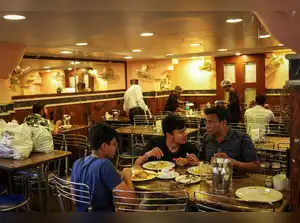
Cafes, restaurants resort to smaller meals, reducing portions and increasing prices (Representative Image)
New Delhi: From pausing high-cost items on the menu, to introducing smaller meals or reducing portions, or increasing prices by 4-5% starting October, fine-dine chains, restaurants and cafes are resorting to various measures in peak festive season amid surging food inflation and higher costs of hygiene compliances.
"We have paused serving some higher-priced options in our biryani range, which involve high-cost ingredients," said Raymond Andrews, co-founder of quick service restaurant (QSR) chain Biryani Blues.
Executives said they are putting in place a combination of measures amid tight market conditions, adding that the ongoing inflation is having a far more long-term and significant impact compared to the LPG supply disruptions crisis during March-April this year, at the peak of the West Asia war, which had led to unchecked increases in costs.
Also Read | Navratri fasting food goes gourmet as restaurants see demand
"There is no other way out now but to share some of the inflation load with consumers, and some costs we will absorb," said Saurabh Khanijo, managing director at Asian cuisine chain Kylin.
The spotlight and crackdowns by Maharashtra Food and Drug Administration (FDA) and Food Safety & Standards Authority of India (FSSAI) on food safety, sanitation, storage methods and licensing violations have further led to increased costs by chains, some of which chains are passing on to consumers, executives said.
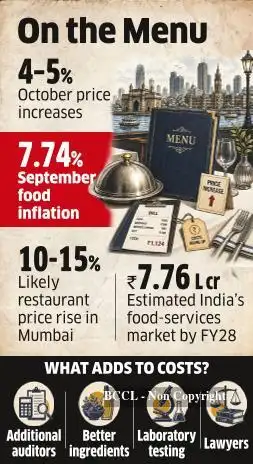
The new costs, or 'hygiene surge' include hiring additional audit staff, using higher-quality ingredients, engaging with external labs for testing and sampling and reinforcing legal teams. "There are a lot of compliances by regulators now that impact everyone-from small operators to large chains. For example, we are replacing oil used for deep frying quicker than even the permissible standards, as we don't want to take a chance and be called out by regulators-some of that cost we are passing on to consumers ," said the chief of a prominent Delhi-based chain. He requested not to be named.
India's retail food inflation shot up to 7.74% in September, amid surge in prices of vegetables and staples including edible oils, sugar, onions, ginger and garlic.
"Restaurants are facing rising input costs, including gas, water and employee expenses, alongside aggregator commissions and the pressure to offer discounts. At the same time, competition from newer players operating at aggressive price points is making it increasingly challenging to maintain profitability," said Shashank Shetty, director, Peninsula Redpine, which operates Tattva Bar & Cafe.
Also Read | From Deoghar to Udupi: Family offices bet Rs 2,000 crore on hotels in pilgrimage towns
Over the weekend, the Indian Hotel and Restaurant Association released a statement that restaurants in Mumbai are gearing to increase prices by 10-15%. AHAR president Vijay K Shetty attributed the increase to "sustained increases in the cost of preparing and serving food".
Avanish Chaturvedi, F&B manager at ITC Grand Central, Mumbai added that rising food and ingredient costs, manpower expenses, rentals and utility bills are contributing to increased operating costs," Restaurants can mitigate cost pressures through menu engineering, efficient procurement, waste reduction and operational improvements," he added.
Read More News on
...moreless
| # | Наименование новости | Тональность | Информативность | Дата публикации |
|---|---|---|---|---|
| 1 | Restaurants, cafes rule out menu price hikes in festive quarter despite UPI MDR levy and rising food inflation | 0 | 6.91 | 17-09-2026 |
| 2 | FMCG firms to hold prices despite rise in commodity costs; prioritise volume growth | 0 | 6.1 | 20-09-2026 |
| 3 | Restaurants feel the inflation heat: 90 per cent in B.C. have raised prices | 0 | 14.4 | 18-09-2026 |
| 4 | Colgate may get costlier as input inflation returns | 0 | 10.3 | 18-08-2026 |
| 5 | Как ресторану повысить средний чек без прямого повышения цен в меню | New-Retail.ru | 0 | 7 | 09-07-2026 |
| 6 | Рестораны упрощают меню на фоне роста расходов | -2 | 6 | 09-07-2026 |
| 7 | Рост цен в московских ресторанах за полгода составил до 20% | 0 | 0 | 25-11-2021 |
| 8 | NYC Restaurants Shut Off Air Conditioning, Close on Sundays as Costs Surge | 0 | 9.15 | 14-10-2026 |
| 9 | UAE VAT changes to increase costs and compliance burden for Indian businesses | 0 | 10.14 | 18-10-2026 |
| 10 | "Известия": цены на молочные и мясные продукты могут вырасти более чем на 10% | 0 | 0 | 28-01-2020 |