Просмотр новости
Найдите то, что Вас интересует
 Спутники
 РН
 SpaceX
 Роскосмос
 NASA
СпутникиРНSpaceXРоскосмосNASAMeats were important, too. But throughout human evolution, fruits may have fueled much of the brain growth in our primate cousins and early ancestors.
Our sweets cravings may have set the stage for the human brain to become big and powerful. That’s the finding of a new study.
The brains of our upright-walking ancestors, some 4 million years ago, weighed only around 300 grams (11 ounces). That’s about equal to a medium apple. Today, the human brain averages 1,500 grams (3.3 pounds). That’s about equal to 1.5 liters of water. Much of this brain expansion took place before early humans mastered both fire and cooking. That’s a point that marked when they could start regularly dining on energy-dense starches.
Carbohydrates come in two main classes. Sugars tend to be relatively simple molecules. Starches tend to be bigger and more complex. A new analysis of existing data from human ancestors, as well as chimps, suggests that a large share of their energy probably came from sugary carbs, such as those in fruits and honey.
Simple sugars may have played an overlooked — but important — role in human evolution, researchers now conclude. They describe why in the August 6 Science.
Until now, much of how diet affected human evolution has centered on meat. Around 2.5 million years ago, our early upright-walking ancestors began eating more meat — raw at first, then eventually cooked. Meat is rich in protein and fat. And that appeared to play a big role in fueling our ancestors’ ever-expanding brains.
But Jennie Brand-Miller thought there might be more to the story. A nutrition scientist at the University of Sydney, in Australia, she wondered how sugars might have affected the evolution of our brains.
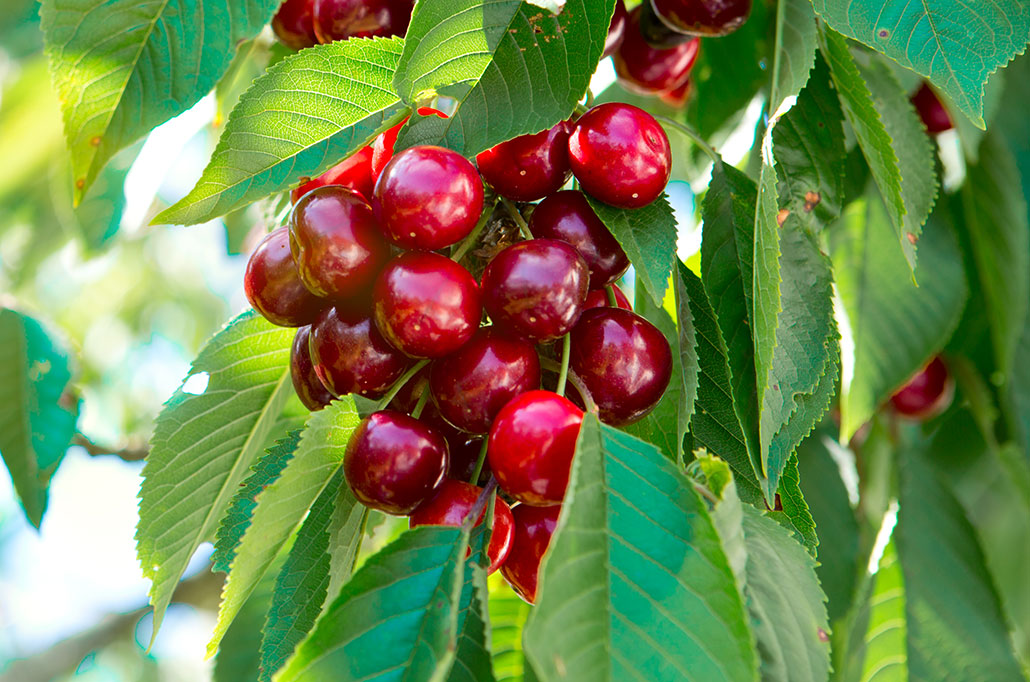 Fruits were a major part of the early hominid diet and remained so going forward in evolutionary history.swkunst/iStock/Getty Images Plus
A 2017 study had shown that fruit-eating primates had bigger brains than leaf-eating ones. Eating fruit boosts demands on various thought processes, other researchers had suggested two decades earlier. Might this have kickstarted the evolution of big brains in humans?
Explains Brand-Miller, “You need to remember when various species of ripe fruit begin to ripen, then you need to remember where it is in the forest.” And, she adds, “Your memory is associated with a bigger brain.”
Fossil primates and later hominids, such as Homo erectus, showed signs of tooth decay, Brand-Miller notes. This suggests a diet containing soft, sugary foods. (Homo erectus was the first of our ancient cousins to venture outside Africa; that was 2 million years ago).
“All these things kept adding pieces to this lovely tapestry, this puzzle that said fruit-containing sugars must be important [in human evolution],” she says.
Submit your question here, and we might answer it an upcoming issue of Science News Explores
Brand-Miller is part of a team that has now calculated the dietary needs of chimps, humans and three early species of human ancestors. To do this, the researchers combined data from fossils, teeth, the species’ metabolism and the biology of bodily processes.
Our earliest chimp-like ancestors from around 4 million years ago were largely vegetarians, they found. Fruit likely provided more than two-thirds of their food energy. And it played a big role as hominid brains grew over the next few million years, the data also suggest.
Clever foraging skills would have helped fuel their energy-sapping brains. These would have included hunting, cracking nuts, grinding seeds or extracting bone marrow. Later, once cooking became common, humans could have turned to starches (such as grains, beans and tubers). But a constant need for sugary foods appears to have been a key player in our evolution. And it didn’t disappear after a shift to foods high in proteins and fat, such as meats.
Meat and sugars? “I see them as parallel stories, not one replacing the other,” Brand-Miller now says. “Animal foods were clearly important. They’re very nutrient dense.”
A past focus on meat-eating may have missed some food trends that helped build the human brain, agrees Julie Lee-Thorp. She’s an archaeologist at the University of Oxford in England. She did not take part in the new study.
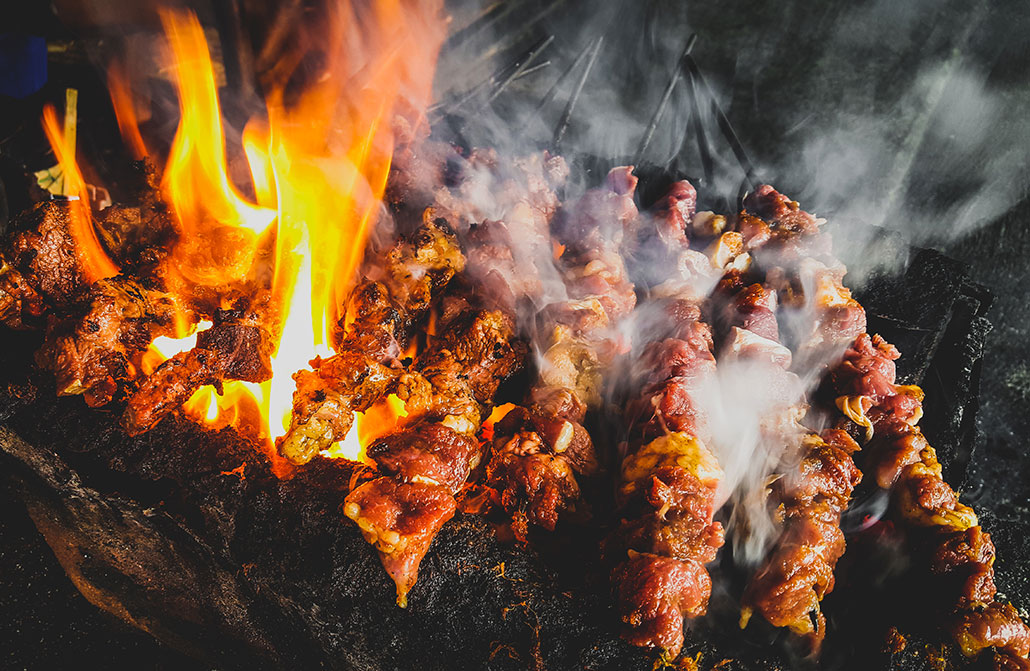 For a long period, evolutionary biologists saw meat as a major energy source that helped fuel the growth and complexity of the human brain. And it did. But a new surprise is that sugary carbs did, too, and they may have even kicked off the brain’s evolutionary growth.Igoravris/iStock/Getty Images Plus
Focusing on meat’s role may reflect a modern bias, she adds. “Meat is a high-status food today,” notes Lee-Thorp. “And that has perhaps been carried over into the way we think about the past.”
But Brian Wood largely dismisses that. The study of human evolution has not been obsessed with meat-eating, he says. A biological anthropologist, Wood works at the University of California, Los Angeles. A diverse range of foods fueled our evolution, he says. And they were made possible by our growing “ability to capture and harvest high-quality, difficult-to-acquire foods.” This included hunting, sure. But, he adds, foraging for fruit, honey, nuts and the underground parts of plants was also part of it.
ancestor: A predecessor. It could be a family forebear, such as a parent, grandparent or great-great-great grandparent. Or it could be a species, genus, family or other order of organisms from which some later one evolved. For instance, ancient dinosaurs are the ancestors of today's birds. (antonym: descendant)
anthropologist: A social scientist who studies humankind, often by focusing on its societies and cultures.
average: (in science) A term for the arithmetic mean, which is the sum of a group of numbers that is then divided by the size of the group.
bias: The tendency to hold a particular perspective or preference that favors some thing, some group or some choice. Scientists often “blind” subjects to the details of a test (don’t tell them what it is) so that their biases will not affect the results.
biology: The study of living things. The scientists who study them are known as biologists.
carbohydrates: Any of a large group of compounds occurring in foods and living tissues, including sugars, starch and cellulose. They contain hydrogen and oxygen in the same ratio as water (2:1) and typically can be broken down in an animal’s body to release energy.
diet: (n.) The foods and liquids ingested by an animal to provide the nutrition it needs to grow and maintain health. Sometimes this is a specific food-intake plan.
evolution: (v. to evolve) A process by which species undergo changes over time, usually through genetic variation and natural selection. These changes usually result in a new type of organism better suited for its environment than the earlier type. The newer type is not necessarily more “advanced,” just better adapted to the particular conditions in which it developed. Or the term can refer to changes that occur as some natural progression within the non-living world (such as computer chips evolving to smaller devices which operate at an ever faster speed).
fat: A natural oily or greasy substance occurring in plants and in animal bodies, especially when deposited as a layer under the skin or around certain organs. Fat’s primary role is as an energy reserve. Fat also is a vital nutrient, though it can be harmful if consumed in excessive amounts.
fossil: Any preserved remains or traces of ancient life. There are many different types of fossils: The bones and other body parts of dinosaurs are called “body fossils.” Things like footprints are called “trace fossils.” Even specimens of dinosaur poop are fossils. The process of forming fossils is called fossilization.
fruit: A seed-containing reproductive organ in a plant.
hominid: All modern and extinct great apes. Living examples include humans, chimpanzees, gorillas and orangutans. The group also includes up to 19 species of prehistoric relatives of humans, such as Australopithecus, Paranthropus and Ardipithecus. The group has a lot of overlap with hominins. The difference: Hominins do not include currently living great apes other than humans.
Homo erectus: An extinct species of hominid that lived in Africa and Eurasia between about 1.9 million and 70,000 years ago.
marrow: (in physiology and medicine) Spongy tissue that develops inside of bones. Most red blood cells, infection-fighting white blood cells and blood platelets form within the marrow.
metabolism: (adj. metabolic) The set of life-sustaining chemical reactions that take place inside cells and bigger structures, such as organs. These reactions enable organisms to grow, reproduce, move and otherwise respond to their environments.
molecule: A group of atoms that represents the smallest possible amount of a chemical compound. Molecules can be made of single types of atoms or of different types. For example, the oxygen in air is made of two bound oxygen atoms (O2). Water is made of two hydrogen atoms and one oxygen atom (H2O).
nutrient: A vitamin, mineral, fat, carbohydrate or protein that a plant, animal or other organism requires as part of its food in order to survive.
nutrition: (adj. nutritious) The healthful components (nutrients) in the diet — such as proteins, fats, vitamins and minerals — that the body uses to grow and to fuel its processes. A scientist who works in this field is known as a nutritionist.
parallel: An adjective that describes two things that are side by side and have the same distance between their parts. In the word “all,” the final two letters are parallel lines. In the word “all,” the final two letters are parallel lines. Or two things, events or processes that occurred at the same time or that have much in common when compared side by side.
primate: The order of mammals that includes humans, apes, monkeys and related animals (such as tarsiers, the Daubentonia and other lemurs).
protein: A compound made from one or more long chains of amino acids. Proteins are an essential part of all living organisms. They form the basis of living cells, muscle and tissues; they also do the work inside of cells. Antibodies, hemoglobin and enzymes are all examples of proteins. Medicines frequently work by latching onto proteins.
range: The full extent or distribution of something. For instance, a plant or animal’s range is the area over which it naturally exists. (in math or for measurements) The extent to which values can vary (such as the highest to lowest temperatures). Also, the distance within which something can be reached or perceived.
species: A group of similar organisms capable of producing offspring that can survive and reproduce.
starch: A soft white chemical made by all green plants. It’s a relatively long molecule made from linking together a lot of smaller, identical building blocks — all of them glucose, a simple sugar. Plants and animals use glucose as an energy source. Plants store that glucose, in the form of starch, as a reserve supply of energy. Animals that consume starch can break down the starch into glucose molecules to extract the useful energy.
vegetarian: A person who does not eat red meat (such as beef, bison or pork), poultry (such as chicken or turkey) or fish. Some vegetarians will drink milk and eat cheese or eggs. Some will eat the flesh of fish only, not mammals or birds. Vegetarians get the vast majority of each day’s calories from plant-based foods.
Jake Buehler is a freelance science writer, covering natural history, wildlife conservation and Earth's splendid biodiversity, from salamanders to sequoias. He has a master's degree in zoology from the University of Hawaii at Manoa.
| # | Наименование новости | Тональность | Информативность | Дата публикации |
|---|---|---|---|---|
| 1 | Sugar may have been a key ingredient in human evolution | 0 | 6.57 | 06-08-2026 |
| 2 | Опровергнуто давнее представление об эволюции мозга человека | 0 | 7.66 | 20-08-2026 |
| 3 | Scientists find a clue to human brain evolution in finger length | 0 | 7 | 10-02-2026 |
| 4 | Антропологи пересмотрели причины увеличения человеческого мозга | 0 | 10 | 07-07-2026 |
| 5 | Childhood junk food may rewire the brain for life | 0 | 10.65 | 21-05-2026 |
| 6 | Диета родителей способна изменить мозг ребёнка: переход на здоровое питание не поможет | 0 | 8.67 | 04-08-2026 |
| 7 | Привычки здорового питания связали с защитой мозга | 5 | 5 | 11-07-2026 |
| 8 | A surprising brain discovery could help explain why we overeat fatty foods | 0 | 11.59 | 13-08-2026 |
| 9 | Привычный напиток оказался защитником мозга от последствий недосыпа | 5 | 7 | 01-07-2026 |