Просмотр новости
Найдите то, что Вас интересует
 Спутники
 РН
 SpaceX
 Роскосмос
 NASA
СпутникиРНSpaceXРоскосмосNASA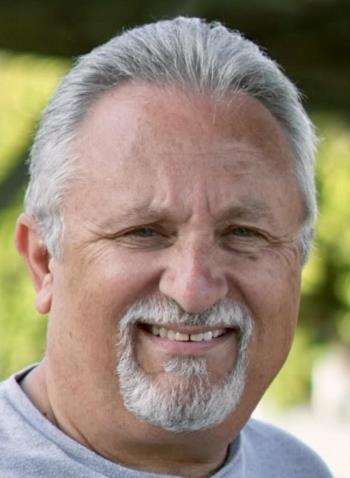
Roger Forgey
There comes a point in life when you suddenly hear something come out of your mouth and think:
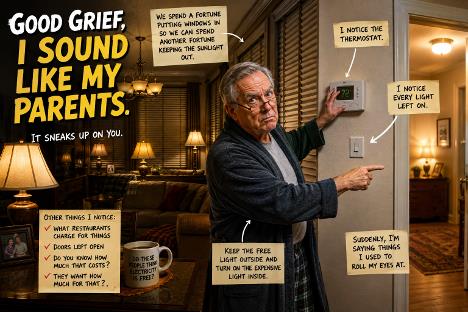
Good grief. I sound just like my parents.
It usually starts with something simple.
“Why is every light in this house on?”
“Do you know how much that costs?”
Then come the others.
“Close the door. We’re not cooling the whole neighborhood.”
“Were you born in a barn?”
“Turn that down. I can hear it in the next room.”
“Does anybody know how to replace a roll of toilet paper around here?”
And perhaps the surest sign of all:
“Back in my Day….”
At some point you realize it is not just the things you say.
It is the way you think.
My father died when I was only 14 months old, so I never had the chance to grow up watching him patrol the thermostat or lecture us about wasting electricity.
But my mother certainly understood the value of a dollar.
She knew what things cost. She knew what waste looked like. She understood that water, electricity, food and everything else had to be paid for because there was no one but her to do it.
She reminded us of that daily.
I would love to tell you those lessons turned me into a wonderfully frugal adult.
They did not.
My wife is a CPA, so you might reasonably assume our household finances were a model of discipline and careful planning.
They were not.
We tried budgeting.
More accurately, my wife tried budgeting.
I failed to cooperate.
Eventually we developed a different financial strategy:
Work harder.
Get more education.
Take on more responsibility.
Make enough money that we didn’t have to be quite so good at budgeting.
I am not recommending this approach.
I am simply admitting that it was ours.
Now, of course, after all these years, we understand everything.
Save early. Spend carefully. Avoid unnecessary debt. Understand compound interest.
We could probably teach a seminar.
It would have been particularly useful about forty years ago.
Of course, forty years ago we wouldn’t have attended.
We have also developed a few habits that would make our younger selves laugh.
Every house we have bought or built has had to have lots of windows.
That is the most important feature to my wife.
Natural light.
Lots of it.
Then we move in and cover the windows.
Blinds. Shades. Curtains.
Apparently we spend a small fortune putting glass in the walls so we can spend another small fortune keeping the sunlight from coming through it.
At the same time, my wife likes the inside of the house brightly lit.
Very brightly lit.
Surgically lit.
You could perform an appendectomy in our kitchen without bringing in an extra lamp.
So somewhere during our marriage we developed an interesting energy policy:
Keep the free light outside and turn on the expensive light inside.
This makes perfect sense to her.
It does not make sense to me.
Which is another sign we have become our parents, because after more than fifty years of marriage, neither one of us feels any particular obligation to make sense to the other anymore.
And yes, I now notice lights left on.
I notice the thermostat.
I notice when someone leaves a door open.
I notice what restaurants charge for things.
I have reached the age where I can spend $40 on something I don’t need without blinking, then become outraged because a hamburger costs $16.
I occasionally hear myself saying, “They want HOW MUCH for that?”
And I have developed another disturbing habit.
I tell younger people what things used to cost.
Gas.
Cars.
Houses.
A Coke.
A movie ticket.
This information is of absolutely no value to them, but I feel compelled to provide it anyway.
Apparently my mother’s lessons did take hold.
They just had a very long incubation period.
Somewhere along the way, the things our parents said that drove us crazy became the things we say without even thinking about them.
Maybe that is how it happens.
You don’t wake up one morning and discover you have become your parents.
It sneaks up on you.
One day you’re young and rolling your eyes while your mother complains about the electric bill.
The next day you’re standing in an empty room turning off a light and muttering, “Do these people think electricity is free?”
And then you realize something even worse.
Your parents were right about a lot of things.
I just wish they were still here so I could blame them.
I mean, thank them.
Something to think about.
* * *
Roger D. Forgey, FACHE, is a retired healthcare executive, nurse practitioner, and Army Lieutenant Colonel with more than 40 years of experience in healthcare leadership. During his career, he served as CEO of multiple hospitals and held senior leadership roles with Erlanger Health System and other regional healthcare organizations. A Fellow of the American College of Healthcare Executives, Forgey has spent his career leading hospitals through growth, change, and crisis. Today, he enjoys writing thoughtful columns on life, leadership, healthcare, faith, and the issues that shape our communities. He lives in Northwest Georgia with his wife. He can be reached at rogerforgey@gmail.com.
| # | Наименование новости | Тональность | Информативность | Дата публикации |
|---|---|---|---|---|
| 1 | Roger Forgey: Sometimes Home Knows You Too Well | 0 | 10 | 01-10-2026 |
| 2 | Roger Forgey: Sometimes The Crooked Road Still Gets You There | 0 | 10 | 05-10-2026 |
| 3 | Roger Forgey: Why Must Someone Die Before We Act? | 0 | 10 | 12-10-2026 |
| 4 | Roger Forgey: Borrowed Trust | 0 | 10 | 15-10-2026 |
| 5 | ‘Everything was for her’: Glengormley firefighter plays piano for Channel 4 show after best friend’s passing | 0 | 14.65 | 25-07-2026 |
| 6 | AMANDA PLATELL: The tears were real but Burnham's speech was pure theatre | 0 | 10.89 | 02-10-2026 |
| 7 | Billy Crystal reflects on ‘profound’ loss of Hollywood director Rob Reiner | 0 | 10 | 14-10-2026 |
| 8 | Ashlee Jenae’s Fiancé Breaks Silence Following Influencer’s Sudden Death | 0 | 5 | 06-05-2026 |
| 9 | Steve - The Passing Of A True Friend - And Response | 0 | 5 | 19-07-2026 |
| 10 | Goad, Ray | 0 | 10 | 15-08-2026 |