Просмотр новости
Найдите то, что Вас интересует
 Спутники
 РН
 SpaceX
 Роскосмос
 NASA
СпутникиРНSpaceXРоскосмосNASAThe Raleigh City school board began to allow Black students to transfer to white schools six years after the Brown vs. Board of Education decision. But desegregation was piecemeal, and the process was hard on these first students.
This is the second in a four-part series covering the integration of Raleigh and Wake County Schools. Read the rest of the series here.
In 1960, a little boy named Bill Campbell was the first Black student to enter a white school in Raleigh. That same year, the Raleigh City school board denied his two older siblings admission to a white junior high school.
In the years that followed, racial integration in Raleigh City Schools was piecemeal. It was a time of lawsuits. In Hunter vs. the Raleigh City Board of Education, 66 plaintiffs charged that Raleigh City Schools was using race in their student assignment decisions to prevent desegregation.
In response, the school board admitted five Black students to Josephus Daniels Junior High and three to Needham Broughton High that fall.

News & Observer
The students were handpicked by the school board based on their neighborhoods. One of those 8, Larry Manuel, had never asked to be a trailblazer. Years later in 2024, he explained this in an interview for an event honoring the "Broughton Three" and the "Daniels Five."
In the interview, Manuel said his family wasn't part of that lawsuit, which was dropped. He learned about his reassignment in the newspaper.
"We weren't thrilled about it because my mother and grandmother felt like there could be some danger involved," Manuel said. "See this was a couple of years right after the Emmett Till incident."
Emmett Till was a 14-year-old Black boy who was abducted and brutally lynched in Mississippi in 1955 for supposedly whistling at a white woman.
I knew that I was paving the road for people behind me, for Black males coming behind me. I knew that's what it was about. I had to make this thing successful.Larry Manuel, one of 8 students handpicked to attend a white school in Raleigh 1961
"My mother and grandmother stressed to me: 'Do not pay attention to any white girls. You could be killed,'" Manuel recalled.
Manuel said it was a hostile environment at the school.
"A lot of the kids there, I'm sure, had been raised that they were superior to Blacks," Manuel said. "I was called the N-word many times, but never one-on-one. It would always be a group."
Manuel saw stark differences between the two schools. The Black elementary he had moved from still heated its furnace with coal, and it had no gym. Gaps like these were one reason some Black families wanted their children in white schools. But, he said, leaving the Black schools also meant losing something incredibly valuable.
"The teachers were the best that you could have. Black teachers nurture Black kids real well. At Daniels, I didn't get that. The teachers were very cold and distant," Manuel recalled.
Manuel said that although he didn't choose it, he also doesn't regret his experience.
"I knew that I was paving the road for people behind me, for Black males coming behind me. I knew that's what it was about. I had to make this thing successful," Manuel said.
'Freedom of Choice' plansThrough the 1960s, integration continued slowly in Raleigh City Schools. By 1962, 37 Black students were permitted transfers.
Families could request transfers to desegregated schools under the state's so-called "Freedom of Choice" plan. School boards, including the Raleigh Board of Education, often denied many transfer requests.
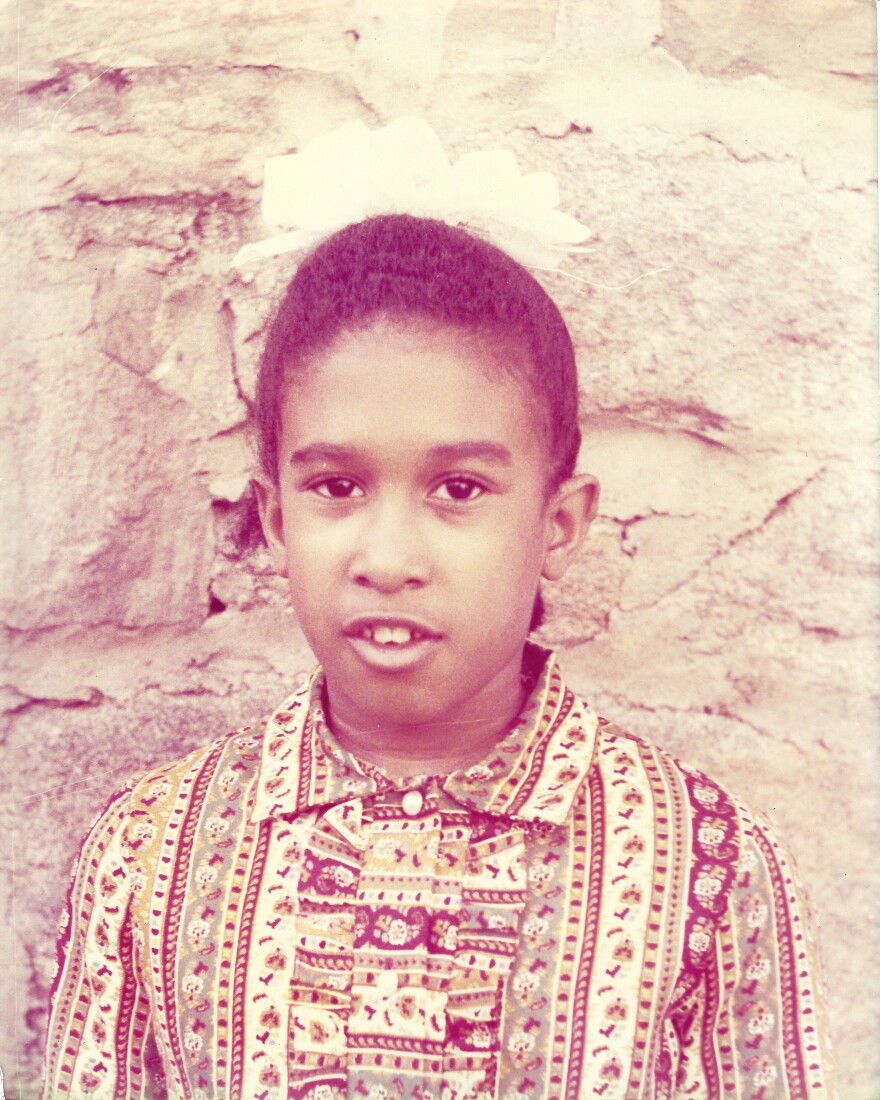
Courtesy of Carmen Wimberley Cauthen
Most of the Black students the school board approved to transfer to white schools in the early 1960s were the children of teachers. One of them was historian Carmen Wimberley Cauthen, a lifelong Raleigh resident. Her mother, Cliffornia Wimberley, was one of the first Black teachers to desegregate the Raleigh City Schools' teaching workforce.
"I remember her saying that the principals were told to send their best teachers to the white schools, and I know some Black teachers lost their jobs or had to move out into the county," Cauthen recalled.
That was one of many losses for the Black community in Raleigh. When the schools continued to integrate in the early 1970s, the city's Black high school, Ligon High, was shut down and converted to a middle school. Black students who began to attend predominantly white schools lost their access to Black teachers, role models, and peers.
Now 67, Cauthen recalls attending Frances Lacy Elementary, which she was permitted to attend after her family moved to a white neighborhood.
"The first day I went to school there, there were four white girls who were sitting in chairs around me, and the second day I went to school, there were four empty chairs around me," Cauthen said. "Those girls had been moved out to private school."
A state law provided that any student whose family opposed their child being assigned to attend a school with a student of another race could get a grant from the state to pay for private school tuition.
This wasn't Cauthen's only experience of students leaving the school because of her. One moment in particular is burned into her memory.
Cauthen remembers a schoolmate who would ride her bike home while she walked. One day, when the two were a block from the school, she says Jesse Helms' car pulled up.
Helms was a long time conservative North Carolina Senator who was known for his inflammatory commentary and staunch opposition to civil rights.
"He got out and told her to get in, and whoever was driving got out and put her bike in the trunk of the car, and she did not come back to school anymore," said Cauthen, who believes the little girl was Jesse Helms' niece.
Editor's note: Special thanks to Michael Parker West for sharing a recording of his interview with Larry Manuel, conducted for the event "Oberlin's Trailblazers: First in the School Integration Fire" in 2024 at Oberlin Middle School (formerly Josephus Daniels Junior High).
| # | Наименование новости | Тональность | Информативность | Дата публикации |
|---|---|---|---|---|
| 1 | This Raleigh family stood up to NC's resistance to desegregate schools after Brown vs. Board | 0 | 6.02 | 20-10-2026 |
| 2 | After decades of progress, Wake County Public Schools faces resegregation | 0 | 6.47 | 23-10-2026 |
| 3 | 50 years ago, Raleigh City Schools and Wake County Schools merged | 0 | 9.17 | 22-10-2026 |
| 4 | CHCCS may split a popular Mandarin program as it begins to rezone students | 0 | 9.78 | 17-07-2026 |
| 5 | As PPS works to expand its gifted programs, students say encouragement and preparation are key | 0 | 15.12 | 28-07-2026 |
| 6 | Смена школы или класса: как помочь ребенку адаптироваться | 0 | 7.16 | 28-08-2026 |
| 7 | NC Democratic lawmakers unveil bill to protect students from ICE and Border Patrol | 0 | 7.86 | 28-04-2026 |
| 8 | The school year begins in LA with one big change: limited screen time | 0 | 9.83 | 11-08-2026 |
| 9 | Trump's Ed. Dept. Backs Away From Addressing Civil Rights for Black Students | -5 | 6 | 03-06-2026 |
| 10 | North Carolina high schoolers show improvements in mental health | 0 | 6.59 | 07-08-2026 |