Просмотр новости
Найдите то, что Вас интересует
 Спутники
 РН
РН SpaceX
 Роскосмос
 NASA
NASA
СпутникиРНSpaceXРоскосмосNASAReleased in 1966 by Universal Pictures, The Ghost and Mr. Chicken represents a pivotal moment in American screen
The post “Atta Boy, Luther!” How THE GHOST AND MR. CHICKEN Haunted Hollywood and Made Don Knotts a Movie Star appeared first on David's Basement of the Bizarre.

Released in 1966 by Universal Pictures, The Ghost and Mr. Chicken represents a pivotal moment in American screen comedy. Having just departed his five-time Emmy-winning role as Deputy Barney Fife on The Andy Griffith Show, Don Knotts transitioned to the silver screen with a tailor-made vehicle that cemented his status as a cinematic leading man. Blending classic haunted-house mystery with small-town slapstick, the film remains an affectionate, enduring family classic.
 Synopsis: A Night in the Simmons Mansion
The film is set in the sleepy, fictional community of Rachel, Kansas. Luther Heggs (Don Knotts) works as a timid newspaper typesetter for the Rachel Courier, harboring dreams of becoming a hard-hitting investigative reporter and winning the heart of his crush, Alma Parker (Joan Staley).
Opportunity strikes on the 20th anniversary of Rachel’s most notorious tragedy: the murder-suicide at the decrepit Simmons mansion, where industrialist Mr. Simmons supposedly murdered his wife and jumped to his death from the organ loft. Luther’s editor, George Beckett (Dick Sargent), dares Luther to spend an entire night alone inside the mansion to write a front-page feature.
What follows is an overnight stay filled with eerie occurrences:
Luther’s sensational story turns him into an overnight local hero, celebrated by townsfolk with the famous rallying cry, “Atta boy, Luther!” However, the house’s surviving heir, Nicholas Simmons (Philip Ober), sues Luther and the newspaper for libel, claiming the ghost stories damage the estate’s value. To clear his name and salvage his reputation in a humiliating courtroom trial, Luther is forced to return to the mansion and uncover whether the haunting is genuine or a calculated earthly conspiracy.
 The Andy Griffith Show Pedigree
Much of the film’s distinct charm stems from its tight creative connection to The Andy Griffith Show:
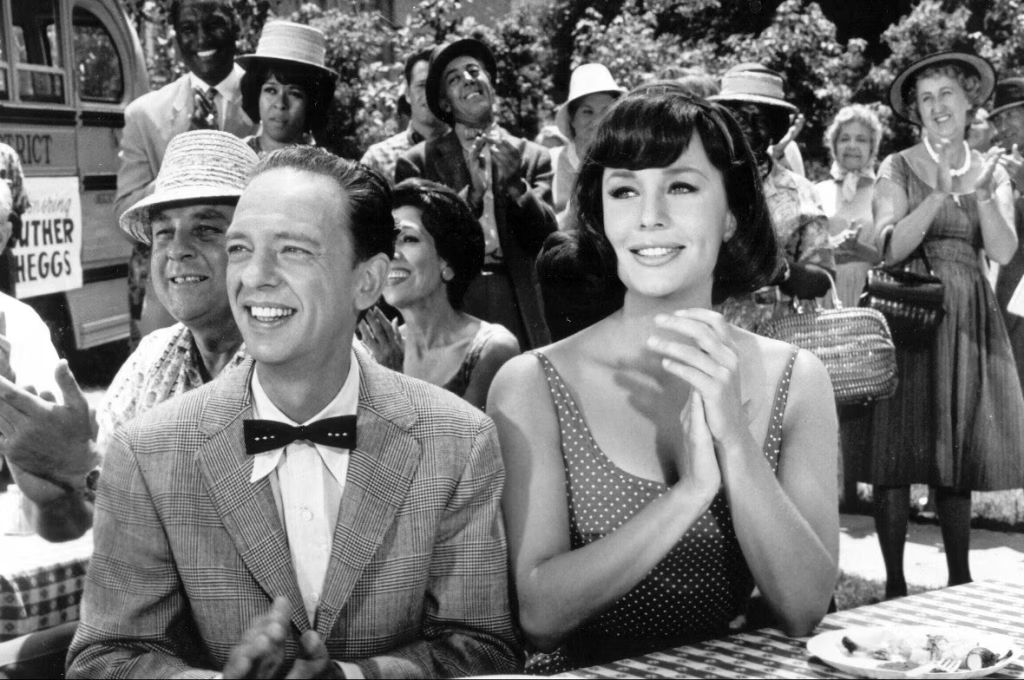 Music, Mood, and Production
A defining element of The Ghost and Mr. Chicken is its musical score by Vic Mizzy, renowned for composing the iconic themes for The Addams Family and Green Acres. Mizzy provided a punchy, melodramatic score driven by harpsichords, brass, and a spooky, jaunty pipe organ theme that anchored the film’s comedic-spooky tone.
The exterior of the haunted Simmons mansion was filmed on Universal’s famous Colonial Street backlot (an altered version of the “Harvey House,” which appeared in numerous TV shows and movies, including The Munsters and later Desperate Housewives).
 Key Cast and Crew
| Role / Credit | Individual | Notes |
|---|---|---|
| Director | Alan Rafkin | Emmy-winning television director |
| Writers | Jim Fritzell & Everett Greenbaum | With uncredited contributions by Andy Griffith |
| Composer | Vic Mizzy | Famous for The Addams Family score |
| Luther Heggs | Don Knotts | First film under his Universal multi-picture contract |
| Alma Parker | Joan Staley | Luther’s supportive romantic interest |
| George Beckett | Dick Sargent | Courier editor; later Darrin Stephens on Bewitched |
| Ollie Weaver | Skip Homeier | Heggs’s rival reporter for Alma’s affections |
 Box Office and Cultural Legacy
Produced on a modest budget, The Ghost and Mr. Chicken proved to be an unexpected commercial hit, grossing several times its production cost. Its success immediately validated Universal chief Lew Wasserman’s decision to sign Knotts to a multi-picture contract, paving the way for follow-up family comedies such as The Reluctant Astronaut (1967), The Shakiest Gun in the West (1968), and How to Frame a Figg (1971).
Decades later, the movie remains an October staple and a beloved time capsule of mid-1960s family entertainment, kept alive through television syndication and home video.
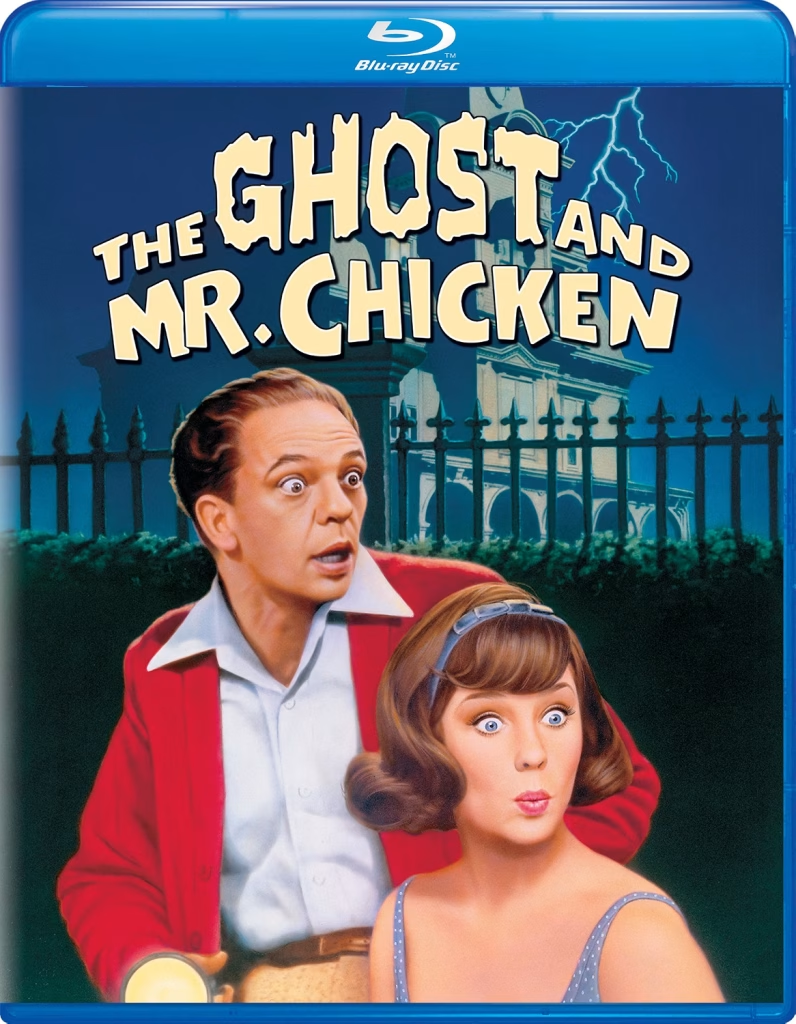
To read the rest of my Monstrous Movie Reviews, click HERE! To add this movie to your film collection, click on the Blu-ray cover below.
 Continue Reading
| # | Наименование новости | Тональность | Информативность | Дата публикации |
|---|---|---|---|---|
| 1 | The Architecture of Dread: How 1944’s THE UNINVITED Invented the Modern Ghost Story | 0 | 5.21 | 08-10-2026 |
| 2 | Seeing Is Believing: How William Castle’s 13 GHOSTS Weaponized Gimmick Cinema | 0 | 11.44 | 03-10-2026 |
| 3 | Sorrow, Sound, and Shadow: Why THE CHANGELING Remains Cinema’s Greatest Haunted House Mystery | 0 | 7.29 | 07-10-2026 |
| 4 | Tonight on Svengoolie and the House of Svengoolie (October 3, 2026): THE WIZARD OF OZ and THE INVISIBLE MAN RETURNS | 0 | 5.85 | 03-10-2026 |
| 5 | Electrifying the Gothic: How THE LEGEND OF HELL HOUSE (1973) Modernized Haunted Cinema | 0 | 8.5 | 04-10-2026 |
| 6 | Minimum Wage, Maximum Dread: A Retrospective on Ti West’s THE INNKEEPERS | 0 | 4.54 | 01-10-2026 |
| 7 | Werewolf Films to Howl Over! | 0 | 6.57 | 30-09-2026 |
| 8 | Locked In: How HOUSEBOUND Rebuilt the Haunted House with Deadpan Kiwi Horror | 0 | 7.85 | 02-10-2026 |
| 9 | The Architecture of Inevitability: How HEREDITARY Turned Grief into Cosmic Horror | 0 | 6.62 | 05-10-2026 |
| 10 | nobrashfestivity:Hans Richter, Ghosts Before Breakfast,... | 0 | 13.31 | 06-10-2026 |