Просмотр новости
Найдите то, что Вас интересует
 Спутники
 РН
РН SpaceX
 Роскосмос
 NASA
NASA
СпутникиРНSpaceXРоскосмосNASAReleased in the summer of 1960, 13 Ghosts represents mid-century gimmick cinema at its peak. Produced and
The post Seeing Is Believing: How William Castle’s 13 GHOSTS Weaponized Gimmick Cinema appeared first on David's Basement of the Bizarre.

Released in the summer of 1960, 13 Ghosts represents mid-century gimmick cinema at its peak. Produced and directed by William Castle—the undisputed PT Barnum of B-movie horror—the film transformed a standard haunted-house storyline into an interactive theatrical event through Castle’s signature interactive technology: Illusion-O.
 The Premise and Plot
Written by Robb White, Castle’s longtime collaborator on films like Macabre (1958) and House on Haunted Hill (1959), 13 Ghosts centers on the Zorba family. Down on their luck and facing eviction, mild-mannered paleontologist Cyrus Zorba (Donald Woods), his wife Hilda (Rosemary DeCamp), teenage daughter Medea (Jo Morrow), and young son Buck (Charles Herbert) receive an unexpected windfall: Cyrus’s eccentric uncle, Dr. Plato Zorba, has died and left them his sprawling, fully furnished Victorian mansion.
The inheritance comes with two major catches:
To navigate the house, the family must use a pair of custom, heavy brass goggles left behind by Plato. Only through these lenses can human eyes perceive the spirits lurking in the rooms. As the family tries to settle in, suspicious attorney Ben Rush (Martin Milner) circles the estate in search of the fortune, while the sinister housekeeper, Elaine Zacharides (played with pitch-perfect eerie menace by Margaret Hamilton, cinema’s iconic Wicked Witch of the West), hints darkly at the horrors awaiting them.
 The Gimmick: “Illusion-O”
By 1960, Castle had already wired theater seats with electric buzzers for The Tingler and flown a glowing skeleton above audience heads for House on Haunted Hill. For 13 Ghosts, he introduced Illusion-O, handing every ticket buyer a handheld cardboard viewer containing two tinted celluloid strips: red and blue.
Castle appeared on screen in an introductory prologue, instructing patrons how to control their viewing experience:
Technically, the movie was shot on black-and-white stock, with the ghost sequences composited using a two-color process. Because the ghosts were somewhat visible even without the viewer, the gimmick functioned primarily as an ingenious psychological engagement tool—audiences actively raised and lowered their viewers throughout the screening.
 Key Ghosts and Production Details
While modern supernatural films lean on psychological dread, Castle favored carnival-style funhouse shocks. Among the twelve captured ghosts that appear throughout the mansion are:
Margaret Hamilton’s casting was a deliberate masterstroke by Castle; audiences immediately associated her sharp profile and cackling delivery with The Wizard of Oz, giving the mansion’s housekeeper an instant aura of witchery.
Legacy and the 2001 Remake13 Ghosts was a commercial hit for Columbia Pictures, cementing Castle’s reputation as an innovator who treated moviegoing as an amusement park attraction.
In 2001, Dark Castle Entertainment—a production outfit co-founded by Joel Silver and Robert Zemeckis specifically to modernize William Castle’s catalog—released an R-rated remake, stylized as Thir13en Ghosts. Directed by Steve Beck, the remake reimagined the Victorian house as an elaborate mechanical labyrinth made of shifting glass walls etched with containment spells, trading the original’s lighthearted carnival camp for visceral creature designs and kinetic industrial horror. Nevertheless, the remake paid direct homage to Castle’s original gimmick by equipping its characters with specialized glass goggles to see the trapped souls.
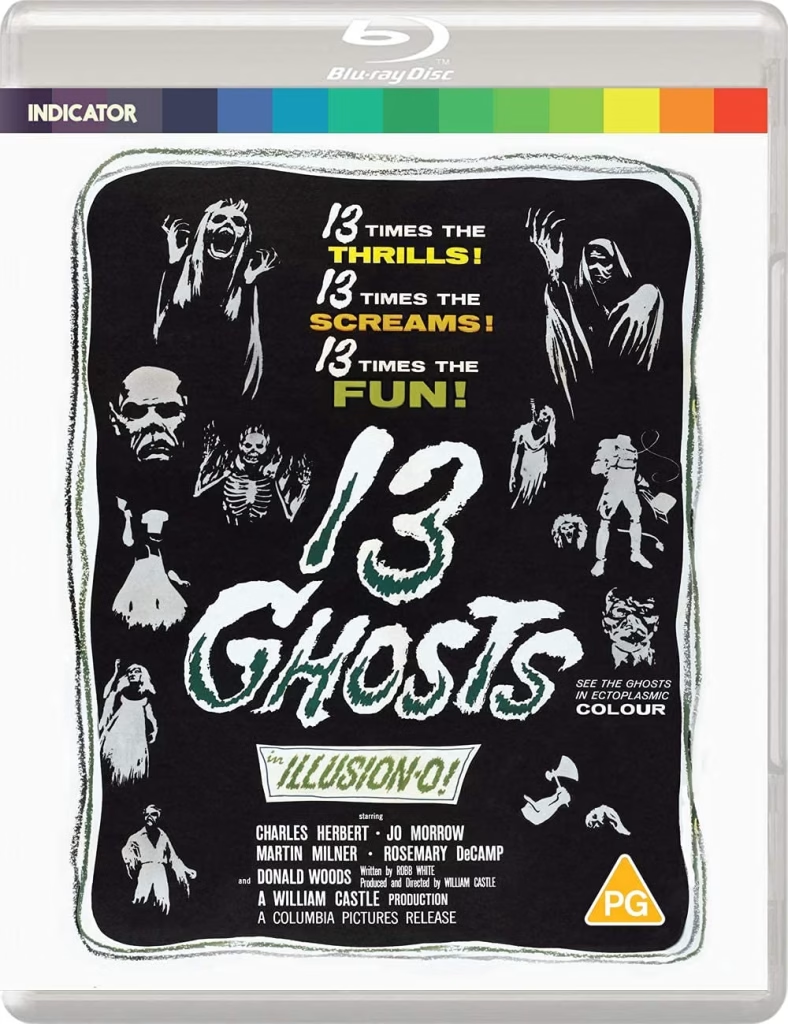
To read the rest of my Monstrous Movie Reviews, click HERE! To add this movie to your film collection, click on the Blu-ray cover below.
 Continue Reading