Просмотр новости
Найдите то, что Вас интересует
 Спутники
 РН
РН SpaceX
 Роскосмос
 NASA
NASA
СпутникиРНSpaceXРоскосмосNASARemember when Nissan, Honda and Mitsubishi all got in the same room to talk about a possible merger? Well it looks like those talks actually have resulted in something of substance. Honda Motor is preparing to sell Mitsubishi-built Triton pickup trucks under its own badge across Southeast Asia and selected export territories as early as […]
The post Honda Turns To Mitsubishi For One-Tonne Pickup: Thai-Built Triton Rebadge Slated For Southeast Asia By 2028 first appeared on DSF.my.
Remember when Nissan, Honda and Mitsubishi all got in the same room to talk about a possible merger? Well it looks like those talks actually have resulted in something of substance. Honda Motor is preparing to sell Mitsubishi-built Triton pickup trucks under its own badge across Southeast Asia and selected export territories as early as 2028. The arrangement marks Honda’s first formal vehicle rebadging agreement with an independent automaker in approximately three decades, excluding its recent platform-sharing ventures with General Motors.

Under the supply agreement, Mitsubishi Motors will assemble the one-tonne trucks at its sprawling manufacturing hub in Laem Chabang, Thailand, and ship completed units to Honda. Honda will then apply its own branding, design adjustments, and badging before distributing the vehicles through its extensive regional dealer network.
 Filling a Ladder-Frame Gap Without Heavy R&D Costs
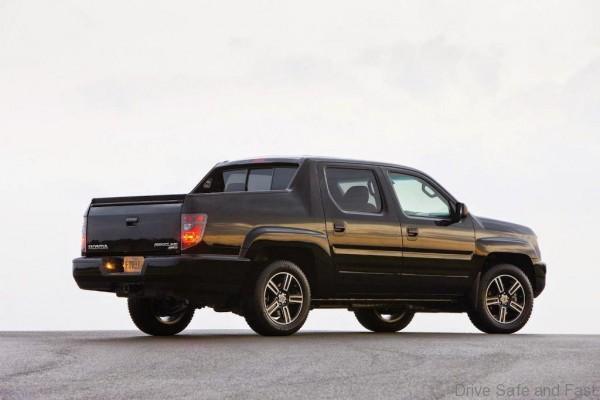
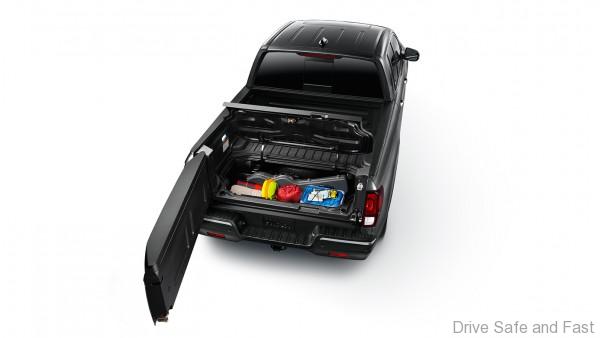
For Honda, the deal solves a glaring structural void in its global catalog. While the carmaker produces the unibody Ridgeline pickup for North America based on its front-wheel-drive passenger car architecture, Honda does not develop or manufacture traditional ladder-frame commercial vehicles.
Engineering a dedicated body-on-frame commercial truck platform from a clean sheet demands billions in capital expenditure and years of chassis development, an outlay that makes little financial sense in an era where research budgets are heavily monopolized by electrification, software architecture, and artificial intelligence.
By borrowing Mitsubishi’s proven heavy-duty platform, Honda secures immediate entry into the lucrative one-tonne truck market without spending a single yen on greenfield chassis engineering:
The tie-up comes as legacy Japanese manufacturers fight to hold their ground across Southeast Asia. Historically commanding upwards of 90 percent market share in powerhouse automotive markets like Thailand and Indonesia, Japanese brands have seen their collective dominance fall to between 70 and 80 percent following aggressive expansions by Chinese EV manufacturers like BYD.

Honda has felt the squeeze directly, with its combined passenger vehicle sales across Thailand, Malaysia, and Indonesia dropping 20 percent year-on-year to roughly 110,000 units over the first eight months of 2026.
Unlike passenger saloons and compact SUVs, the one-tonne commercial pickup segment remains an enduring Japanese fortress, historically representing over 80 percent of regional commercial truck sales. High payload requirements and demanding towing duty cycles mean the pickup bracket is transitioning to pure electric powertrains far more slowly than passenger cars, shielding it from direct Chinese price wars.

Adding a dependable workhorse gives Honda dealers across Thailand, Indonesia, and the Philippines a high-volume commercial asset to drive steady showroom traffic and generate lucrative aftersales servicing income.
From Historic Isuzu Cross-Badging to Future PHEV SourcingHonda is no stranger to badge sharing when market pragmatism demands it. During the 1990s, the company relied on Isuzu to supply models like the Rodeo and Trooper, selling them under the Honda Passport and Horizon names to plug SUV gaps before developing its own CR-V and Pilot platforms.
The Triton deal also breathes real operational momentum into the trilateral cooperation talks between Honda, Nissan, and Mitsubishi that first surfaced in mid-2024. While earlier high-level talks on broader company-wide integration experienced friction, the automakers have increasingly realized that resource sharing is essential to survive shifting market dynamics.
The technical partnership may also extend beyond commercial diesel workhorses. Mitsubishi is a recognized pioneer in rugged off-road hardware and plug-in hybrid electric vehicle (PHEV) powertrains. Because Honda does not assemble its own plug-in hybrids within Japan, discussions are currently underway for Honda to source PHEV systems or complete electrified models from Mitsubishi in the future.
Before the first Honda-badged pickups roll off Thai assembly lines in 2028, both carmakers will finalize export volumes, local homologation schedules, and distinct front-end styling cues to ensure the new truck looks and feels like a genuine member of the Honda family.
| # | Наименование новости | Тональность | Информативность | Дата публикации |
|---|---|---|---|---|
| 1 | Toyota Hilux BEV Review: Diesel’s On The Rise & The Solution Has Arrived | 0 | 6.38 | 15-10-2026 |
| 2 | Mitsubishi Motors Malaysia Launches Xforce Roving Cloud Campaign To Showcase Wet-Weather Driving Tech | 0 | 8.15 | 16-10-2026 |
| 3 | Battle Of The Boxes Gets Intensive With More Options On Sale | 0 | 6.78 | 15-10-2026 |
| 4 | Kyodo сообщило о планах Honda, Nissan и Mitsubishi создать общий автокомпьютер | 0 | 7 | 29-06-2026 |
| 5 | Mitsubishi teases first images of Canada-bound midsize pickup | 0 | 15.62 | 25-08-2026 |
| 6 | Why The 2nd-Gen Proton Perdana Failed And Its Low Used Values | 0 | 8.33 | 14-10-2026 |
| 7 | Honda CEO Teases Imminent Nissan Deal | 0 | 8.92 | 01-07-2026 |
| 8 | Mitsubishi is making this Pininfarina-designed e-crossover for Australia | 0 | 11.18 | 16-08-2026 |
| 9 | Honda Gives SUV Owners A Free Way To Have More Fun Off-Road | 0 | 11.13 | 16-06-2026 |
| 10 | Dongfeng M-HERO Hybrid Getting More Attention With PHEV Power | 0 | 5 | 01-07-2026 |
